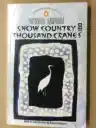
Snow Country
Kawabata's best-known and most widely acclaimed novel, and a central expression of his lyrical style.
Author guide
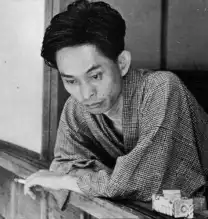
Yasunari Kawabata (1899–1972) was a Japanese novelist, short-story writer, essayist, and literary critic associated with the modernist New Sensationalist movement. His spare, lyrical prose drew on Japanese aesthetic traditions while engaging with modernist narrative techniques. His major works include Snow Country, Thousand Cranes, The Sound of the Mountain, The Master of Go, The Old Capital, and The House of the Sleeping Beauties. He received the Nobel Prize in Literature in 1968.
Catalog record updated .
Not sure where to begin?
Kawabata's best-known and most widely acclaimed novel, and a central expression of his lyrical style.
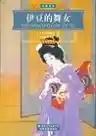
A concise early novella that introduces his recurring themes of longing, impermanence, and beauty.

A representative collection of the extremely short fiction Kawabata considered the essence of his art.
Outside the series
novella · 1926
novel · 1930
novel · 1933
novella · 1934
novel · 1936
novel · 1937
Schildering van de liefdesverhouding tussen een geisha met haar ongecompliceerde levensinstelling en een tot diepere menselijke gevoelens onmachtige intellectuele estheet.
novel · 1937
novel · 1942
novella · 1942
novella · 1945
novella · 1946
novel · 1947
'In this masterpiece Kawabata, his brush dipped in silver, renders all the excruciating anguish and beauty of post-war Japan' Edmund White With the Second World War only a few years in the past, and Japan still reeling from its effects,…
novel · 1952
A luminous story of desire, regret, and the almost sensual nostalgia that binds the living to the dead—from the acclaimed Nobel Prize winner and author of Snow Country. "A stunning economy, delicacy of feeling, and a painter’s sensitivity…
novel · 1951
novel · 1951
novel · 1953
novel · 1953
novel · 1954
novel · 1954
"By day Ogata Shingo, an elderly Tokyo businessman, is troubled by small failures of memory. At night he associates the distant rumble he hears from the nearby mountain with the sounds of death. In between are the complex relationships…
novel · 1954
Go is a game of strategy in which two players attempt to surround each other’s black or white stones. Simple in its fundamentals, infinitely complex in its execution, Go is an essential expression of the Japanese spirit. And in his…
nonfiction · 1954
novel · 1955
novel · 1955
novella · 1955
novel · 1955
novella · 1955
novel · 1957
novel · 1959
novella · 1961
novel · 1962
novel · 1965
The successful writer Oki has reached middle age and is filled with regrets. He returns to Kyoto to find Otoko, a young woman with whom he had a terrible affair many years before, and discovers that she is now a painter, living with a…
novella · 1965
novel · 1972
A fascinating discovery, Kawabata’s unfinished final novel Dandelions is a great master’s last word A fascinating discovery, Dandelions is Kawabata's final novel, left incomplete when he committed suicide in 1972. Beautifully spare and…
literary-criticism · 1936
literary-criticism · 1941
travel-writing · 1948
travel-writing · 1954
memoir · 1966
short-story-collection · 1926
short-story-collection · 1930
short-story-collection · 1930
short-story-collection · 1934
short-story-collection · 1935
short-story-collection · 1939
short-story-collection · 1940
short-story-collection · 1941
short-story-collection · 1941
short-story-collection · 1945
short-story-collection · 1945
short-story-collection · 1946
short-story-collection · 1946
short-story-collection · 1948
short-story-collection · 1948
short-story-collection · 1948
short-story-collection · 1948
short-story-collection · 1948
short-story-collection · 1948
short-story-collection · 1949
short-story-collection · 1949
short-story-collection · 1949
short-story-collection · 1958
short-story-collection · 1923
Recipient of the Nobel Prize in Literature in 1968, the novelist Yasunari Kawabata felt the essence of his art was to be found not in his longer works but in a series of short stories--which he called "Palm-of-the-Hand Stories." Written…
essay-collection · 1936
essay-collection · 1942
essay-collection · 1945
essay-collection · 1967
essay · 1969
essay-collection · 1969
juvenile-novel · 1937
juvenile-fiction · 1937
juvenile-novel · 1938
juvenile-fiction · 1946
juvenile-novel · 1952
juvenile-fiction · 1953
juvenile-fiction · 1955
juvenile-fiction · 1959
Yasunari Kawabata was a Japanese novelist and short-story writer who became the first Japanese recipient of the Nobel Prize in Literature. He was born in Osaka in 1899 and died in Zushi in 1972.
After his parents died when he was young, Kawabata was raised in the countryside by his maternal grandfather. He later studied at Tokyo Imperial University from 1920 to 1924.
Kawabata helped found the literary magazine Bungei Jidai, which promoted a new movement in modern Japanese literature. His recognized writing career began with the short story “Izu dancer,” published in 1927.
Sources: nobelprize.org (opens in a new tab)ndl.go.jp (opens in a new tab)
His work drew on Japanese classical literature, particularly The Tale of Genji, as well as Zen and Buddhist ideas about beauty, nature, and impermanence. His early career was also shaped by the modernist Shinkankakuha, or “new sensation,” movement.
Sources: nobelprize.org (opens in a new tab)ndl.go.jp (opens in a new tab)
Kawabata received the Goethe Medal in 1959, Japan’s Order of Culture in 1961, and the Nobel Prize in Literature in 1968 for his narrative mastery and expression of the Japanese mind. He is remembered as Japan’s first Nobel literature laureate and as a major figure in the international recognition of Japanese literature.
Sources: nobelprize.org (opens in a new tab)nobelprize.org (opens in a new tab)gov-online.go.jp (opens in a new tab)