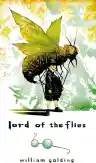
Lord of the Flies
Golding's first novel and his most widely recognized work.
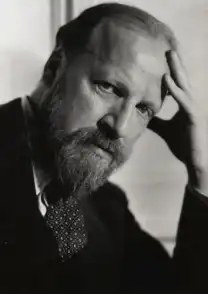
Author guide
William Golding (1911–1993) was an English writer whose fiction examined civilization, violence, morality, freedom, and human nature through mythic and often historical settings. His published work includes thirteen novels, a poetry collection, a play, collections of fiction and essays, a travel journal, and a separately published Nobel lecture. He received the Booker Prize for Rites of Passage and the Nobel Prize in Literature in 1983.
Catalog record updated .
Not sure where to begin?
Golding's first novel and his most widely recognized work.
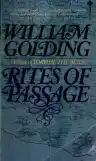
The opening volume of his complete sea trilogy and winner of the Booker Prize.
Read in order
trilogy · complete
A completed sea trilogy following an upper-class young man and his fellow passengers during a voyage from England to Australia.
Book 1 · novel · 1980
During the early 18th century, passengers on a ship to Australia include a parson whom the crew choses as a scapegoat.
Book 2 · novel · 1987
A decrepit warship is becalmed halfway to Australia, stilled in an ocean wilderness of heat and sea mists. In this surreal, fête-like atmosphere, a ball is held with a passing ship: the passengers dance and flirt, while beneath them…
Outside the series
novel · 1954
"At the dawn of the next world war, a plane crashes on an uncharted island, stranding a group of schoolboys. At first, with no adult supervision, their freedom is something to celebrate. This far from civilization they can do anything…
novel · 1955
Golding’s follow-up to Lord of the Flies, this is an unusual novel about the last tribe of Neanderthals in Europe and their fatal encounter with a tribe of more advanced and infinitely more ruthless Humans.
novel · 1956
One of Golding’s bleakest novels, this existentialist story is about the sole survivor of a shipwreck in the North Atlantic. Having been washed up on a rocky outcrop with no other land in sight and having no form of sustenance the man…
novel · 1959
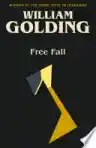
Sammy Mountjoy, artist, rises from poverty and an obscure birth to see his pictures hung in the Tate Gallery. Swept into World War Two, he is taken as a prisoner-of-war, threatened with torture, then locked in a cell of total darkness to…
novel · 1964
Told in a stream-of-consciousness narrative, this is a story of obsession. Against the advice of his builder, the Dean of Salisbury Cathedral, slowly dying from tuberculosis, plans the construction of a towering spire atop the cathedral…
novel · 1967
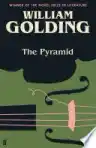
Follow young Oliver's rebellious coming-of-age in the village of Stillbourne in this comic novel by the radical Nobel Laureate and author of Lord of the Flies. Eighteen is a good time for suffering Welcome to the country town of…
novella-collection · 1971
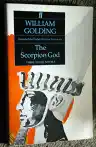
Three short novels show Golding at his subtle, ironic, mysterious best. The Scorpion God depicts a challenge to primal authority as the god-ruler of an ancient civilization lingers near death. Clonk Clonk is a graphic account of a…
novel · 1979
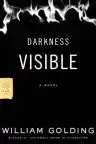
Hideously scarred and orphaned during the bombing of London, Matty sees himself as set apart from others, and his wanderings bring him into contact with Mr. Pedigree, a respected teacher and obsessed pederast, and Sophy and Toni,…
novel · 1984
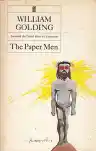
A novel about the conflict between a curmudgeonly writer with many secrets and the professor who wants to gain access to his personal papers and become his official biographer.
novel · 1995
A final draft of Nobel Laureate William Golding's last novel, published two years after his sudden death in 1993. The story explores the relationships between the mystical, the sacred, and the profane in ancient Greece through an…
travel-journal · 1985
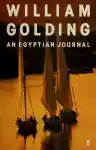
A personal diary of the author's recent trip up the Nile describes the everyday life of the Egyptians and connects it with their ancient past
essay-collection · 1965
essay-collection · 1982
lecture · 1984
poetry-collection · 1934
coauthored-fiction-collection · 1956
William Golding (1911–1993) was an English novelist, poet, and playwright best known for his first novel, Lord of the Flies (1954). He later received the Nobel Prize in Literature.
Sources: nobelprize.org (opens in a new tab)william-golding.co.uk (opens in a new tab)
Golding was born in Newquay, Cornwall, England, on 19 September 1911. He studied at Brasenose College, Oxford, initially pursuing natural sciences before switching to English literature.
Sources: nobelprize.org (opens in a new tab)william-golding.co.uk (opens in a new tab)
Before his literary breakthrough, Golding worked in theatre and taught at schools including Bishop Wordsworth’s School in Salisbury. During the Second World War, he served in the Royal Navy.
Sources: nobelprize.org (opens in a new tab)nobelprize.org (opens in a new tab)
Golding’s writing was strongly shaped by his wartime naval experiences and his study of ancient Greek language and literature. These influences helped inform his recurring examination of violence, morality, and the human condition.
Sources: nobelprize.org (opens in a new tab)nobelprize.org (opens in a new tab)
Golding won the Booker Prize in 1980 for Rites of Passage and the Nobel Prize in Literature in 1983. The Nobel citation praised his use of realistic narrative, myth, and symbolism to illuminate the human condition.
Sources: thebookerprizes.com (opens in a new tab)nobelprize.org (opens in a new tab)