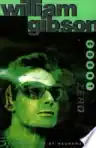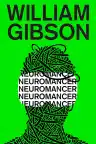
Neuromancer
The foundational novel and the first volume of the Sprawl Trilogy.
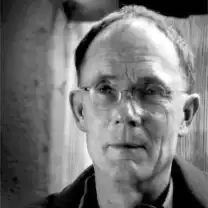
Author guide
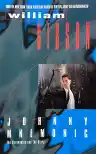
William Gibson is an American-Canadian speculative-fiction writer and essayist whose early short fiction and debut novel, Neuromancer, helped define cyberpunk. His fiction ranges from the Sprawl, Bridge, Blue Ant, and Jackpot series to alternate history, contemporary techno-thrillers, and graphic works. He has also published the short-story collection Burning Chrome, the essay collection Distrust That Particular Flavor, the artist's book Agrippa, and the screenplay-and-story volume Johnny Mnemonic.
Catalog record updated .
Not sure where to begin?
The foundational novel and the first volume of the Sprawl Trilogy.
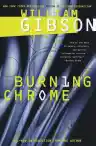
A standalone collection of Gibson's defining early cyberpunk short fiction.
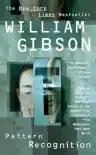
A standalone contemporary thriller and the first volume of the Blue Ant Trilogy.
Read in order
novel series · complete
A loosely connected cyberpunk trilogy centered on artificial intelligence, cyberspace, and the global information economy.
Book 1 · novel · 1984
Case was the sharpest data-thief in the matrix—until he crossed the wrong people and they crippled his nervous system, banishing him from cyberspace. Now a mysterious new employer has recruited him for a last-chance run at an unthinkably…
Book 2 · novel · 1986
William Gibson continues the visionary Sprawl Trilogy that began with Neuromancer in this frighteningly probable parable of the future. A corporate mercenary wakes in a reconstructed body, a beautiful woman by his side. Then Hosaka…
Book 3 · novel · 1988
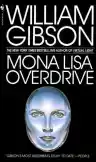
William Gibson, author of the extraordinary multiaward-winning novel Neuromancer, has written his most brilliant and thrilling work to date . . .The Mona Lisa Overdrive. Enter Gibson's unique world—lyric and mechanical, sensual and…
novel series · complete
A near-future trilogy set around the San Francisco–Oakland Bay Bridge and the social consequences of technological transformation.
Book 1 · novel · 1993
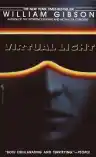
California, the not so distant future. Berry, ex-cop/private security, looking to just make ends meet. Chevette, a young bicycle messanger. A murder, a secret missing, and a murderer closing in on Chevette. Berry is the only thing…
Book 2 · novel · 1996
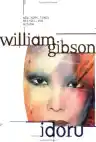
21st century Tokyo, after the millennial quake. Neon rain. Light everywhere blowing under any door you might try to close. Where the New Buildings, the largest in the world, erect themselves unaided, their slow rippling movements like the…
Book 3 · novel · 1999
novel series · complete
A contemporary techno-thriller trilogy featuring advertising magnate Hubertus Bigend and investigations into culture, technology, and power.
Book 1 · novel · 2003
One of the most influential and imaginative writers of the past twenty years turns his attention to London - with dazzling results.Cayce Pollard owes her living to her pathological sensitivity to logos. In London to consult for the…
Book 2 · novel · 2007
Tito is in his early twenties. Born in Cuba, he speaks fluent Russian, lives in one room in a NoLita warehouse, and does delicate jobs involving information transfer.Hollis Henry is an investigative journalist, on assignment from a…
Book 3 · novel · 2010
Set among London's dark and tangled streets after the money-crash , Zero History is a thriller about the hidden webs and patterns that underlie the new century.
novel series · ongoing
A future-spanning trilogy involving alternate timelines, advanced artificial intelligence, and the slow societal catastrophe known as the jackpot.
Book 1 · novel · 2014
Flynne Fisher lives down a country road, in a rural America where jobs are scarce, unless you count illegal drug manufacture, which she’s trying to avoid. Her brother Burton lives on money from the Veterans Administration, for…
Book 2 · novel · 2020
Verity Jane, gifted app-whisperer, out of work since her exit from a brief but problematic relationship with a Silicon Valley billionaire, signs the wordy NDA of a dodgy San Francisco start-up, becoming the beta-tester for their latest…
Outside the series
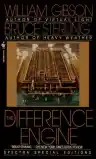
novel · 1990
1855: The Industrial Revolution is in full and inexorable swing powered by steam-driven cybernetic Engines, Charles Babbage perfects his Analytical Engine and the computer age arrives a century ahead of its time. And three extraordinary…
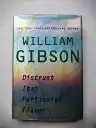
nonfiction_collection · 2012
Known primarily as a novelist, Gibson has, over thirty years, been approached by different publication to share his insights into contemporary culture. The resulting essays are collected here for the first time.
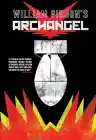
graphic_novel · 2017
"The U.S. political leaders of 2016 abandon the radioactive planet they've destroyed and harness the power of humanity's last hope: The Splitter, a colossal machaine designed to manufacture a bright new reality for them to infiltrate and…
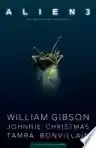
graphic_novel · 2019
"Collects issues #1-#5 of the Dark Horse Comics series William Gibson's Alien 3"
short_story_collection · 1986
Burning Chrome collects Gibson's early short fiction from the late 70's and early 80's. Contents: Preface / by Bruce Sterling -- Johnny Mnemonic -- The Gernsback continuum -- Fragments of a hologram rose -- The belonging kind / by John…
screenplay_and_story_collection · 1995
Synopsis: Johnny is a courier. He carries data, uploaded into his brain through a jack implanted in his skull. And so Johnny's troubles begin. The data is stolen, and to get it back the owners have hired the Yakuza who intend to get hold…
play · 2003
artist_book · 1992
William Ford Gibson is a U.S.-born author who has lived in Canada since 1968, moving to Vancouver in 1972. He was born in Conway, South Carolina, in 1948.
Gibson’s first science-fiction story, “Fragments of a Hologram Rose,” was published in 1977. He began writing science fiction after taking a literature course at the University of British Columbia.
Sources: sf-encyclopedia.com (opens in a new tab)magazine.alumni.ubc.ca (opens in a new tab)
Gibson has said he wanted to challenge the triumphalist, militaristic tone of much mid-century American science fiction. He aimed for more naturalistic settings, textured technology, and antiheroic protagonists.
His breakthrough novel Neuromancer won the 1984 Nebula Award for Best Novel and the 1985 Hugo Award for Best Novel, along with the Philip K. Dick Award. SFWA later named Gibson a Damon Knight Grand Master in 2018 for lifetime achievement.
Sources: nebulas.sfwa.org (opens in a new tab)thehugoawards.org (opens in a new tab)nebulas.sfwa.org (opens in a new tab)
Gibson helped define cyberpunk and introduced the term “cyberspace” in his story “Burning Chrome,” later expanding the idea in Neuromancer. SFWA credits his work with influencing writers, cinema, fiction, games, and computer culture.
Sources: nebulas.sfwa.org (opens in a new tab)sf-encyclopedia.com (opens in a new tab)