Lolita
The most accessible entry point to Nabokov’s mature English-language fiction.
Author guide
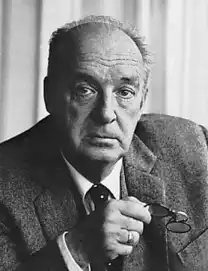
Vladimir Vladimirovich Nabokov (1899–1977) was a Russian-American writer who published Russian fiction and poetry under the pen name Vladimir Sirin before becoming one of the major English-language novelists of the twentieth century. His work spans novels, short fiction, poetry, drama, memoir, literary criticism, translation, correspondence, and scientific writing on butterflies.
Catalog record updated .
Not sure where to begin?
The most accessible entry point to Nabokov’s mature English-language fiction.
A central memoir that introduces his style, multilingual background, and recurring themes.
A compact, formally inventive introduction to his experimental fiction.
Outside the series
novel · 1926
Nabokov's first novel is now available in a trade paper edition. Here is the dark tale of a handsome officer who lives next door to his lover's husband in a dreary Berlin boarding house.
novel · 1928
The novel is the story of Dreyer, a wealthy and boisterous proprietor of a men's clothing emporium store. Ruddy, self-satisfied, and thoroughly masculine, he is perfectly repugnant to his exquisite but cold middle-class wife Martha.…
novel · 1930
Vladimir Nabokov's early novel is the dazzling story of the coarse, strange yet oddly endearing chess-playing genius Luzhin. Discovering his prodigious gift in boyhood and rising to the rank of International Grandmaster, Luzhin develops a…
novella · 1930
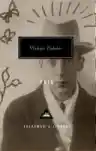
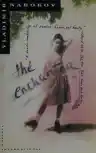
Nabokov's fourth novel, The Eye is as much a farcical detective story as it is a profoundly refractive tale about the vicissitudes of identities and appearances. Nabokov's protagonist, Smurov, is a lovelorn, excruciatingly self-conscious…
novel · 1932
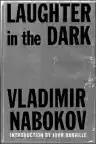
novel · 1933
"Once upon a time there lived in Berlin, Germany, a man called Albinus. He was rich, respectable, happy; one day he abandoned his wife for the sake of a youthful mistress; he loved; was not loved; and his life ended in disaster." Thus…
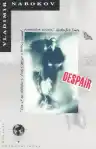
novel · 1936
Self-satisfied, delighting in the many fascinating quirks of his own personality, Hermann Hermann is perhaps not to be taken too seriously. But then a chance meeting with a man he believes to be his double reveals a frightening 'split' in…
novel · 1938
Like Kafka's The Castle, Invitation to a Beheading embodies a vision of a bizarre and irrational world. In an unnamed dream country, the young man Cincinnatus C. is condemned to death by beheading for "gnostical turpitude," an imaginary…
novel · 1938
novel · 1941
En apariencia se trata de la simple biografía de un escritor, Sebastian Knight, escrita por su hermanastro «V» con la intención de corregir las falsedades vertidas sobre su persona en otra biografía, escrita con tendenciosidad y graves…
novel · 1947
<p><b>Book Source:</b> <a href="http://www.new.dli.ernet.in/handle/2015/65702" rel="nofollow">Digital Library of India Item 2015.65702</a></p><p>dc.contributor.author: Nabokov Vladimir<br />dc.date.accessioned: 2015-06-29T23:30:58Z<br…
novel · 1955
The most famous and controversial novel from one of the greatest writers of the twentieth century tells the story of Humbert Humbert’s obsessive, devouring, and doomed passion for the nymphet Dolores Haze. “The conjunction of a sense of…
novel · 1957
Professor Timofey Pnin is a haplessly disoriented Russian émigré precariously employed on an American college campus in the 1950s. Pnin struggles to maintain his dignity through a series of comic and sad misunder-standings, all the while…
novel · 1962
"An ingeniously constructed parody of detective fiction and learned commentary, 'Pale Fire' offers a cornucopia of deceptive pleasures, at the center of which is a 999-line poem written by the literary genius John Shade just before his…
novel · 1969
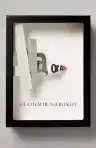
Two young children engage in an inocent tryst only to later discover a wonderful and terrible secret about themselves. "The arbors and ardors of Ardis."
novel · 1972
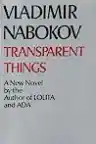
"Transparent Things revolves around the four visits of the hero--sullen, gawky Hugh Person--to Switzerland . . . As a young publisher, Hugh is sent to interview R., falls in love with Armande on the way, wrests her, after multiple…
novel · 1974
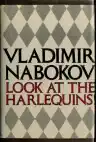
'Look at the harlequins . . . Play! Invent the world! Invent reality.' This is the childhood advice given by an aunt to Russian born writer Vadim Vadimovich, who emigrates to England, then Paris, then Germany and then the US, and, now…
novella · 1986
nonfiction · 2000
novel · 2009
Avec la reproduction des fiches manuscrites originales de l'auteur établi à Montreux dès 1961.
literary-criticism · 1944
memoir · 1951
From one of the 20th century’s great writers comes one of the finest autobiographies of our time. Speak, Memory was first published by Vladimir Nabokov in 1951 as Conclusive Evidence and then assiduously revised and republished in 1966.…
literary-criticism · 1963
literary-criticism · 1980
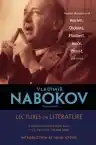
Reading versions of important lectures given in the 1950s demonstrate Nabokov's critical talents and reveal his judgments on the works and achievement of Austen, Dickens, Flaubert, Joyce, Kafka, Proust, and Stevenson
literary-criticism · 1980
literary-criticism · 1981
literary-criticism · 1983
short-story-collection · 1930
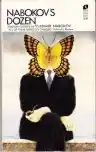
short-story-collection · 1947
short-story-collection · 1956
short-story-collection · 1958
Introducing Little Clothbound Classics: irresistible, mini editions of short stories, novellas and essays from the world's greatest writers, designed by the award-winning Coralie Bickford-Smith Celebrating the range and diversity of…
short-story-collection · 1966
short-story-collection · 1968
short-story-collection · 1973
short-story-collection · 1975
short-story-collection · 1976
short-story-collection · 1992
short-story-collection · 1995
short-fiction-collection · 2012
essay-collection · 1973
essay-collection · 2019
poetry-collection · 1916
poetry-collection · 1918
poetry-collection · 1923
poetry-collection · 1923
poetry-collection · 1952
poetry-collection · 1952
poetry-collection · 1970
poetry-collection · 1979
play · 1938
screenplay · 1974
The screenplay for Kubrik's 1962 film tells the story of an older man's obsession with a young girl.
play-collection · 1985
play-collection · 1990
play · 1997
correspondence · 1979
correspondence · 1984
correspondence · 2014
"A collection of letters between Vladimir Nabokov and his wife, Vera"-- "The letters of the great writer to his wife--gathered here for the first time--chronicle a decades-long love story and document anew the creative energies of an…
Vladimir Nabokov (1899–1977) was a Russian émigré writer who became one of the twentieth century’s major English-language authors. He also worked in poetry, translation, criticism, memoir, and the scientific study of butterflies.
Both descriptions are accurate: he was born in Russia, became a naturalized American citizen in 1945, and wrote in Russian, English, and French.
Sources: time.com (opens in a new tab)poetry.harvard.edu (opens in a new tab)
Nabokov was a distinguished lepidopterist, or butterfly specialist, and taught Russian literature at Cornell University from 1948 to 1959. His scientific work included research on blue butterflies and conservation-related work involving the Karner blue.
Sources: news.cornell.edu (opens in a new tab)news.cornell.edu (opens in a new tab)
His exile after the 1917 Bolshevik Revolution and his movement from Russian culture through Western Europe to America strongly shaped his literary outlook. Scholars also describe his work as a reinterpretation of Russian fictional traditions.
The National Book Foundation records Nabokov as a fiction finalist seven times, in 1958, 1959, 1963, 1965, 1973, 1975, and 1976. The Nobel Prize nomination archive also records him as a nominee for the Nobel Prize in Literature.
Sources: nationalbook.org (opens in a new tab)nobelprize.org (opens in a new tab)