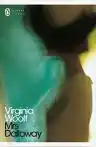
Mrs. Dalloway
A concise, accessible entry to Woolf's mature modernist fiction.
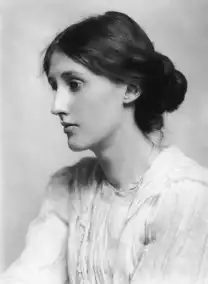
Author guide
Virginia Woolf (1882–1941) was an English modernist writer and a central figure of the Bloomsbury Group. Her innovative novels, including Mrs Dalloway, To the Lighthouse, Orlando, and The Waves, transformed twentieth-century fiction. She also wrote influential essays, biographies, memoirs, short fiction, diaries, letters, and the play Freshwater, and co-founded the Hogarth Press with Leonard Woolf.
Catalog record updated .
Not sure where to begin?
A concise, accessible entry to Woolf's mature modernist fiction.
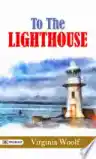
A central novel that showcases Woolf's lyrical, shifting perspective and formal experimentation.
The clearest starting point for her feminist criticism and nonfiction.
Read in order
diary · complete
The five-volume edited publication of Woolf's diary from 1915 to 1941.
Book 1 · diary · 1977
Book 2 · diary · 1978
Book 3 · diary · 1980
Book 4 · diary · 1982
Book 5 · diary · 1984
Book 1 · letter-collection · 1975
Book 2 · letter-collection · 1976
Book 3 · letter-collection · 1977
Book 4 · letter-collection · 1978
Book 5 · letter-collection · 1979
Book 6 · letter-collection · 1980
Outside the series
novel · 1915
“The Voyage Out” by Virginia Woolf. This is a story about a young English woman, Rachel, on a sea voyage from London, to a South American coastal city of Santa Marina. As I read the story, the title of the story became a metaphor for…
novel · 1919
Katharine Hilbery must decide whether she wants to marry a man she doesn't love, who is socially acceptable, or a man who is poor but the true love she has been looking for.
novel · 1922
Virginia Woolf's first original and distinguished work, Jacob's Room is the story of a sensitive young man named Jacob Flanders. The life story, character and friends of Jacob are presented in a series for separate scenes and moments from…
novel · 1925
Virginia Woolf’s novel chronicles a day in the life of Clarissa Dalloway, a politician’s wife in 1920s London, as she prepares to host a party that evening. The narrative follows Clarissa’s thoughts (and sometimes those of people she…
novel · 1927
This novel is an extraordinarily poignant evocation of a lost happiness that lives on in the memory. For years now the Ramsays have spent every summer in their holiday home in Scotland, and they expect these summers will go on forever.In…
novel · 1928
novel · 1931
Set on the coast of England against the vivid background of the sea, The Waves introduces six characters—three men and three women—who are grappling with the death of a beloved friend, Percival. Instead of describing their outward…
novel · 1937
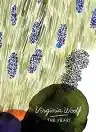
A stirring, straightforward work written near the end of her luminous career, Virginia Woolf's *The Years* is a portrait of the Pargiters, a staid London family presided over by Colonel Abel Pargiter. In some ways, "portrait" is not an…
novel · 1941
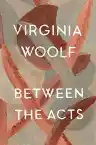
Between the Acts is the final novel by Virginia Woolf, published in 1941 shortly after her suicide. This is a book laden with hidden meaning and allusion. It describes the mounting, performance, and audience of a festival play (hence the…
art-criticism · 1934
biography · 1940
diary-selection · 1953
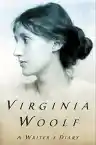
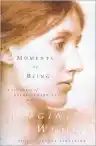
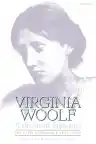
An invaluable guide to the art and mind of Virginia Woolf, drawn by her husband from the personal record she kept over a period of twenty-seven years. Included are entries that refer to her own writing, others that are clearly writing…
memoir · 1976
Five essays spanning her writing career show the many sides of Virginia Woolf.
journal-selection · 1990
These early journals record Virginia Woolf's "sublime trajectory" (Bloomsbury Review) from a gifted adolescent to a professional writer and complete the magnificent self-portrait provided by her published letters and diaries. Edited and…
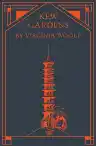
short-story · 1919
This charming short story by one of the greatest literary figures of the 20th century, Virginia Woolf, is set on a hot July day in Kew Gardens. Woolf creates an impressionistic world with snippets of conversation, wondering thoughts and…
short-story-collection · 1921
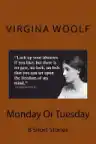
One of the most distinguished critics and innovative authors of the twentieth century, Virginia Woolf published two novels before this collection appeared in 1921. However, it was these early stories that first earned her a reputation as…
short-story-collection · 1944
The stories found in A Haunted House reflect Virginia Woolf's experimental writing style and act as an enlightening introduction to the longer fiction of this pioneer novelist. Gathering works from the previously published Monday or…
short-story-collection · 1973
essay · 1924
essay-collection · 1925
A collection of essays from the acclaimed author of Mrs. Dalloway on such subjects as Jane Austen, Geoffrey Chaucer, and her own literary philosophy. A good essay must have this permanent quality about it; it must draw its curtain round…
extended-essay · 1929
A Room of One's Own is an extended essay by Virginia Woolf. First published on the 24th of October, 1929, the essay was based on a series of lectures she delivered at Newnham College and Girton College, two women's colleges at Cambridge…
essay · 1930
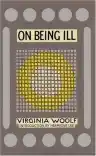
"Virginia Woolf observes that though illness is part of every human being's experience, it has rarely been the focus of literature - like the more acceptable subjects of war and love. We cannot quote Shakespeare to describe a headache. We…
essay-collection · 1931
essay-collection · 1932
essay · 1932
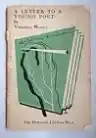
A letter from Virginia Woolf to an aspiring poet who had written to her for help with composition. A fascinating insight into the way Woolf thought of poetry.
extended-essay · 1938
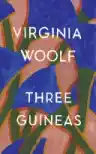
The author received three separate requests for a gift of one guinea-one for a women’s college building fund, one for a society promoting the employment of professional women, and one to help prevent war and “protect culture, and…
essay-collection · 1942
essay-collection · 1947
essay-collection · 1950
essay-collection · 1958
essay-collection · 1965
essay-collection · 1977
play · 1976
co-authored-short-story-collection · 1917
Includes: 'The Mark on the Wall' by Virginia Woolf (24 p.) 'St Brides Bay' by Mark Haddon (30 p.) Virginia Woolf was one of the most influential writers of the twentieth century. With her husband, Leonard Woolf, she started the Hogarth…
juvenilia · 1973
Virginia Woolf (1882–1941) was an English novelist, essayist, and publisher. She was a major figure in literary modernism and a prominent member of the Bloomsbury Group.
Sources: britishlibrary.cn (opens in a new tab)lib.uchicago.edu (opens in a new tab)
Born Adeline Virginia Stephen in London on January 25, 1882, she died on March 28, 1941.
Sources: virginiawoolfsociety.org.uk (opens in a new tab)britishlibrary.cn (opens in a new tab)
Her writing was influenced by authors such as Marcel Proust, music by Igor Stravinsky, and Post-Impressionist art. These influences helped shape her modernist interest in consciousness, perception, time, and the city.
Sources: britishlibrary.cn (opens in a new tab)academic.oup.com (opens in a new tab)
In 1917, Woolf and her husband, Leonard Woolf, founded the Hogarth Press. She helped produce its hand-printed books, making her an important publisher as well as a novelist and essayist.
Woolf’s stream-of-consciousness technique remains highly influential in modernist fiction, while her feminist criticism continues to shape literary studies and discussions of women’s intellectual and creative freedom.
Sources: britishlibrary.cn (opens in a new tab)campuspress.yale.edu (opens in a new tab)