Embracing Hope: On Freedom, Responsibility and the Meaning of Life
posthumous collection · First published 2024
Author guide
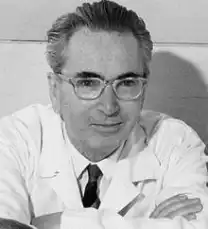
Viktor E. Frankl (1905–1997) was an Austrian neurologist and psychiatrist who developed logotherapy and existential analysis, emphasizing the human search for meaning and responsibility. After surviving Nazi concentration camps, he wrote influential memoirs and works on psychotherapy, psychiatry, religion, suffering, freedom, and meaning.
Catalog record updated .
posthumous collection · First published 2024
Not sure where to begin?
The central memoir and the most accessible introduction to Frankl's experience and meaning-centered outlook.
A strong starting point for studying Frankl's clinical theory and practice.
Read in order
collected works · complete
The posthumous collected works of Viktor E. Frankl, combining major books with letters, archival materials, previously unpublished writings, lectures, interviews, and selected texts.
Book 1 · collected works · 2005
Book 2 · collected works · 2006
Book 3 · collected works · 2008
Book 4 · collected works · 2011
Book 5 · collected works · 2018
Outside the series
nonfiction · 1946
nonfiction · 1948
nonfiction · 1948
nonfiction · 1949
nonfiction · 1950
nonfiction · 1969
nonfiction · 1977
nonfiction · 1978
memoir · 1946
memoir · 1995
essay collection · 1946
Mehrere Jahre musste der österreichische Psychologe Viktor E. Frankl in deutschen Konzentrationslagern verbringen. Doch trotz all des Leids, das er dort sah und erlebte, kam er zu dem Schluss, dass es selbst an Orten der größten…
essay collection · 1967
essay collection · 1971
essay collection · 1978
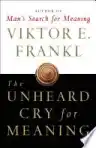
In our age of depersonalization, Frankl teaches the value of living to the fullest. Upon his death in 1997, Viktor E. Frankl was lauded as one of the most influential thinkers of our time. The Unheard Cry for Meaning marked his return to…
posthumous collection · 2005
posthumous collection · 2010
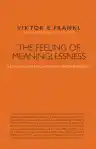
In The Feeling of Meaninglessness, Viktor Frankl, the founder of logotherapy, a psychotherapeutic method which focus on a will to meaning as the driving force of human life, takes a look at how the modern condition affects the human…
posthumous collection · 2015
posthumous collection · 2023
posthumous collection · 2024
co-authored book · 1982
co-authored dialogue · 2005
Viktor E. Frankl was an Austrian neurologist and psychiatrist who founded logotherapy and existential analysis, a meaning-centered school of psychotherapy. He was born in Vienna in 1905 and died there in 1997.
Sources: franklzentrum.org (opens in a new tab)geschichte.univie.ac.at (opens in a new tab)
Frankl was a professor of neurology and psychiatry at the University of Vienna and directed the Vienna Neurological Policlinic from 1946 to 1970. He also held guest professorships, including at Harvard University, and later taught logotherapy in San Diego.
Sources: franklzentrum.org (opens in a new tab)geschichte.univie.ac.at (opens in a new tab)
Frankl’s early thinking was influenced by Sigmund Freud’s psychoanalysis and Alfred Adler’s individual psychology. He later moved beyond both approaches and developed his own emphasis on meaning, freedom, and responsibility.
Sources: geschichte.univie.ac.at (opens in a new tab)viktorfrankl.org (opens in a new tab)
Because he was Jewish, Frankl was persecuted by the Nazis and deported to Theresienstadt, Auschwitz, and Dachau subcamps. He survived, but his mother, brother, and first wife were murdered, and these experiences strongly informed his later meaning-centered psychotherapy.
Sources: geschichte.univie.ac.at (opens in a new tab)viktorfrankl.org (opens in a new tab)
Frankl was the first non-American psychiatrist to receive the American Psychiatric Association’s Oskar Pfister Prize and received 29 honorary doctorates. His legacy continues through the Viktor Frankl Institute and numerous logotherapy education and research centers worldwide.
Sources: franklzentrum.org (opens in a new tab)psychiatry.org (opens in a new tab)geschichte.univie.ac.at (opens in a new tab)viktorfrankl.org (opens in a new tab)