Les Misérables
The fullest introduction to Hugo's social imagination, narrative scale, and political concerns.
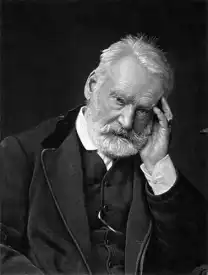
Author guide
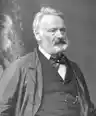
Victor-Marie Hugo was a leading figure of French Romanticism whose work spans lyric and epic poetry, historical and social novels, drama, travel writing, literary criticism, political essays, memoir, and public advocacy. His major works include Notre-Dame de Paris, Les Misérables, Les Contemplations, La Légende des siècles, and a series of influential Romantic dramas.
Catalog record updated .
Not sure where to begin?
The fullest introduction to Hugo's social imagination, narrative scale, and political concerns.
A relatively compact major novel and a clear entry into Hugo's historical imagination.
The central lyric collection for encountering Hugo's intimate and philosophical poetry.
Read in order
poetry · complete
Hugo's epic poetry cycle, published in three principal series between 1859 and 1883.
Book 1 · poetry · 1859
Book 2 · poetry · 1877
Book 3 · poetry · 1883
nonfiction · complete
A three-volume collection of Hugo's political speeches, public addresses, and political writings.
Book 1 · political writing · 1875
Book 2 · political writing · 1875
Book 3 · political writing · 1876
Outside the series
novel · 1823
novel · 1826
"Set in 1791, during the first months of a slave revolt that would eventually lead to the creation of the black republic of Haiti in 1804, Bug-Jargal is a tale of interracial friendship and rivalry, an account of the ties that bind a…
novella · 1829
novel · 1831
novella · 1834
Claude Gueux was a short story written by Victor Hugo in 1834. It is considered an early example of "true crime" fiction, and contains Hugo's early thoughts on societal injustice which thirty years later he would flesh out in his novel…
novel · 1862
Victor Hugo's tale of injustice, heroism, and love follows the fortunes of Jean Valjean, an escaped convict determined to put his criminal past behind him. But his attempts to become a respected member of the community are constantly put…
novel · 1866
Gilliat se rejeta en arrière, mais put à peine remuer. Il était comme cloué. De sa main gauche restée libre il prit son couteau qu'il avait entre ses dents, et de cette main, tenant le couteau, s'arc-bouta au rocher, avec un effort…
nonfiction · 1867
novel · 1869
Victor Hugo commence la rédaction de son ouvrage le 21 juillet 1866, à Bruxelles et le termine deux ans plus tard, le 23 août 1868 toujours à Bruxelles3. Mais c'est en exil à Guernesey qu'il en rédige la plus grande partie. L'œuvre se…
novel · 1874
Dans a Vendée de 1793, trois personnages s'affrontent : l'aristocrate Lantenac, fidèle à son passé, son petit-neveu Gauvain, tourné vers l'avenir généreux de la République, et le conventionnel Cimourdain, plus durement soucieux des…
nonfiction · 1942
travel · 1829
travel · 1842
memoir · 1874
memoir · 1887
travel · 1892
memoir · 1901
essays · 1834
essay · 1864
essays · 1902
essay · 1902
poetry · 1822
poetry · 1824
poetry · 1826
Quelque chose me presse d'elever la voix, et d'appelermon siecle en jugement. F. DE LA MENNAIS.Ecoutez : je vais vous dire des choses du coeur. HAFIZ.LIVRE PREMIER1818 - 1822Vox clamabat in deserto.ODE PREMIERELE POETE DANS LES…
poetry · 1829
poetry · 1831
poetry · 1835
poetry · 1837
poetry · 1840
poetry · 1853
L'histoire ne marche pas à reculons. On ne fonde pas un empire bourgeois sur les ruines d'une république. Pour l'avoir clamé, Victor Hugo est exilé par celui qu'il appelait Napoléon le petit, caricature de l'autre, celui des soldats de…
poetry · 1856
Demain dès l'aube, à l'heure où blanchit la campagne, Je partirai, Vois-tu je sais que tu m'attends. J'irai par la forêt, j'irai par la montagne Je ne puis demeurer loin de toi plus longtemps. "Qu'est-ce que les Contemplations? C'est ce…
poetry · 1865
poetry · 1872
poetry · 1877
poetry · 1878
poetry · 1879
poetry · 1880
poetry · 1880
poetry · 1881
poetry · 1886
poetry · 1888
poetry · 1891
poetry · 1898
poetry · 1902
poetry · 1942
play · 1821
play · 1827
play · 1828
play · 1830
L'auteur de ce drame ecrivait il y a peu de semaines a propos d'un poete mort avant l'age: «...Dans ce moment de melee et de tourmente litteraire, qui faut-il plaindre, ceux qui meurent ou ceux qui combattent? Sans doute, il est triste de…
play · 1831
This is a play written with great controversy at the times of Victor Hugo, its author. The play was forced to become idle due to the possibility of bringing shame to the monarchy of Lois the XIII and the future heirs to the monarchy.…
play · 1832
Une ambiance de fête règne à la cour de François Ier. Le roi s'encanaille : il boit et rit des railleries de son bouffon Triboulet, qui l'incite à la débauche. Tous ignorent que l'amuseur bossu a une fille, Blanche, un joyau qu'il chérit…
play · 1833
Indifférente à la haine de l'Italie entière, Lucrèce Borgia parade au carnaval de Venise. Qui pourrait inquiéter cette femme de pouvoir qui baigne dans l'adultère, l'inceste et le crime ? Elle a peur cependant, et tremble. pour un simple…
play · 1833
Il y a deux manieres de passionner la foule au theatre : par le grand et par le vrai. Le grand prend les masses, le vrai saisit l'individu. Le but du poete dramatique, quel que soit d'ailleurs l'ensemble de ses idees sur l'art, doit donc…
play · 1835
play · 1836
play · 1838
Trois especes de spectateurs composent ce qu'on est convenu d'appeler le public : premierement, les femmes ; deuxiemement, les penseurs ; troisiemement, la foule proprement dite. Ce que la foule demande presque exclusivement a l'oeuvre…
play · 1843
play · 1882
play · 1886
play · 1902
play · 1934
play · 1951
political writing · 1852
Victor Hugo was born in Besançon, France, on February 26, 1802, and died in Paris on May 22, 1885.
Source: senat.fr (opens in a new tab)
Hugo was a French poet, dramatist, essayist, artist, and politician. He served as a deputy and senator and was elected to the Académie française in 1841.
Sources: catalogue.bnf.fr (opens in a new tab)academie-francaise.fr (opens in a new tab)
His 1827 preface to Cromwell established him as a leader of the Romantic movement, while the 1830 premiere of Hernani became a celebrated confrontation between Romantic and classical theater.
Hugo opposed Louis-Napoléon Bonaparte’s coup d’état of December 2, 1851, and was banished from France. He lived in Brussels, Jersey, and Guernsey before returning after the fall of the Second Empire in 1870.
Sources: maisonsvictorhugo.paris.fr (opens in a new tab)senat.fr (opens in a new tab)
Hugo was elected to the Académie française, became a peer of France, and received national funerals in 1885 before being buried in the Panthéon. He remains a defining figure in French literature and public life.
Sources: academie-francaise.fr (opens in a new tab)senat.fr (opens in a new tab)