Speed: How It Explains the World
book · First published 2025
Author guide
Vaclav Smil is Distinguished Professor Emeritus in the Faculty of Environment at the University of Manitoba and a Fellow of the Royal Society of Canada. His interdisciplinary research examines energy, environment, population, food, technical advances, growth, innovation, size, speed, and efficiency. He is the author of more than forty original books and hundreds of scholarly papers, and a Member of the Order of Canada.
Catalog record updated .
book · First published 2025
Not sure where to begin?
Accessible overview of Smil's core interests in energy, food, materials, transport, and global systems.
Comprehensive historical synthesis of energy use and the development of civilizations.
Outside the series
book · 1983
book · 1994
Every human activity entails the conversion of energy. Changes in the fundamental sources of energy, and in the use of energy sources, are a basic dimension of the evolution of society. Our appreciation of the significance of these…
book · 1997
Introduces biogeochemical cycles, explaining the interrelationship of carbon, nitrogen, sulfur, and living organisims as agents of change in the environment
book · 1998
Energy is the only universal currency. One of its many forms must be transformed into another in order for stars to shine, planets to rotate, living things to grow, and civilizations to evolve. Recognition of this universality was one of…
book · 2002
"In his latest book, Vaclav Smil tells the story of the Earth's biosphere from its origins to its long-term future. He explains the workings of its parts and what is known about their interactions. He examines the biosphere's physics,…
book · 2004
book · 2005
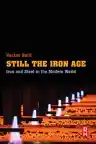
The period between 1867 and 1914 remains the greatest watershed in human history since the emergence of settled agricultural societies: the time when an expansive civilization based on synergy of fuels, science, and technical innovation…
book · 2006
Post-WWI inventions transformed the technical advances that created the modern world, & added new capabilities ranging from both military uses of nuclear energy to the universal diffusion of microprocessors. This book examines most of…
book · 2003
An objective, comprehensive, and accessible examination of today's most crucial problem: preserving the environment in the face of society's insatiable demand for energy. In Energy at the Crossroads, Vaclav Smil considers the twenty-first…
book · 2008
A comprehensive, systematic, analytically unified, and interdisciplinary treatment of energy in nature and society, from solar radiation and photosynthesis to our fossil fueled civilization and its environmental consequences.
book · 2008
book · 2008
In this book, the author takes a wide-ranging interdisciplinary look at the catastrophes and trends the next fifty years may bring. The author looks at rare but cataclysmic events, both natural and human-produced, then at trends of global…
book · 2010
An investigation of the America-Rome analogy that goes deeper than the facile comparisons made on talk shows and in glossy magazine articles. America's post-Cold War strategic dominance and its pre-recession affluence inspired pundits to…
book · 2012
In a little more than a century, the Japanese diet has undergone a dramatic transformation. This book points out that the gains in the quality of Japans diet have exacted a price in terms of land use changes, water requirements, & marine…
book · 2013
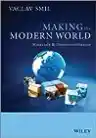
How much further should the affluent world push its material consumption? Does relative dematerialization lead to absolute decline in demand for materials? These and many other questions are discussed and answered in Making the Modern…
book · 2013
"In Made in the USA, Vaclav Smil powerfully rebuts the notion that manufacturing is a relic of predigital history and that the loss of American manufacturing is a desirable evolutionary step toward a pure service economy. Smil argues that…
book · 2013
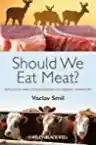
"Meat eating is often a contentious subject, whether considering the technical, ethical, environmental, political, or health-related aspects of production and consumption. This book is a wide-ranging and interdisciplinary examination and…
book · 2015
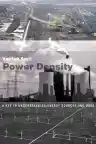
The first systematic, quantitative appraisal of power density, offering detailed reviews of power densities of renewable energy flows, fossil fuels, and all common energy uses. “There's no author whose books I look forward to more than…
book · 2015
Natural gas is the world’s cleanest fossil fuel; it generates less air pollution and releases less CO2 per unit of useful energy than liquid fuels or coals. With its vast supplies of conventional resources and nonconventional stores, the…
book · 2016
Although the last two generations have seen an enormous amount of attention paid to advances in electronics, the fact remains that high-income, high-energy societies could thrive without microchips, etc., but, by contrast, could not exist…
book · 2017
A comprehensive account of how energy has shaped society throughout history, from pre-agricultural foraging societies through today's fossil fuel–driven civilization. "I wait for new Smil books the way some people wait for the next 'Star…
book · 2019
A systematic investigation of growth in nature and society, from tiny organisms to the trajectories of empires and civilizations. Growth has been both an unspoken and an explicit aim of our individual and collective striving. It governs…
book · 2020
'There is no author whose books I look forward to more than Vaclav Smil' Bill Gates Is flying dangerous? How much do the world's cows weigh? And what makes people happy? From earth's nations and inhabitants, through the fuels and foods…
book · 2021
Epochal transitions -- Populations -- Agricultures and diets -- Energies -- Economies -- Environment -- Outcomes and outlooks.
book · 2023
From the New York Times-bestselling author, a new volume on the history of human ingenuity—and its attendant breakthroughs and busts. Included in BILL GATES's 2023 Holiday Reading List Included in Lit Hub’s Most Anticipated Books of 2023…
book · 2025