Other Voices, Other Rooms
The acclaimed debut novel and a foundational entry point into Capote's fiction.
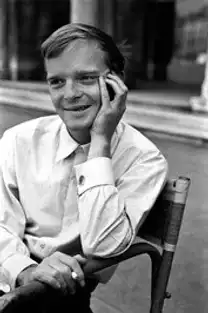
Author guide
Truman Capote (1924–1984) was an American writer whose work ranged from Southern Gothic fiction and short stories to travel writing, literary journalism, memoir, drama, and narrative nonfiction. His major works include Other Voices, Other Rooms, The Grass Harp, Breakfast at Tiffany's, In Cold Blood, Music for Chameleons, and the unfinished novel Answered Prayers. Several posthumous books present recovered manuscripts or previously unpublished stories.
Catalog record updated .
Not sure where to begin?
The acclaimed debut novel and a foundational entry point into Capote's fiction.
A concise introduction to Capote's lighter, more lyrical fiction.
His landmark work of narrative nonfiction and literary journalism.
Read in order
story-cycle · complete
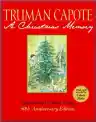
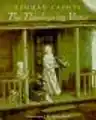
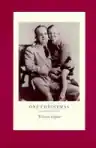
Three separately published autobiographical holiday stories: A Christmas Memory, The Thanksgiving Visitor, and One Christmas.
Book 1 · novella · 1966
A reminiscence of a Christmas shared by a seven-year-old boy and a sixtyish childlike woman, with enormous love and friendship between them.
Book 2 · short_story · 1968
A boy recalls his life with an elderly relative in rural Alabama in the 1930s and the lesson she taught him one Thanksgiving Day about dealing with a bully from school. Autobiographical.
Book 3 · memoir · 1983
One unforgettable Christmas, young Truman Capote is sent from his childhood home and his beloved cousin Miss Sook to New Orleans, to a father he's never met. Far from the warmth and familiarity of small town dreams and family traditions,…
Outside the series
novel · 1948
Other Voices, Other Rooms is a 1948 novel by Truman Capote. It is written in the Southern Gothic style and is notable for its atmosphere of isolation and decadence. Other Voices, Other Rooms is significant because it is both Capote's…
novel · 1951
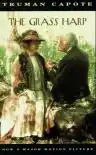
Set in a small Southern town in the 1930s, this classic work tells the story of three endearing misfits--an orphaned boy and two whimsical old ladies--who one day take up residence in a tree house. Now a major motion picture from Fine…
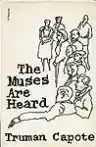
nonfiction · 1956
fiction_collection · 1958
Published with three short stories this novella cemented Capote’s position at the forefront of American literature. It is the story of a friendship between New York neighbours, good time girl Holly Golightly and the unnamed male narrator.
nonfiction_novel · 1966
On November 15, 1959, in the small town of Holcomb, Kansas, four members of the Clutter family were savagely murdered by blasts from a shotgun held a few inches from their faces. There was no apparent motive for the crime, and there were…
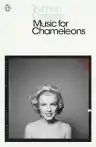
fiction_and_nonfiction_collection · 1980
This collection of 14 short stories includes Handcarved Coffins which, like the novel In Cold Blood, is based on the brutal crimes of a real-life murderer. Of the 14 stories, seven are potraits of characters such as Marilyn Monroe and a…
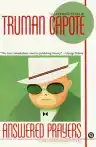
unfinished_novel · 1986
RESUMEN: El protagonista de la novela ingenioso, encantador, bisexual, absolutamente amoral logró escaparse de un orfanato a los trece años, aprendió el oficio de masajista y se las ingenió para convertirse en un pícaro moderno y codearse…
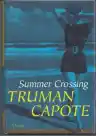
novel · 2005
Grady McNeil comes from a very privileged family but she wants more, her parents are very conventional. Grady has an affair with a Jewish parking attendant, if her parents knew they would be horrified. She has to make a decision about her…
short_story_collection · 1949
illustrated_short_story · 1987
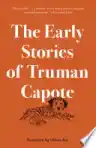
short_story_collection · 2015
The early fiction of one of the nation’s most celebrated writers, Truman Capote, as he takes his first bold steps into the canon of American literature Recently rediscovered in the archives of the New York Public Library, these short…
essay_collection · 1950
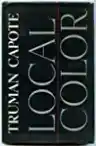
essay_collection · 1973
play · 1952
musical_play · 1968
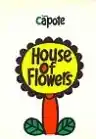
multimedia_book · 1969
Truman Capote was an American writer born in New Orleans on September 30, 1924. Much of his childhood was spent with relatives in Monroeville, Alabama, an experience that deeply shaped his imagination and writing.
Source: neh.gov (opens in a new tab)
Capote is best known for his fiction, literary journalism, and especially In Cold Blood, his landmark account of a 1959 Kansas murder case. The book became a standard-setting example of the “nonfiction novel.”
Source: neh.gov (opens in a new tab)
His childhood in the Depression-era South, particularly his relationship with his cousin Sook, influenced his emotionally vivid storytelling. His friendship with Harper Lee and exposure to the Southern literary tradition also informed his work.
Source: neh.gov (opens in a new tab)
Capote was a 1952 National Book Award fiction finalist for The Grass Harp. He later served as a fiction judge for the National Book Awards in 1974.
Sources: nationalbook.org (opens in a new tab)nationalbook.org (opens in a new tab)
Capote helped transform true-crime writing into a widely respected literary genre, although later reporting questioned the factual accuracy of parts of In Cold Blood. His precise, highly stylized prose and cultural influence have kept his work widely read and discussed.
Source: neh.gov (opens in a new tab)