Book Series Guide
Steven Pinker

Author guide

Steven Pinker Books in Order

Steven Pinker is an experimental cognitive psychologist and Johnstone Family Professor of Psychology at Harvard University. A native of Montreal, he earned his bachelor's degree from McGill University and his PhD from Harvard, and has taught at Harvard, Stanford, and MIT. His research spans visual cognition, language, psycholinguistics, social relations, and common knowledge. He is also a widely read author whose books explore language, cognition, human nature, violence, progress, writing, and rationality.

popular sciencecognitive psychologylinguisticspsychologyscience writingsocial science

Catalog record updated .

Steven Pinker's Newest Book

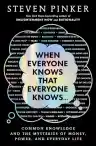
Cover of When Everyone Knows That Everyone Knows...: Common Knowledge and the Mysteries of Money, Power, and Everyday Life

When Everyone Knows That Everyone Knows...: Common Knowledge and the Mysteries of Money, Power, and Everyday Life

book · First published 2025

From one of the world’s most celebrated intellectuals, a brilliantly insightful work that explains how we think about each other’s thoughts about each other’s thoughts, ad infinitum. It sounds impossible, but Steven Pinker shows that we do it all the time. This awareness, which we experience as something that is public or “out there,” is called common knowledge, and it has a momentous impact on our social, political, and economic lives. Common knowledge is necessary for coordination, for making arbitrary but complementary choices like driving on the right, using paper currency, and coalescing behind a political leader or movement. It’s also necessary for social coordination: everything from rendezvousing at a time and place to speaking the same language to forming enduring relationships of friendship, romance, or authority. Humans have a sixth sense for common knowledge, and we create it with signals like laughter, tears, blushing, eye contact, and blunt speech. But people also go to great lengths to avoid common knowledge—to ensure that even if everyone knows something, they can’t know that everyone else knows they know it. And so we get rituals like benign hypocrisy, veiled bribes and threats, sexual innuendo, and pretending not to see the elephant in the room. Pinker shows how the hidden logic of common knowledge can make sense of many of life’s enigmas: financial bubbles and crashes, revolutions that come out of nowhere, the posturing and pretense of diplomacy, the eruption of social media shaming mobs and academic cancel culture, the awkwardness of a first date. Artists and humorists have long mined the intrigues of common knowledge, and Pinker liberally uses their novels, jokes, cartoons, films, and sitcom dialogues to illuminate social life’s tragedies and comedies. Along the way he answers questions like: Why do people hoard toilet paper at the first sign of an emergency? Why are Super Bowl ads filled with ads for crypto? Why, in American presidential primary voting, do citizens typically select the candidate they believe is preferred by others rather than their favorite? Why did Russian authorities arrest a protester who carried a blank sign? Why is it so hard for nervous lovers to say goodbye at the end of a phone call? Why does everyone agree that if we were completely honest all the time, life would be unbearable? Consistently riveting in explaining the paradoxes of human behavior, When Everyone Knows That Everyone Knows… invites us to understand the ways we try to get into each other’s heads and the harmonies, hypocrisies, and outrages that result.

Not sure where to begin?

Start with one of these

Cover of The Language Instinct

The Language Instinct

Best introduction to Pinker's core interests in language, cognition, and human nature.

Cover of How the Mind Works

How the Mind Works

Accessible synthesis of his cognitive-scientific account of the mind.

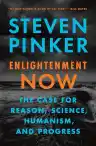
Cover of Enlightenment Now: The Case for Reason, Science, Humanism, and Progress

Enlightenment Now: The Case for Reason, Science, Humanism, and Progress

Clear entry point to his arguments about reason, science, humanism, and progress.

Outside the series

Bibliography by category

Essays and speeches (1)
Other (12)
  1. Language Learnability and Language Development

    book · 1984

    In this influential study, Steven Pinker develops a new approach to the problem of language learning. Now reprinted with new commentary by the author, this classic work continues to be an indispensable resource in developmental…

  2. The Language Instinct

    book · 1994

    From the Preface... I have never met a person who is not interested in language. I wrote this book to try to satisfy that curiosity. Language is beginning to submit to that uniquely satisfying kind of understanding that we call science,…

  3. How the Mind Works

    book · 1997

    An assessment of human thought and behavior explores conundrums from the mind's ability to perceive three dimensions to the nature of consciousness, in an account that draws on beliefs in cognitive science and evolutionary biology.

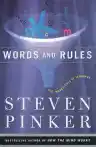
  4. Words and Rules: The Ingredients of Language

    book · 1999

    How does language work, and how do we learn to speak? Why do languages change over time, and why do they have so many quirks and irregularities? In this book, the profound mysteries of language are explored.

  5. The Blank Slate: The Modern Denial of Human Nature

    book · 2002

    In The Blank Slate, Steven Pinker, one of the world's leading experts on language and the mind, explores the idea of human nature and its moral, emotional, and political colorings. With characteristic wit, lucidity, and insight, Pinker…

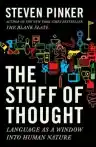
  6. The Stuff of Thought: Language as a Window into Human Nature

    book · 2007

    New York Times bestselling author Steven Pinker possesses that rare combination of scientific aptitude and verbal eloquence that enables him to provide lucid explanations of deep and powerful ideas. His previous books—including the…

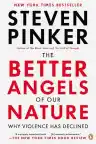
  7. The Better Angels of Our Nature: Why Violence Has Declined

    book · 2011

    From Goodreads: Selected by *The New York Times Book Review* as a Notable Book of the Year The author of *The New York Times* bestseller *The Stuff* of Thought offers a controversial history of violence. Faced with the ceaseless stream of…

  8. Enlightenment Now: The Case for Reason, Science, Humanism, and Progress

    book · 2018

    Is the world really falling apart? Is the ideal of progress obsolete? Cognitive scientist Steven Pinker urges us to step back from the gory headlines and prophecies of doom, which play to our psychological biases. Instead, follow the…

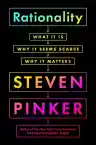
  9. Rationality: What It Is, Why It Seems Scarce, Why It Matters

    book · 2021

    Like the subtitle says: what rationality is, the habits of mind that exhibit (and inhibit) rationality, and why wide-spread rationality is desirable.

  10. When Everyone Knows That Everyone Knows...: Common Knowledge and the Mysteries of Money, Power, and Everyday Life

    book · 2025

    From one of the world’s most celebrated intellectuals, a brilliantly insightful work that explains how we think about each other’s thoughts about each other’s thoughts, ad infinitum. It sounds impossible, but Steven Pinker shows that we…

Frequently asked questions about Steven Pinker

Who is Steven Pinker?

Steven Pinker is an experimental cognitive psychologist and popular writer on language, mind, and human nature. He is the Johnstone Family Professor of Psychology at Harvard University.

Source: psychology.fas.harvard.edu (opens in a new tab)

Where did Steven Pinker study and teach?

A native of Montreal, Pinker earned his bachelor’s degree at McGill University in 1976 and his PhD from Harvard in 1979. He has taught at Harvard, Stanford, and MIT.

Source: psychology.fas.harvard.edu (opens in a new tab)

What is Steven Pinker known for?

Pinker is known for research on vision, language, and social relations, as well as for explaining cognitive psychology and human nature to general readers through popular writing.

Source: psychology.fas.harvard.edu (opens in a new tab)

Who influenced Steven Pinker’s career?

In his own account, Pinker’s interests were shaped by Harvard courses with Jill de Villiers and Reid Hastie, work with Stephen Kosslyn and Joan Bresnan, and exposure to ideas from Noam Chomsky and Jerry Fodor.

Source: linguistlist.org (opens in a new tab)

What awards and honors has Steven Pinker received?

His research has received prizes from organizations including the National Academy of Sciences, the Royal Institution of Great Britain, the American Psychological Association, and the Association for Psychological Science. He has also received eight honorary doctorates and was elected to the National Academy of Sciences in 2016.

Sources: psychology.fas.harvard.edu (opens in a new tab)nasonline.org (opens in a new tab)