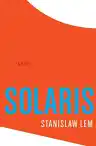
Solaris
The clearest entry point to Lem's serious philosophical science fiction.
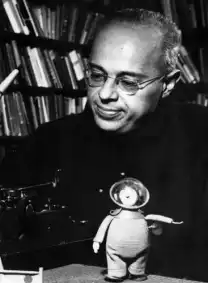
Author guide
Stanisław Lem (1921–2006) was a Polish writer whose fiction combined science fiction, philosophical inquiry, grotesque satire, detective forms, and literary experimentation. His nonfiction addressed cybernetics, technology, futurology, literature, science, and the limits of human knowledge. He also wrote memoirs, plays, screenplays, poetry, journalism, interviews, and correspondence.
Catalog record updated .
Not sure where to begin?
The clearest entry point to Lem's serious philosophical science fiction.
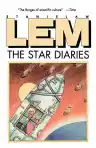
Introduces Lem's comic imagination and the recurring character Ijon Tichy.
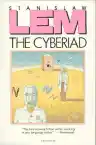
A self-contained showcase of Lem's satire, wordplay, and inventive storytelling.
Read in order
character-cycle · complete
Comic and philosophical adventures of the space traveler Ijon Tichy.
Book 1 · short-story-collection · 1957
Ijon Tichy, an amiable cosmic traveler, tells of his adventures and misfortunes which cast a disparaging light on twentieth-century concepts, beliefs, and institutions
Book 2 · novella · 1971
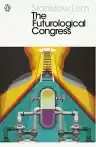
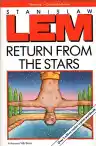
'This Room Guaranteed BOMB-FREE. From the Management' Hapless cosmonaut Ijon Tichy has been sent back to earth to attend the Eighth Futurological Congress in smog-bound, overpopulated Costa Rica, holed up with an assortment of scientists…
Book 3 · novel · 1982
Book 4 · novel · 1987
Are the self-programming robots on the moon ensuring "peace on Earth", or are they secretly plotting a terrestrial invasion of their own? This "futuristic version of Dr. Jekyll and Mr. Hyde" (Boston Phoenix) presents a hilarious take on…
apocryphal-collection · complete
Lem's sequence of apocryphal reviews, introductions, and scholarly essays about nonexistent books.
Book 1 · apocryphal-essay-collection · 1971
Book 2 · apocryphal-essay-collection · 1973
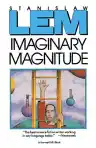
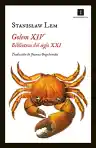
These wickedly authentic introductions to twenty-first-century books preface tomes on teaching English to bacteria, using animated X-rays to create "pornograms," and analyzing computer-generated literature through the science of…
Book 3 · apocryphal-essay · 1984
Book 4 · apocryphal-essay-collection · 1986
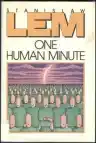
Contains three essays; *One Human Minute*, *The Upside-Down Revolution*, and *The World as Cataclysm* from science fiction master Stanisław Lem.
character-cycle · complete
Linked stories following the career of the astronaut pilot Pirx.
Book 1 · short-story-collection · 1968
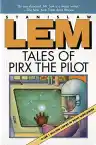
In Pilot Pirx, Lem has created an irresistibly likable character: an astronaut who gives the impression of still navigating by the seat of his pants-a bumbler but an inspired one. By investing Pirx with a range of human foibles, Lem…
Outside the series
novel · 1946
novel · 1951
novel · 1955
novel · 1955
nonfiction · 1957
novel · 1959
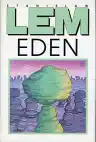
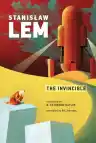
A six-man crew crash-lands on Eden, fourth planet from another sun. The men find a strange world that grows ever stranger, and everywhere there are images of death. The crew's attempt to communicate with this civilization leads to…
novel · 1959
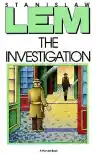
An eerie and offbeat mystery by a Kafka Prize–winning author. The case confronting Lieutenant Gregory is not one that a man of Scotland Yard would expect. In fact, it is not one any sane man would care to entertain. Bodies are…
novel · 1961
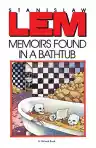
"Memoiren, gefunden in der Badewanne ist eine satirische Farce, eine surrealistische Anti-Utopie und eine Schmähschrift auf die absolute Bürokratie und den totalen Polizeistaat, in dem alles und jeder gelenkt, einem geheimen Zweck…
novel · 1961
The cult-classic by Stanislaw Lem that spawned the movie is now available for your Kindle! Until now the only English edition was a 1970 version, which was translated from French and which Lem himself described as a "poor translation."…
novel · 1964
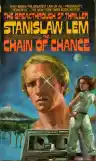
Reads initially like the sort of traditional science fiction you might see on TV - rocket lands on foreign planet, sends out teams to discover what gives. what follows is a gripping scientific detective story as we learn the terrible…
novel · 1968
From the critically acclaimed author of Solaris comes a classic sci-fi tale about scientists who must decode a message from intelligent beings in outer space—for fans of Arrival By pure chance, scientists detect a signal from space that…
nonfiction · 1968
nonfiction · 1970
novel · 1976
A former astronaut turned private detective is dispatched to Naples to discover the pattern in a mysterious series of deaths and disappearances occurring at a seaside spa.
novel · 1986
Nos hallamos en el siglo XXII y parece que por fin la humanidad va a hacer realidad un viejo sueño: entablar relación con seres inteligentes de otros sistemas planetarios. Con todo, la tripulación de la nave que tiene encomendada la…
memoir · 1966
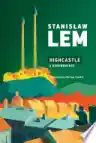
A playful, witty, reflective memoir of childhood by the science fiction master Stanisław Lem. With Highcastle, Stanisław Lem offers a memoir of his childhood and youth in prewar Lvov. Reflective, artful, witty, playful—“I was a monster,”…
interview-memoir · 2000
short-story-collection · 1954
short-story-collection · 1959
short-story-collection · 1964
short-story-collection · 1965
Trurl and Klaupacius are constructor robots who try to out-invent each other. They travel to the far corners of the cosmos to take on freelance problem-solving jobs, with dire consequences for their employers.
short-story-collection · 1996
essay-collection · 1962
essay-collection · 1975
apocryphal-essay · 1981
essay-collection · 1995
essay-collection · 1995
essay-collection · 1996
essay-collection · 1996
essay-collection · 1999
essay-collection · 2000
essay-collection · 2003
essay-collection · 2004
essay-collection · 2006
play-and-screenplay-collection · 1968
unfinished-novel-and-play-collection · 2009
posthumous-fiction-and-poetry-collection · 2009
short-prose-collection · 2001
correspondence · 2011
correspondence · 2013
Stanisław Lem (1921–2006) was a Polish writer, philosopher, essayist, satirist, and futurologist, internationally renowned for intellectually ambitious science fiction.
Sources: lem.pl (opens in a new tab)sf-encyclopedia.com (opens in a new tab)
He was a Polish author born in Lwów in 1921, when the city was part of Poland; Lwów is now called Lviv and lies in Ukraine. He moved to Kraków in 1946 and lived there for most of his later life.
Sources: english.lem.pl (opens in a new tab)gov.pl (opens in a new tab)
Lem studied medicine at the Lviv Medical Institute and later at Jagiellonian University in Kraków. He completed his medical studies but refused the final examinations to avoid becoming a military doctor; during the German occupation, he worked as a mechanic and welder.
Sources: english.lem.pl (opens in a new tab)sf-encyclopedia.com (opens in a new tab)
His work was shaped by science, technology, philosophy, and cybernetics, as well as by questions about human knowledge and the possibility of communication with other intelligences. His wartime experiences also informed some of his writing.
Sources: english.lem.pl (opens in a new tab)nybooks.com (opens in a new tab)sf-encyclopedia.com (opens in a new tab)
Among his honors were Poland’s State Prize for Literature, the Austrian State Prize for European Culture, and the Austrian Kafka Prize for Literature. He also received Poland’s Medal of the White Eagle and several honorary degrees.
Sources: english.lem.pl (opens in a new tab)lem.pl (opens in a new tab)