
Book Series Guide
Siddhartha Mukherjee

Author guide

Siddhartha Mukherjee Books in Order

Siddhartha Mukherjee is an Indian-born American physician, hematologist-oncologist, cancer researcher, and science writer. A Rhodes Scholar educated at Stanford University, the University of Oxford, and Harvard Medical School, he is an associate professor of medicine at Columbia University. His writing combines scientific history, clinical experience, biology, and personal narrative. His first book, The Emperor of All Maladies, won the 2011 Pulitzer Prize for General Nonfiction.

nonfictionpopular sciencemedical historyscience writing

Catalog record updated .

Siddhartha Mukherjee's Newest Book

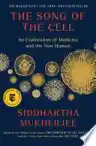
Cover of The Song of the Cell: An Exploration of Medicine and the New Human

The Song of the Cell: An Exploration of Medicine and the New Human

nonfiction · First published 2022

Presenting revelatory and exhilarating stories of scientists, doctors, and the patients whose lives may be saved by their work, the author draws on his own experience as a researcher, doctor, and prolific reader to explore how the discovery of cells created a new kind of medicine based on the therapeutic manipulation of cells.

Not sure where to begin?

Start with one of these

Cover of The Emperor of All Maladies: A Biography of Cancer

The Emperor of All Maladies: A Biography of Cancer

The best entry point to Mukherjee's work: his first book and a Pulitzer Prize-winning, highly accessible history of cancer.

Outside the series

Bibliography by category

Novels (4)
  1. The Emperor of All Maladies: A Biography of Cancer

    nonfiction · 2010

    The Emperor of All Maladies is a magnificent, profoundly humane “biography” of cancer—from its first documented appearances thousands of years ago through the epic battles in the twentieth century to cure, control, and conquer it to a…

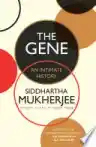
  2. The Gene: An Intimate History

    nonfiction · 2016

    Spanning the globe and several centuries, The Gene is the story of the quest to decipher the master-code that makes and defines humans, that governs our form and function. The story of the gene begins in an obscure Augustinian abbey in…

  3. The Song of the Cell: An Exploration of Medicine and the New Human

    nonfiction · 2022

    Presenting revelatory and exhilarating stories of scientists, doctors, and the patients whose lives may be saved by their work, the author draws on his own experience as a researcher, doctor, and prolific reader to explore how the…

Frequently asked questions about Siddhartha Mukherjee

Who is Siddhartha Mukherjee?

Siddhartha Mukherjee is an Indian-born American physician, hematologist-oncologist, cancer researcher, and science writer. He is an associate professor of medicine at Columbia University and practices medical oncology.

Sources: cancer.columbia.edu (opens in a new tab)pulitzer.org (opens in a new tab)

Where was Siddhartha Mukherjee born, and where did he study?

He was born in New Delhi, India. He earned a biology degree from Stanford University, a DPhil in immunology from Oxford University as a Rhodes Scholar, and an MD from Harvard Medical School.

Source: cancer.columbia.edu (opens in a new tab)

What inspired Siddhartha Mukherjee to become a writer?

His writing grew out of his clinical work with cancer patients; during oncology training, he kept notes to understand the emotional and scientific complexity of their care. He has also identified physician-writer Lewis Thomas as a major influence.

Sources: magazine.hms.harvard.edu (opens in a new tab)cuimc.columbia.edu (opens in a new tab)

What awards has Siddhartha Mukherjee won?

He won the 2011 Pulitzer Prize for General Nonfiction and the 2019 Lewis Thomas Prize for Writing About Science.

Sources: pulitzer.org (opens in a new tab)cuimc.columbia.edu (opens in a new tab)

Why is Siddhartha Mukherjee considered influential?

He combines clinical experience, historical research, and biology to make complex medicine accessible to general readers, while continuing research on blood development and blood cancers at Columbia. This dual role as physician-scientist and public-facing writer defines his influence.

Sources: pulitzer.org (opens in a new tab)cancer.columbia.edu (opens in a new tab)