Book Series Guide
Sam Kean

Author guide

Sam Kean Books in Order

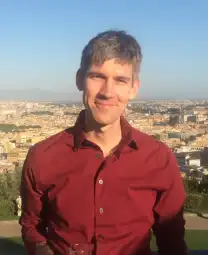
Sam Kean is an American science writer based in Washington, D.C. He is the author of narrative nonfiction books that explore chemistry, genetics, neuroscience, atmospheric science, espionage, scientific misconduct, archaeology, and lost treasures. His writing has appeared in publications including National Geographic, The New Yorker, The New York Times Magazine, The Atlantic, Slate, and The Best American Science and Nature Writing.

nonfictionpopular sciencehistory

Catalog record updated .

Sam Kean's Newest Book

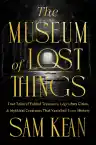
Cover of The Museum of Lost Things

The Museum of Lost Things

nonfiction · First published 2026

Discover the astonishing story of the world’s greatest lost treasures in this enthralling narrative by a writer with "the anecdotal flourishes of Oliver Sacks and the populist accessibility of Malcolm Gladwell." (Entertainment Weekly) Spanning a million years of history, the mysteries in these pages include fabled relics, legendary cities, mythical species, and undeciphered languages that have bedeviled seekers for centuries. Perhaps the single most common theme across all of history is loss. The loss of lands, loss of sacred objects, loss of languages, of rights, of life—the past groans with disappearances of all kinds. This enthralling narrative collects the most spellbinding tales of these experiences and weaves them into a thoughtful meditation on what it all means across the sweep of human history and the scope of human lives, including: The long-lost city of Troy The hidden tomb of Genghis Khan The destruction of the fabled library of Alexandria The near-destruction of the Mona Lisa and other art The decipherment of ancient Egyptian hieroglyphs The extinction—and potential resurrection—of dodos, mammoths, and other iconic species Provocative, surprising, and above all entertaining, this globe-trotting narrative acknowledges the sheer scale of humanity’s losses, celebrates the treasures we have managed to retain, and reveals why they continue to captivate us centuries later.
Not sure where to begin?

Start with one of these

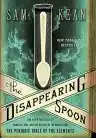
Cover of The Disappearing Spoon

The Disappearing Spoon

Best entry point to Kean's signature style: accessible narrative science told through surprising historical stories.

Outside the series

Bibliography by category

Novels (8)
  1. The Disappearing Spoon

    nonfiction · 2010

    Explores intriguing tales about every element of the periodic table, sharing their parts in human history, finance, mythology, war, evil, love, the arts, and the lives of the colorful scientists who discovered them.

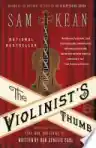
  2. The Violinist's Thumb

    nonfiction · 2012

    "In The Disappearing Spoon, bestselling author Sam Kean unlocked the mysteries of the periodic table. In THE VIOLINIST'S THUMB, he explores the wonders of the magical building block of life: DNA. There are genes to explain crazy cat…

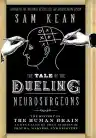
  3. The Tale of the Dueling Neurosurgeons

    nonfiction · 2014

    The story of neuroscience

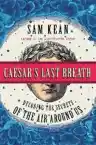
  4. Caesar's Last Breath

    nonfiction · 2017

    In Caesar's Last Breath, New York Times bestselling author Sam Kean takes us on a journey through the periodic table, around the globe, and across time to tell the story of the air we breathe, which, it turns out, is also the story of…

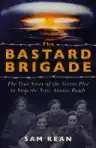
  5. The Bastard Brigade

    nonfiction · 2019

    Scientists have always kept secrets. But rarely have the secrets been as vital as they were during World War II. In the middle of building an atomic bomb, the leaders of the Manhattan Project were alarmed to learn that Nazi Germany was…

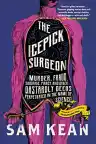
  6. The Icepick Surgeon

    nonfiction · 2021

    From New York Times bestselling author Sam Kean comes the gripping, untold history of science's darkest secrets, "a fascinating book [that] deserves a wide audience" (Publishers Weekly, starred review) Science is a force for good in the…

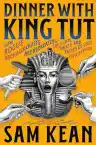
  7. Dinner with King Tut

    nonfiction · 2025

    From “one of America’s smartest and most charming writers” (NPR), an archaeological romp through the entire history of humankind—and through all five senses—from tropical Polynesian islands to forbidding arctic ice floes, and everywhere…

  8. The Museum of Lost Things

    nonfiction · 2026

    Discover the astonishing story of the world’s greatest lost treasures in this enthralling narrative by a writer with "the anecdotal flourishes of Oliver Sacks and the populist accessibility of Malcolm Gladwell." (Entertainment Weekly)…

Frequently asked questions about Sam Kean

Who is Sam Kean?

Sam Kean is a New York Times–bestselling science author known for narrative nonfiction that connects scientific ideas with history and human discovery.

Sources: samkean.com (opens in a new tab)sciencehistory.org (opens in a new tab)

Where did Sam Kean grow up and what did he study?

Kean grew up in South Dakota and attended college in Minnesota, where he studied physics and English. He later earned a master’s degree in library science in Washington, D.C.

Source: samkean.com (opens in a new tab)

How did Sam Kean become a science writer?

He began with physics but was also drawn to storytelling, so he pursued English and eventually moved into writing. Kean has described nonfiction as a way to remain engaged with science while sharing it with others.

Sources: ksmu.org (opens in a new tab)sdhumanities.org (opens in a new tab)

What awards or honors has Sam Kean received?

The Disappearing Spoon was shortlisted for the Royal Society Winton Prize for Science Books, while The Violinist’s Thumb and The Tale of the Dueling Neurosurgeons were nominated for PEN’s literary science writing award. His work has also received recognition from The Guardian, Science Friday, and other outlets.

Sources: samkean.com (opens in a new tab)royalsociety.org (opens in a new tab)

What is Sam Kean known for in science writing?

Kean is known for making complex science accessible through clear explanations, humor, and surprising historical stories. His public reach has also included NPR programs and the Science History Institute’s The Disappearing Spoon podcast.

Sources: ksmu.org (opens in a new tab)sciencehistory.org (opens in a new tab)