Book Series Guide
Richard Wright

Author guide

Richard Wright Books in Order

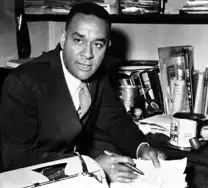
Richard Nathaniel Wright (1908–1960) was born in Mississippi and grew up amid poverty and racial segregation. His major works include the novella collection Uncle Tom's Children, the novel Native Son, the memoir Black Boy, and the international nonfiction works Black Power, The Color Curtain, Pagan Spain, and White Man, Listen! His later fiction and poetry extended his concerns into existentialism, expatriation, and global political experience.

novelshort fictionnovellamemoiressaynonfictiontravel writingsocial criticismdramapoetry

Catalog record updated .

Richard Wright's Newest Book

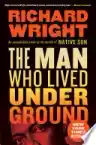
Cover of The Man Who Lived Underground

The Man Who Lived Underground

novel · First published 2021

Fred Daniels, a Black man, is picked up by the police after a brutal double murder and tortured until he confesses to a crime he did not commit. After signing a confession, he escapes from custody and flees into the city’s sewer system. This is the devastating premise of this scorching novel, a never-before-seen masterpiece by Richard Wright. Written between his landmark books Native Son (1940) and Black Boy (1945), at the height of his creative powers, it would see publication in Wright’s lifetime only in drastically condensed and truncated form, and ultimately be included in the posthumous short story collection Eight Men (1961). Now, for the first time, by special arrangement with the author’s estate, the full text of the work that meant more to Wright than any other (“I have never written anything in my life that stemmed more from sheer inspiration”) is published in the form that he intended, complete with his companion essay, “Memories of My Grandmother.” Malcolm Wright, the author’s grandson, contributes an afterword.
Not sure where to begin?

Start with one of these

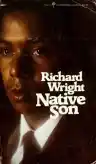
Cover of Native Son

Native Son

The central and most widely taught example of Wright's social-protest fiction.

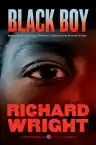
Cover of Black Boy: A Record of Childhood and Youth

Black Boy: A Record of Childhood and Youth

The clearest entry into Wright's childhood, education, and formation as a writer.

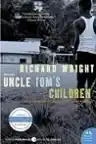
Cover of Uncle Tom's Children

Uncle Tom's Children

An accessible introduction to his early short fiction and Southern racial themes.

Outside the series

Bibliography by category

Novels (12)
  1. Uncle Tom's Children

    novella-collection · 1938

    Set in the American Deep South, each of the powerful novellas collected here concerns an aspect of the lives of black people in the post-slavery era, exploring their resistance to white racism and oppression. Originally published in 1938,…

  2. Native Son

    novel · 1940

    Right from the start, Bigger Thomas had been headed for jail. It could have been for assault or petty larceny: by chance. it was for murder and rape. Native Son tells the story of this young black man caught in a downward spiral after he…

  3. The Outsider

    novel · 1953

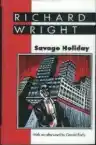
  4. Savage Holiday

    novel · 1954

    Erskine Fowler, an insurance executive forced by corporate intrigue into the long holiday of retirement, becomes enmeshed in a weekend of bizarre and bloody circumstances that reveal his troubled psyche and desperation. Naked and…

  5. The Long Dream

    novel · 1958

  6. Lawd Today!

    novel · 1963

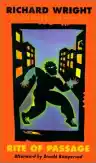
  7. Rite of Passage

    novella · 1994

    When fifteen-year-old Johnny Gibbs is told that he is really a foster child, he runs off into the streets of Harlem and meets up with a gang that wants him to participate in a mugging. Includes criticism of Wright's fiction.

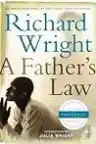
  8. A Father's Law

    novel · 2008

  9. The Man Who Lived Underground

    novel · 2021

    Fred Daniels, a Black man, is picked up by the police after a brutal double murder and tortured until he confesses to a crime he did not commit. After signing a confession, he escapes from custody and flees into the city’s sewer system.…

Nonfiction (3)
  1. Black Boy: A Record of Childhood and Youth

    memoir · 1945

    Black Boy is a classic of American autobiography, a subtly crafted narrative of Richard Wright's journey from innocence to experience in the Jim Crow South. An enduring story of one young man's coming of age during a particular time and…

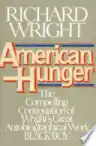
  2. American Hunger

    memoir · 1977

    The compelling continuation of Richard Wright's great autobiographical work, Black Boy Anyone who has read Richard Wright's Black Boy knows it to be one of the great American autobiographies. Covering Wright's early life in the South, the…

Short fiction (1)
  1. Eight Men

    short-story-collection · 1961

Essays and speeches (2)
  1. White Man, Listen!

    essay-collection · 1957

Poetry (1)
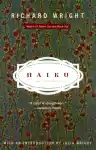
  1. Haiku: This Other World

    poetry-collection · 1998

Plays (1)

Frequently asked questions about Richard Wright

Who was Richard Wright?

Richard Wright (1908–1960) was an American novelist, essayist, short-story writer, and memoirist whose work confronted racism, poverty, and segregation. He is best known as a major twentieth-century African American literary voice.

Sources: poetryfoundation.org (opens in a new tab)mississippiencyclopedia.org (opens in a new tab)

What was Richard Wright’s early life like?

He was born near Natchez, Mississippi, to a sharecropper father and schoolteacher mother. Poverty, family upheaval, frequent moves, and the racial oppression he experienced in the Jim Crow South deeply shaped his outlook and writing.

Source: mississippiencyclopedia.org (opens in a new tab)

What influenced Richard Wright’s writing and political development?

His experiences of segregation and poverty were central influences. In Memphis, he discovered writers including H. L. Mencken, Theodore Dreiser, and Sherwood Anderson; in Chicago and New York, his work with leftist literary groups and the Federal Writers’ Project further shaped his career.

Source: mississippiencyclopedia.org (opens in a new tab)

What awards and recognition did Richard Wright receive?

Wright won first prize in a 1937 Story magazine contest for “Fire and Cloud.” In 1941, the NAACP awarded him the Spingarn Medal for his literary achievements.

Sources: mississippiencyclopedia.org (opens in a new tab)naacp.org (opens in a new tab)

What is Richard Wright’s literary legacy?

Wright’s candid portrayals of Black life under racism and segregation helped make those experiences central to twentieth-century American literature. His work continues to challenge readers and remains influential in discussions of race, identity, and social justice.

Sources: poetryfoundation.org (opens in a new tab)mississippiencyclopedia.org (opens in a new tab)