Night Talk and Other Poems
The earliest independently published book in the bibliography and Pevear's principal poetry collection.
Author guide
Richard Pevear (born 1943) is an American poet, literary translator, and academic. He earned degrees from Allegheny College and the University of Virginia and taught at several American institutions before becoming Distinguished Professor of Comparative Literature and later professor emeritus at the American University of Paris. With Larissa Volokhonsky, he produced acclaimed English translations of Russian classics. He has also translated from French, Italian, Spanish, and Greek, and has published poetry, children's books, and essays on literary translation.
Catalog record updated .
Not sure where to begin?
The earliest independently published book in the bibliography and Pevear's principal poetry collection.

A concise introduction to Pevear's thinking about literary translation and his own translation practice.
Read in order
poetry series · unknown
A Princeton University poetry series in which Night Talk and Other Poems appeared as volume 116.
Book 116 · poetry collection · 1977
Book 1 · literary essay chapbook · 2012
Outside the series
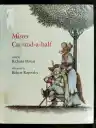
childrens picture book · 1986
A cat with a reputation for being fierce is invited to dinner by the forest animals, where a chain of accidents ensures the continuation of this erroneous belief.
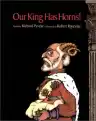
childrens picture book · 1987
Having discovered the king's horns while cutting his hair, a young barber is sworn to secrecy or he will lose his life.
Richard Pevear is an American poet, literary translator, and professor emeritus of comparative literature. He is best known for translating Russian classics into English with Larissa Volokhonsky.
Sources: aup.edu (opens in a new tab)penguinrandomhouse.com (opens in a new tab)
He earned a B.A. from Allegheny College and an M.A. from the University of Virginia. He taught at several American colleges before joining the American University of Paris in 1998, where he became Distinguished Professor Emeritus.
Sources: aup.edu (opens in a new tab)broadwayplaypublishing.com (opens in a new tab)
They met through Russian literature after Pevear wrote about dissident writer Andrei Sinyavsky. Their translation partnership began with work on The Brothers Karamazov, with the goal of preserving Dostoevsky’s distinctive stylistic qualities rather than smoothing them away.
Their translations won the PEN Translation Prize twice: in 1991 for Dostoevsky’s The Brothers Karamazov and in 2002 for Tolstoy’s Anna Karenina.
Source: pen.org (opens in a new tab)
Pevear and Volokhonsky helped reshape how English-language readers encounter Russian classics, with their versions contributing to the displacement of older translations. Critics have particularly noted their effort to preserve features such as Tolstoy’s repetitions and Dostoevsky’s competing voices.
Sources: theparisreview.org (opens in a new tab)college.columbia.edu (opens in a new tab)