Cathedral
A widely acclaimed mature story collection and accessible entry point to Carver's fiction.
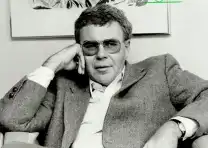
Author guide
Raymond Carver (1938–1988) was an American short-story writer and poet whose work helped define late twentieth-century literary minimalism. He published influential story collections including Will You Please Be Quiet, Please?, What We Talk About When We Talk About Love, Cathedral, and Where I'm Calling From, as well as poetry, essays, a screenplay co-written with Tess Gallagher, and a one-act play. His writing is noted for compressed prose, emotional understatement, and attention to precarious domestic and working-class lives.
Catalog record updated .
Not sure where to begin?
A widely acclaimed mature story collection and accessible entry point to Carver's fiction.

The first major story collection and a foundation of Carver's literary reputation.

The principal posthumous collection of Carver's late poetry.
Outside the series
short-story-chapbook · 1974
short-story-collection · 1976
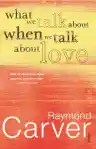
The first collection of stories from “one of the great short story writers of our time” (The Philadelphia Inquirer) breathed new life into the American short story, showing us the humor and tragedy that dwell in the hearts of ordinary…
short-story-collection · 1977
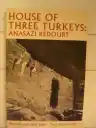
A history and description of the Three Turkey House site in Canyon de Chelly, Arizona, with black and white photographs accompanied by appreciative quotes from various authors.
short-story-collection · 1981
In his second collection of stories, as in his first, Carver's characters are peripheral people--people without education, insight or prospects, people too unimaginative to even give up. Carver celebrates these men and women.
short-story-collection · 1983
In the title story of this collection the hand of a blind man guides the hand of a sighted man as together they draw the cathedral the blind man can never see.
short-story-chapbook · 1982
short-story-collection · 1988
short-story-chapbook · 1988
short-story-chapbook · 1990
essay-chapbook · 1986
poetry-collection · 1968
poetry-collection · 1970
poetry-collection · 1976
poetry-collection · 1985
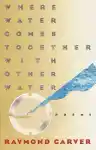
Winner of Poetry Magazine’s Levinson Prize • An illuminating collection of poems from the middle of Carver's career that “function as distilled, heightened versions of his stories, offering us fugitive glimpses of ordinary lives on the…
poetry-chapbook · 1985
poetry-chapbook · 1982
poetry-collection · 1986
poetry-chapbook · 1986
poetry-chapbook · 1986
poetry-chapbook · 1986
poetry-collection · 1987
poetry-chapbook · 1988
poetry-collection · 1989
screenplay · 1985
play · 1992
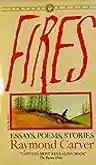
mixed-genre-collection · 1983
mixed-genre-chapbook · 1987
mixed-genre-collection · 1991
mixed-genre-collection · 2001
Raymond Carver was an American short-story writer and poet whose spare, emotionally restrained fiction focused on working- and middle-class lives. He was a major figure in the revival of the American short story during the 1970s and 1980s.
Sources: poetryfoundation.org (opens in a new tab)oregonencyclopedia.org (opens in a new tab)
He was born on May 25, 1938, in Wauna, near Clatskanie, Oregon, and died of lung cancer on August 2, 1988.
Carver supported his family through various manual and service jobs before establishing himself as a writer. He later taught creative writing and English at institutions including the University of Iowa, the University of Texas at El Paso, and Syracuse University.
Sources: poetryfoundation.org (opens in a new tab)encyclopedia.com (opens in a new tab)
His fiction was shaped by his Pacific Northwest upbringing, working-class experience, and years of precarious employment. He studied with John Gardner and cited writers including Tolstoy, Chekhov, Hemingway, Isaac Babel, and Ann Beattie among the fiction writers he valued.
Sources: poetryfoundation.org (opens in a new tab)theparisreview.org (opens in a new tab)
Carver received National Endowment for the Arts fellowships and the Mildred and Harold Strauss Living Award, and he was elected to the American Academy of Arts and Letters. His direct, compressed storytelling helped define American literary minimalism and continues to influence short-fiction writers.
Sources: arts.gov (opens in a new tab)artsandletters.org (opens in a new tab)oregonencyclopedia.org (opens in a new tab)