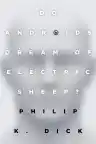
Do Androids Dream of Electric Sheep?
An accessible, compact introduction to Dick's recurring concerns about humanity, artificiality, and identity.

Author guide
Philip Kindred Dick (1928–1982) was an American writer best known for psychologically intense science fiction and speculative fiction. His novels and stories frequently question the nature of reality, humanity, memory, identity, power, and divine presence. He also wrote mainstream novels, essays, autobiographical material, letters, and philosophical journals. Much of his work was published or collected posthumously, including major novels, short-story collections, The Exegesis, and selected correspondence.
Catalog record updated .
Not sure where to begin?
An accessible, compact introduction to Dick's recurring concerns about humanity, artificiality, and identity.
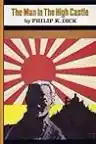
A landmark alternate-history novel and an especially clear introduction to Dick's interest in contested realities and political power.

A highly representative reality-bending science-fiction novel with a fast-moving, inventive premise.
Read in order
trilogy · complete
A late-career trilogy concerned with divine revelation, theological speculation, and the relationship between reality and fiction.
Book 1 · novel · 1981
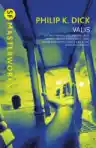
It began with a blinding light, a divine revelation from a mysterious intelligence that called itself VALIS (Vast Active Living Intelligence System). And with that, the fabric of reality was torn apart and laid bare so that anything…
Book 2 · novel · 1981
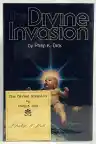
What if God—or a being called Yah—were alive and in exile on a distant planet? How could a second coming succeed against the high technology and finely tuned rationalized evil of the modern police state?
Book 3 · novel · 1982
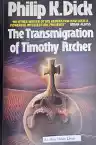
The Transmigration of Timothy Archer, the final novel in the trilogy that also includes Valis and The Divine Invasion, is an anguished, learned, and very moving investigation of the paradoxes of belief. It is the story of Timothy Archer,…
Outside the series
novel · 1955
The year is 2203, and the ruler of the universe is chosen according to the random laws of a strange game under the control of Quizmaster Verrick. But when Ted Bentley, a research technician recently dismissed from his job, signs on to…
novel · 1956
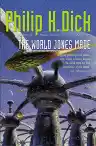
The World Jones Made is a 1956 science fiction novel by American writer Philip K. Dick, examining notions of precognition, humanity, and politics. It was first published by Ace Books as one half of Ace Double D-150, bound dos-à-dos with…
novel · 1956
Following a devastating nuclear war, the Moral Reclamation government took over the world and forced its citizens to live by strictly puritanical rules—no premarital sex, drunkenness, or displaying of neon signs—all of which are…
novel · 1957
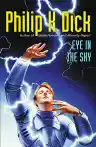
Eye in the Sky is a science fiction novel by American writer Philip K. Dick, originally published in 1957. After an accident at the Belmont Bevatron, eight people are forced into several different alternate universes. These ersatz…
novel · 1957
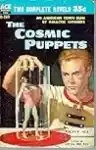
The Cosmic Puppets was published in 1957 in an Ace Double edition, back to back with The Sargasso of Space of Andrew North. This underrated novel of Philip K. Dick, which is more fantasy than SF, was kept out of the publishing loop for…
novel · 1959
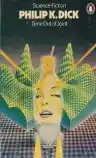
Time Out of Joint is a dystopian novel by American writer Philip K. Dick, first published in novel form in the United States in 1959. An abridged version was also serialised in the British science fiction magazine New Worlds Science…
novel · 1960
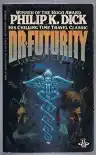
Dr. Futurity is a 1960 science fiction novel by American writer Philip K. Dick. It is an expansion of his earlier short story "Time Pawn", which first saw publication in the summer 1954 issue of Thrilling Wonder Stories. Dr. Futurity was…
novel · 1960
After the twentieth century’s devastating series of wars, the world’s governments banded together into one globe-spanning entity, committed to peace at all costs. Ensuring that peace is the Vulcan supercomputer, responsible for all major…
novel · 1962
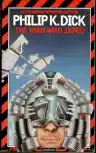
The Man in the High Castle is an alternate history novel by American writer Philip K. Dick. Published and set in 1962, the novel takes place fifteen years after an alternative ending to World War II, and concerns intrigues between the…
novel · 1963
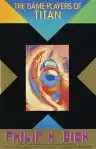
The Game-Players of Titan is a 1963 science fiction novel by American writer Philip K. Dick. Pete Garden, the protagonist, is one of several residents who own large swathes of property in a depopulated, post-apocalyptic future world.…
novel · 1964
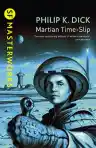
Martian Time-Slip is a 1964 science fiction novel by American writer Philip K. Dick. The novel uses the common science fiction concept of a human colony on Mars. However, it also includes the themes of mental illness, the physics of time…
novel · 1964
On a ravaged Earth, fate and circumstances bring together a disparate group of characters, including a fascist with dreams of a coup, a composer who plays his instrument with his mind, a First Lady who calls all the shots, and the world’s…
novel · 1964
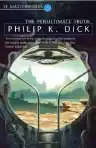
The Penultimate Truth is a 1964 science fiction novel by American writer Philip K. Dick. The story is set in a future where the bulk of humanity is kept in large underground shelters. The people are told that World War III is being fought…
novel · 1964
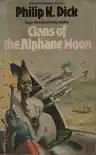
Clans of the Alphane Moon is a 1964 science fiction novel by American writer Philip K. Dick. It is based on his 1954 short story "Shell Game", first published in Galaxy Science Fiction magazine. War between Earth and insectoid-dominated…
novel · 1965
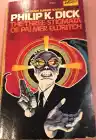
The Three Stigmata of Palmer Eldritch is a 1965 science fiction novel by Philip K. Dick. It was nominated for the Nebula Award for Best Novel in 1965. The novel takes place in 2016. Under United Nations authority, humankind has colonized…
novel · 1965
Dr. Bloodmoney, or How We Got Along After the Bomb is a 1965 science fiction novel by American writer Philip K. Dick. It was nominated for the Nebula Award for Best Novel in 1965.[1] Dick wrote the novel in 1963 with working titles In…
novel · 1966
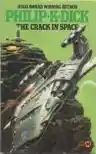
The first seven chapters of Philip K. Dick's The Crack in Space were first published as Cantata-140 in Fantasy and Science Fiction (07/1964). Cantata-140 was expanded from the short story Stand-By (Amazing 10/1963). The Gollancz 2003…
novel · 1966
A world leader uses his strange ability to die repeatedly and be brought back to life to ward off a global catastrophe.
novel · 1966
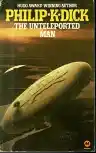
The Unteleported Man (later republished in a greatly expanded version as [Lies, Inc.][1]) is a 1966 science fiction novel by American writer Philip K. Dick, first published as a novella in 1964. It is about a future in which a one-way…
novel · 1967
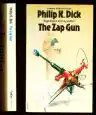
Scalding sarcastic yet enduringly empathetic, "The Zap Gun"is Dick's remarkable novel depicting the insanity of the arms race. Lars Powderdry and Lilo Topchev are counterpart weapons fashion designers for a world divided into two factions…
novel · 1967
The world has entered the Hobart Phase, in which time runs backwards. Old people emerge from their graves, grow to middle age, youth, adolescence and childhood, to be finally unborn in their mothers' wombs. Religious leader Anarch Peak's…
novel · 1967
Earth has been taken over by a strange alien force - creatures whose instinct for survival overrides any human resistance. Then a vital weapon - with the power of electronically warping the mind - falls into the hands of a terrorist group…
novel · 1968
By 2021, the World War has killed millions, driving entire species into extinction and sending mankind off-planet. Those who remain covet any living creature, and for people who can’t afford one, companies built incredibly realistic…
novel · 1969
Ubik, written in 1966 and published in 1969, is one of Philip K. Dick's masterpieces (The Three Stigmata of Plamer Eldritch is another one). Ubik is the first novel to introduce spiritual elements that will culminate in his last novels…
novel · 1969
Galactic Pot-Healer is a science fiction novel by American writer Philip K. Dick, first published in 1969. The novel deals with a number of philosophical and political issues such as repressive societies, fatalism, and the search for…
novel · 1970
For all the strange worlds borne of his vast and vivid imagination, Philip K. Dick was largely concerned with humanity's most achingly familiar heartaches and struggles. In Our Friends From Frolix 8, he clashes private dreams against…
novel · 1970
From Hugo Award–winning author Philip K. Dick, A Maze of Death is a sci-fi murder mystery set on a mysterious planet where colonists experience unexplained shifts in reality and perception. Delmak-O is a dangerous planet. Though there are…
novel · 1972
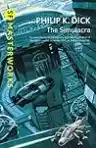
Louis Rosen's company creates historically accurate simulacra of people, such as Abraham Lincoln, but a billionaire's secret plans for them could cause trouble for Louis
novel · 1974
Jason Taverner woke up one morning to find himself completely unknown. The night before he had been the top-rated television star with millions of devoted watchers. The next day he was just an unidentified walking object, whose face…
novel · 1975
Confessions of a Crap Artist is one of Philip K. Dick's weirdest and most accomplished novels. Jack Isidore is a crap artist -- a collector of crackpot ideas (among other things, he believes that the earth is hallow and that sunlight has…
novel · 1976
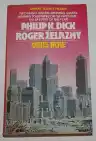
Deus Irae is a post-apocalyptic science fiction novel by American authors Philip K. Dick and Roger Zelazny. It was published in 1976. Deus irae, meaning God of Wrath in Latin, is a play on Dies Irae, meaning Day of Wrath or Judgment Day.…
novel · 1977
Substance D is not known as Death for nothing. It is the most toxic drug ever to find its way on to the streets of LA. It destroys the links between the brain's two hemispheres, causing, first, disorientation and then complete and…
novel · 1985
Science fiction novel, a wild and visionary alternate history of the United States. It is 1969, and a paranoid president has convulsed America in a vicious war against imaginary internal enemies. As the country slides into fascism, a…
novel · 1985
Bruce Stevens is a young buyer for a big discount house when he meets the recently divorced Susan Faine. She suggests that he might like to manage her ailing typewriter store and he leaps at the suggestion. Then he realizes that Susan was…
novel · 1985
When Roger and Virginia Lindhal enroll their son Gregg in Mrs. Alt's Los Padres Valley School in the mountains of Southern California, their marriage is already in deep trouble. Then the Lindhals meet Chic and Liz Bonner, whose two sons…
novel · 1984
A civic-minded, liberal Jewish real-estate agent envisions high profits in the wake of a discovery of what he believes to be Neanderthal bones in his California selling area.
novel · 1986
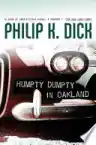
Set in San Francisco in the late 1950s, Humpty Dumpty in Oakland is a tragicomedy of misunderstandings among used car dealers and real-estate salesmen: the small-time, struggling individuals for whom Philip K.Dick always reserved his…
novel · 1987
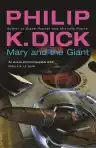
Mary Anne Reynolds is a young and vulnerable woman, determined to make her own way in the world. But Pacific Park, California, in the 1950s is not really the place for Mary. Her relationship with a black singer offends against the small…
novel · 1988
Nick and the Glimmung is a children's science fiction novel written by American author Philip K. Dick in 1966. It was first published by Gollancz in 1988. It is set on "Plowman's Planet" (Sirius Five), in the same continuity as his adult…
novel · 1994
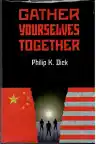
Gather Yourselves Together is one of Philip K. Dick’s earliest novels, written when he was just twenty-four years old. It tells the story of three Americans left behind in China by their employer, biding their time as the Communists…
nonfiction · 1995
This first-time collection assembles his nonfiction writings (the bulk of which either have never before been published or have appeared only in obscure and out-of-print publications) - essays, journals, speeches, and interviews. In these…
nonfiction · 2011
"'A great and calamitous sequence of arguments with the universe: poignant, terrifying, ludicrous, and brilliant. The Exegesis is the sort of book associated with legends and madmen, but Dick wasn't a legend and he wasn't mad. He lived…
novel · 2007
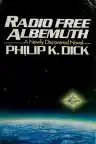
Stuart Hadley is a young radio electronics salesman in early 1950s Oakland, California. He has what many would consider the ideal life; a nice house, a pretty wife, a decent job with prospects for advancement, but he still feels…
memoir · 1988
short-story-collection · 1955
short-story-collection · 1957
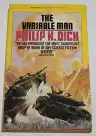
"The Variable Man" is a science fiction novella by American writer Philip K. Dick, which he wrote and sold before he had an agent. It was first published in Space Science Fiction (British), Vol. 2 No. 2, July 1953 and Space Science…
short-story-collection · 1969
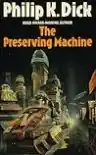
The Preserving Machine is a collection of science fiction stories by American writer Philip K. Dick. It was first published by Ace Books in 1969 with cover art by Leo and Diane Dillon as part of their Ace Science Fiction Specials series.…
short-story-collection · 1973
short-story-collection · 1977
short-story-collection · 1980
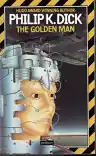
A science fiction story set in the future where the a government agency hunts mutants created by a nuclear war. The story centers around one mutant, a tall golden god-like man named Cris and his ability to see the future instead of the…
short-story-collection · 1984
short-story-collection · 1985
short-story-collection · 1987
short-story-collection · 1988
They had almost finished with the loading. Outside stood the Optus, his arms folded, his face sunk in gloom. Captain Franco walked leisurely down the gangplank, grinning. "What's the matter?" he said. "You're getting paid for all this."…
short-story-collection · 1989
Science fiction fans will find familiar the premise of Philip K. Dick's 1954 short story "The Father-Thing." In it, a young boy, Charlie, discovers that his father is not actually his father. The man in his house who comes home from work,…
short-story-collection · 1989
short-story-collection · 1990
short-story-collection · 1990
short-story-collection · 1990
short-story-collection · 1990
short-story-collection · 1991
In the world of The Minority Report, Commissioner John Anderton is the one to thank for the lack of crime. He is the originator of the Precrime System, which uses precogs—people with the power to see into the future—to identify criminals…
short-story-collection · 1992
screenplay · 1985
letters · 1991
letters · 1993
letters · 1993
letters · 1994
letters · 1996
letters · 2010
Philip Kindred Dick was an American novelist and short-story writer, born in Chicago on December 16, 1928. He died in Santa Ana, California, on March 2, 1982.
Sources: philipdick.com (opens in a new tab)penguinrandomhouse.com (opens in a new tab)
He was best known for psychologically intense science fiction that questioned reality, identity, consciousness, and political power. He also wrote mainstream fiction, essays, and autobiographical material.
Sources: philipdick.com (opens in a new tab)sf-encyclopedia.com (opens in a new tab)
His work drew on Cold War paranoia, dystopian politics, philosophy, religion, the 1960s counterculture, and questions about illusion and simulation. A religious experience in 1974 became a major focus of his later writing.
Sources: academic.oup.com (opens in a new tab)sf-encyclopedia.com (opens in a new tab)
He won the Hugo Award for Best Novel, presented in 1963 for The Man in the High Castle. He also received the John W. Campbell Memorial Award for best novel of 1974 for Flow My Tears, the Policeman Said.
Sources: thehugoawards.org (opens in a new tab)penguinrandomhouse.com (opens in a new tab)
His legacy is especially visible in cinema: Blade Runner helped launch a wave of adaptations of his fiction. Scholars also identify his treatment of memory, surveillance, and artificial reality as influential on later science fiction.
Sources: bfi.org.uk (opens in a new tab)encyclopedia.com (opens in a new tab)