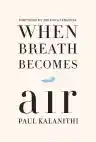
When Breath Becomes Air
His sole standalone book and the definitive introduction to his life, medicine, and writing.
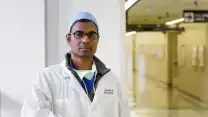
Author guide
Paul Sudhir Arul Kalanithi was an American neurosurgeon, neuroscientist, and writer. He grew up in Kingman, Arizona, graduated from Stanford University with degrees in English literature and human biology, earned an MPhil in the history and philosophy of science and medicine from the University of Cambridge, and graduated cum laude from Yale School of Medicine. He returned to Stanford for neurosurgical residency and a postdoctoral fellowship in neuroscience. Diagnosed with stage IV lung cancer in 2013, he continued writing and practicing medicine when possible. He died in March 2015 at age 37. His memoir When Breath Becomes Air was published posthumously in 2016.
Catalog record updated .
Not sure where to begin?
His sole standalone book and the definitive introduction to his life, medicine, and writing.
Outside the series
memoir · 2016
For readers of Atul Gawande, Andrew Solomon, and Anne Lamott, a profoundly moving, exquisitely observed memoir by a young neurosurgeon faced with a terminal cancer diagnosis who attempts to answer the question 'What makes a life worth…
Paul Kalanithi was an American neurosurgeon and writer who became widely known for reflecting on medicine, illness, mortality, and meaning. He died from lung cancer in 2015 at age 37.
He studied English literature and human biology at Stanford, history and philosophy of science and medicine at Cambridge, and medicine at Yale. He later completed neurosurgical residency and a neuroscience fellowship at Stanford.
Kalanithi regarded literature as a powerful tool for thinking about life and found medicine meaningful because it placed him inside its emotional and human realities. After his cancer diagnosis, writing helped him examine illness, mortality, and purpose with philosophical distance.
Sources: med.stanford.edu (opens in a new tab)med.stanford.edu (opens in a new tab)
At Yale, he won the Lewis H. Nahum Prize for research on Tourette syndrome and later received the American Academy of Neurological Surgery’s highest research award. His memoir, When Breath Becomes Air, was a 2017 Pulitzer Prize finalist for Biography.
Sources: med.stanford.edu (opens in a new tab)pulitzer.org (opens in a new tab)
His posthumously published memoir became a New York Times bestseller, was translated into more than 40 languages, and resonated with readers, doctors, and patients worldwide. Stanford later established the Paul Kalanithi Writing Award to encourage honest medical and personal storytelling.