The Picture of Dorian Gray
Wilde's only completed novel and a central work of aesthetic and decadent fiction.
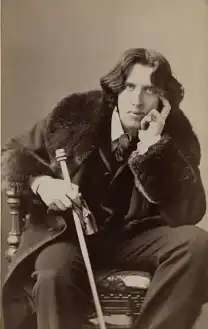
Author guide
Oscar Fingal O'Flahertie Wills Wilde (1854–1900) was an Irish writer whose career encompassed poetry, fiction, fairy tales, aesthetic criticism, journalism, drama, and political prose. His major works include The Picture of Dorian Gray, Intentions, The Soul of Man under Socialism, Salomé, and four enduring comedies: Lady Windermere's Fan, A Woman of No Importance, An Ideal Husband, and The Importance of Being Earnest. His posthumous publications include De Profundis, The Rise of Historical Criticism, and collections of correspondence and previously unpublished writings.
Catalog record updated .
Not sure where to begin?
Wilde's only completed novel and a central work of aesthetic and decadent fiction.
His most celebrated comedy and the clearest introduction to his dramatic wit.
A concise introduction to his distinctive fairy-tale style and moral imagination.
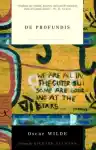
A major late prose work combining memoir, self-examination, and literary reflection.
Outside the series
novel · 1891
In this celebrated work Wilde forged a devastating portrait of the effects of evil and debauchery on a young aesthete in late-19th-century England. Combining elements of the Gothic horror novel and decadent French fiction, the book…
novella · 1901
memoir and letter · 1905
De Profundis (Latin: "from the depths") is a 50,000 word letter written by Oscar Wilde during his imprisonment in Reading Gaol, to Lord Alfred Douglas, his lover. Wilde wrote the letter between January and March 1897; he was not allowed…
literary criticism · 1905
literary criticism · 2008
short fiction collection · 1888
A beautiful, golden, jewel-studded statue and a little swallow give all they have to help the poor.
short fiction collection · 1891
Lord Arthur Savile's Crime is a masterpiece of polished cynicism, in which poison, explosive clocks and finally murder forerun married bliss. Two of Oscar Wilde's best-loved stories for children are also included, together with The…
essay collection · 1891
political essay · 1895
"**The Soul of Man Under Socialism**" is an 1891 essay by Oscar Wilde in which he expounds a libertarian socialist worldview and a critique of chary. The writing of "The Soul of Man" followed Wilde's conversion to anarchist philosophy,…
essay collection · 1901
poetry · 1878
poetry collection · 1881
poetry · 1894
prose poetry collection · 1905
High quality reprint of Poems in Prose by Oscar Wilde.
poetry · 1898
illustrated poem · 1904
play · 1882
Oscar Fingal O'Flahertie Wills Wilde (1854-1900) was an Irish playwright, novelist, poet, and author of short stories. Known for his barbed wit, he was one of the most successful playwrights of late Victorian London, and one of the…
play · 1883
The Market Place of Padua at noon; in the background is the great Cathedral of Padua; the architecture is Romanesque, and wrought in black and white marbles; a flight of marble steps leads up to the Cathedral door; at the foot of the…
play · 1893
Written originally in French in 1892, Wilde's one-act tragedy Salomé was translated into English by Lord Alfred Douglas, inspired some of Aubrey Beardsley's finest illustrations (long available in a Dover edition), and served as the text…
play · 1893
Lady Windermere's Fan: A Play About a Good Woman is a play by Oscar Wilde, who uses his sharp wit to satirize Victorian ideals about marriage. Lady Windemere suspects her husband of infidelity and retaliates by taking a lover. Her…
play translation · 1894
play · 1894
Oscar Wilde's audacious drama of social scandal centres around the revelation of Mrs Arbuthnot's long-concealed secret. A house party is in full swing at Lady Hunstanton's country home, when it is announced that Gerald Arbuthnot has been…
play · 1899
An Ideal Husband is an 1895 comedic stage play by Oscar Wilde which revolves around blackmail and political corruption, and touches on the themes of public and private honour. The action is set in London, in "the present", and takes place…
play · 1899
"Cecily Cardew and Gwendolen Fairfax are both in love with the same mythical suitor. Jack Worthing has wooed Gwendolen as Earnest, while Algernon has also posed as Earnest to win the heart of Jack's ward, Cecily. When all four arrive at…
incomplete play · 1908
incomplete play · 1908
play · 1922
fairy-tale collection · 1891
**A House of Pomegranates** is a collection of fairy tales, written by Oscar Wilde, that was published in 1891 as a second collection for The Happy Prince and Other Tales (1888). Wilde once said that this collection was "intended neither…
letters · 1962
Oscar Wilde was born in Dublin, Ireland, in 1854, and died in Paris on 30 November 1900.
Sources: tcd.ie (opens in a new tab)poetryfoundation.org (opens in a new tab)
Yes. Wilde was an Irish writer born into a prominent Dublin family, though he spent much of his career in England and later lived in France.
Sources: tcd.ie (opens in a new tab)britishlibrary.cn (opens in a new tab)
He became famous as a witty public figure and leading advocate of Aestheticism before achieving major success as a novelist and playwright. His epigrams, flamboyant persona, and social comedies made him a celebrity of late-Victorian London.
Sources: britishlibrary.cn (opens in a new tab)tcd.ie (opens in a new tab)
At Oxford, Wilde was strongly influenced by the aesthetic ideas of art critics Walter Pater and John Ruskin. Their writing helped shape his views on art, beauty, and individual expression.
Sources: britishlibrary.cn (opens in a new tab)poetryfoundation.org (opens in a new tab)
Wilde remains important for his enduring literary reputation and for the way his life and work illuminate sexuality, censorship, and artistic freedom. Since the 1960s, he has also become an important cultural figure in LGBTQ+ history and civil-rights movements.
Sources: britishlibrary.cn (opens in a new tab)bl.uk (opens in a new tab)