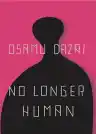
No Longer Human
Dazai's most internationally recognized novel and his starkest exploration of alienation and social disconnection.
Author guide
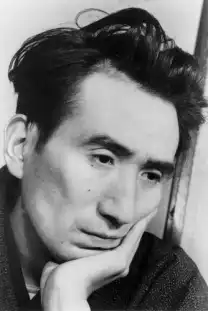
Osamu Dazai was the pen name of Shūji Tsushima (1909–1948), a major Japanese writer associated with the postwar buraiha or decadent school. His work ranges from novels and autobiographical fiction to essays, travel memoirs, plays, and modern retellings of classical Japanese stories. His best-known books include The Setting Sun, No Longer Human, Tsugaru, Fairy Tales, and Villon's Wife.
Catalog record updated .
Not sure where to begin?
Dazai's most internationally recognized novel and his starkest exploration of alienation and social disconnection.

A concise, influential postwar novel that introduces Dazai's social and psychological themes.
An accessible collection showcasing Dazai's humor and inventive modern retellings of Japanese folktales.
Outside the series
novella · 1939
The novella that first propelled Dazai into the literary elite of post-war Japan. Essentially the start of Dazai's career, ***Schoolgirl*** gained notoriety for its ironic and inventive use of language. Now it illuminates the prevalent…
autobiographical-fiction · 1940
novella · 1940
novel · 1941
novel · 1942
novel · 1943
novel · 1945
epistolary-novel · 1946
The war is over. Japan is defeated. As his country rebuilds, a young man must fight disease and rebuild his life. He will start at a peculiar sanatorium, where everyone gets a nickname, and where he is surrounded by an odd assortment of…
novel · 1947
"Set in the early postwar years, it probes the destructive effects of war and the transition from a feudal Japan to an industrial society. Ozamu Dazai died, a suicide, in 1948. But the influence of his book has made "people of the setting…
novel · 1948
Oba Yozo's attempts to reconcile himself to the world around him begin in early childhood, continue through high school, where he becomes a "clown" to mask his alienation, and eventually lead to a failed suicide attempt as an adult.…
travel-memoir · 1944
short-story-collection · 1936
short-story-collection · 1937
short-story-collection · 1937
short-story-collection · 1939
short-story-collection · 1940
short-story-collection · 1941
short-story-collection · 1941
short-story-collection · 1942
short-story-collection · 1942
short-story-collection · 1942
short-story-collection · 1942
short-story-collection · 1943
short-story-collection · 1944
short-story-collection · 1945
short-story-collection · 1945
short-story-collection · 1946
short-story-collection · 1946
Early Light offers three very different aspects of Osamu Dazai's genius: the title story relates his misadventures as a drinker and a family man in the terrible fire bombings of Tokyo at the end of WWII. Having lost their own home, he and…
short-story-collection · 1947
short-story-collection · 1947
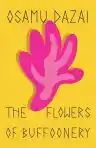
The Flowers of Buffoonery opens in a seaside sanitarium where Yozo Oba — the narrator of No Longer Human — is convalescing after a failed suicide attempt. Friends and family visit him, and nurses and police drift in and out of his room.…
short-story-collection · 1947
short-story-collection · 1947
short-story-collection · 1947
short-story-collection · 1947
short-story-collection · 1947
short-story-collection · 1947
short-story-collection · 1948
essay-collection · 1948
essay-collection · 1948
play-collection · 1947
Osamu Dazai was the pen name of Shūji Tsushima, a Japanese novelist.
Source: ndl.go.jp (opens in a new tab)
He was born on June 19, 1909, in the Tsugaru area of Aomori Prefecture, and died on June 13, 1948.
Sources: ndl.go.jp (opens in a new tab)bookmark.jpf.go.jp (opens in a new tab)
He studied French literature at Tokyo Imperial University, wrote in the first-person confessional mode associated with the Japanese I-novel, and reworked Japanese classics and fairy tales. He also studied with writer Masuji Ibuse.
Sources: bookmark.jpf.go.jp (opens in a new tab)ndl.go.jp (opens in a new tab)
No. His 1935 story “Gyakko” was nominated for the first Akutagawa Prize, but the official winners list records Tatsuzō Ishikawa as the winner, not Dazai.
Sources: jlpp.go.jp (opens in a new tab)bungakushinko.or.jp (opens in a new tab)
His writing explores isolation, adolescent distress, and other broadly human emotions, helping sustain his popularity in Japan and abroad. The Japan Foundation notes that more than 300 translations of his works have appeared in multiple languages.