Il Principe
The concise, most accessible introduction to Machiavelli's analysis of power and political leadership.
Author guide
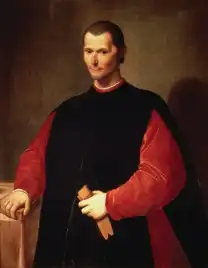
Niccolò Machiavelli (1469–1527) was a Florentine civil servant and diplomat who wrote during and after the Florentine Republic. His political treatises, histories, military dialogue, comedies, novella, and poetry—including Il Principe, Discorsi sopra la prima deca di Tito Livio, L'arte della guerra, and Istorie fiorentine—made him a foundational Renaissance thinker of political realism and republicanism.
Catalog record updated .
Not sure where to begin?
The concise, most accessible introduction to Machiavelli's analysis of power and political leadership.
The central work for his republican theory, civic conflict, and institutional thought.
A lively entry to Machiavelli's dramatic and literary writing.
Outside the series
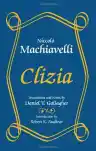
novella · 1519
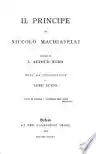
political treatise · 1513
Questa nuova edizione del Principe, arricchita da una corposa introduzione e da un ricco apparato di note, permette al lettore di approfondire la conoscenza del capolavoro di Machiavelli nonché uno dei massimi testi di teoria politica mai…
political treatise · 1517
political history · 1520
biography · 1520
political treatise · 1520
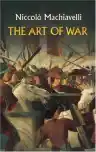
military treatise · 1521
history · 1525
history · 1525
political essay · 1499
political essay · 1502
political essay · 1502
political essay · 1506
political essay · 1508
political essay · 1510
political essay · 1519
political essay · 1522
literary essay · 1524
military essay · 1526
religious essay · 1526
poetry · 1506
poetry · 1514
poetry · 1517
poetry · 1519
play · 1518
play · 1525
Niccolò Machiavelli was a Florentine diplomat, civil servant, political thinker, historian, and playwright. He was born in Florence on 3 May 1469 and died there on 21 June 1527.
Sources: plato.stanford.edu (opens in a new tab)treccani.it (opens in a new tab)
He served the Florentine Republic as a chancellor and diplomat from 1498, undertaking missions to Italian states, France, and the court of Emperor Maximilian. After the Medici returned to power in 1512, he lost his position and turned increasingly to writing.
Sources: plato.stanford.edu (opens in a new tab)treccani.it (opens in a new tab)
His thinking was shaped by direct experience in Florentine government and diplomacy, as well as classical historians and writers including Livy, Tacitus, and Polybius. His humanist education and close study of Roman political history were especially important.
Sources: academic.oup.com (opens in a new tab)treccani.it (opens in a new tab)
Although he analyzed how rulers acquire and preserve power, Machiavelli expressed a distinct preference for republics, where civic participation and political conflict could support liberty. His reputation as a simple advocate of tyranny largely comes from later readings of his work on princely rule.
He helped establish a more empirical, historically grounded study of politics and became a major influence on modern political thought. His name also survives in the terms “Machiavellian” and “Machiavellism,” which are associated with cunning and manipulative political behavior.
Sources: plato.stanford.edu (opens in a new tab)static.treccani.it (opens in a new tab)