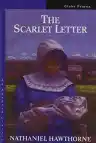
The Scarlet Letter
The canonical concise entry point to Hawthorne's major fiction.
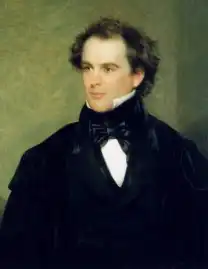
Author guide
Nathaniel Hawthorne (1804–1864) was an American novelist, short-story writer, biographer, essayist, and travel writer associated with American Romanticism. His major works include The Scarlet Letter, The House of the Seven Gables, The Blithedale Romance, The Marble Faun, Twice-Told Tales, and Mosses from an Old Manse. He also wrote historical and biographical books for young readers, travel sketches, notebooks, and several posthumously published unfinished romances.
Catalog record updated .
Not sure where to begin?
The canonical concise entry point to Hawthorne's major fiction.

A representative introduction to his short fiction and characteristic themes.
An accessible introduction to his mythic storytelling and children's writing.
Read in order
Book 1 · nonfiction · 1841
Book 2 · nonfiction · 1841
Book 3 · nonfiction · 1841
duology · complete
A two-book sequence of Hawthorne's retellings of classical myths for children.
Book 1 · children's_book · 1851
Six legends of Greek mythology, retold for children by Nathaniel Hawthorne. Included are The Gorgon’s Head, The Golden Touch, The Paradise of Children, The Three Golden Apples, The Miraculous Pitcher, and The Chimaera. In 1838, Hawthorne…
Book 2 · children's_book · 1853
Tanglewood Tales uses the Greek classics as its source. Nathaniel Hawthorne has taken the most striking and exciting ones and adapted them for children. From the original stories he has selected episodes that illustrate conceptions held…
Outside the series
novel · 1828
Published anonymously at his own expense in 1828, Hawthorne's first novel is an engrossing apprentice work.
novel · 1850
THE SCARLET LETTER is an 1850 work of fiction in a historical setting, written by Nathaniel Hawthorne, and is considered to be his best work. Set in 17th-century Puritan Boston, Massachusetts, during the years 1642 to 1649, it tells the…
novel · 1851
In a sleepy little New England village stands a dark, weather-beaten, many-gabled house. This brooding mansion is haunted by a centuries-old curse that casts the shadow of ancestral sin upon the last four members of the distinctive…
novel · 1852
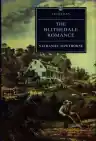
A superb depiction of a utopian community that cannot survive the individual passions of its members. In language that is suggestive and often erotic, Nathaniel Hawthorne tells a tale of failed possibilities and multiple personal…
novel · 1860
unfinished_novel · 1872
unfinished_novel · 1883
biography · 1842
biography · 1852
travel_sketches · 1863
Though he is now regarded as one of the masters of American literature, Nathaniel Hawthorne spent a sizable chunk of his peak writing years living in England. This volume collects a series of essays and sketches that Hawthorne penned…
short_story_collection · 1837
Twice-Told Tales is a short story collection first published in two volumes by Nathaniel Hawthorne. The stories had all been previously published in magazines and annuals, hence the name. Contains: The Gray Champion Sunday At Home The…
short_story_collection · 1846
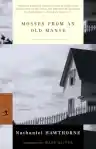
Presents twenty-six moral tales written during Hawthorne's residence in the historic Concord house.
short_story_collection · 1851
posthumous_collection · 1876
posthumous_collection · 1883
notebook_collection · 1868
notebook_collection · 1870
notebook_collection · 1871
Nathaniel Hawthorne (1804–1864) was an American novelist and short-story writer associated with nineteenth-century American Romanticism. He was born in Salem, Massachusetts, and became known for fiction exploring morality, guilt, and human nature.
Sources: loc.gov (opens in a new tab)poets.org (opens in a new tab)
Yes. He descended from John Hathorne, a Puritan judge who oversaw the Salem Witch Trials, and added the “w” to his surname in his early twenties. His writing frequently returned to Puritan New England and themes of guilt and sin.
Sources: poets.org (opens in a new tab)loc.gov (opens in a new tab)salem.lib.virginia.edu (opens in a new tab)
Hawthorne worked for the U.S. Customs Service in Boston and served as surveyor at the Salem Custom House in 1846. In 1853, he was appointed U.S. consul in Liverpool, England.
Sources: nps.gov (opens in a new tab)home.nps.gov (opens in a new tab)
His work was strongly shaped by New England and Puritan history, especially questions of sin, guilt, morality, and inherited responsibility. His years in Concord also brought him into the intellectual orbit of Ralph Waldo Emerson, Henry David Thoreau, and other Transcendentalists.
Sources: loc.gov (opens in a new tab)poets.org (opens in a new tab)home.nps.gov (opens in a new tab)
Hawthorne was inducted into the American Poets’ Corner in 1986, and fellow writers such as Herman Melville and Henry James praised his work. He is now regarded as one of the leading authors of nineteenth-century American literature.
Sources: poets.org (opens in a new tab)loc.gov (opens in a new tab)