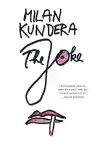
The Joke
The foundational early novel and a direct introduction to Kundera's irony, political history, and concerns with fate.
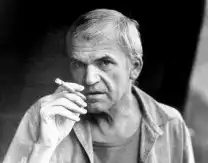
Author guide
Milan Kundera (1929–2023) was a Czech-born French writer whose career moved from early poetry and drama to celebrated novels, short fiction, and literary essays. His major works include The Joke, Life Is Elsewhere, The Book of Laughter and Forgetting, The Unbearable Lightness of Being, Immortality, Slowness, Identity, Ignorance, and The Festival of Insignificance. He also wrote influential essays on the novel and European culture, including The Art of the Novel, Testaments Betrayed, The Curtain, and Encounter. He wrote in Czech until the early 1990s and thereafter primarily in French.
Catalog record updated .
Not sure where to begin?
The foundational early novel and a direct introduction to Kundera's irony, political history, and concerns with fate.
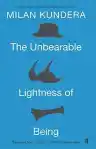
His most widely known novel and an accessible entry to his mature treatment of love, identity, history, and philosophical reflection.
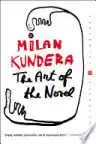
A concise introduction to Kundera's ideas about the novel, European literary tradition, and his own artistic practice.
Outside the series
novel · 1967
All too often, this brilliant novel of thwarted love and revenge miscarried has been read for its political implications. Now, a quarter century after The Joke was first published and several years after the collapse of the Soviet-imposed…
novel · 1973
The author initially intended to call this novel The Lyrical Age. The lyrical age, according to Kundera, is youth, and this novel, above all, is an epic of adolescence; an ironic epic that tenderly erodes sacrosanct values: childhood,…
novel · 1976
novel · 1979
Rich in its stories, characters, and imaginative range, The Book of Laughter and Forgetting is the novel that brought Milan Kundera his first big international success in the late 1970s. Like all his work, it is valuable for far more than…
novel · 1984
Interweaves story and dream, past and present, and philosophy and poetry in a sardonic and erotic tale of two couples--Tomas and Teresa, and Sabina and her Swiss lover, Gerhart.
novel · 1990
Milan Kundera's sixth novel springs from a casual gesture of a woman to her swimming instructor, a gesture that creates a character in the mind of a writer named Kundera. Like Flaubert's Emma or Tolstoy's Anna, Kundera's Agnes becomes an…
novel · 1995
After the gravity of The Unbearable Lightness of Being and Immortality, Slowness comes as a surprise: it is certainly Kundera's lightest novel, a divertimento, an opera buffa, with, as the author himself says, "not a single serious word…
novel · 1998
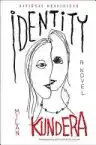
Sometimes - perhaps only for an instant - we fail to recognise a companion; for a moment their identity ceases to exist, and thus we come to doubt our own. The effect is at its most acute in a couple where our existence is given meaning…
novel · 2000
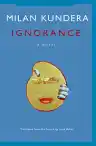
Irena and Josef meet by chance while returning to their Czech homeland, which they had abandoned 20 years earlier when they chose to become exiles. Will they manage to pick up the thread of their strange love story, interrupted almost as…
novella · 2014
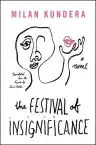
Casting light on the most serious of problems and at the same time saying not one serious sentence; being fascinated by the reality of the contemporary world and at the same time completely avoiding realism--that's *The Festival of…
short-story collection · 1963
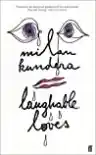
Laughable Loves is a collection of stories that first appeared in print in Prague before 1968, but was then banned. The seven stories are all concerned with love, or rather with the complex erotic games and stratagems employed by women…
short-story collection · 1965
short-story collection · 1968
essay · 1955
literary essay · 1960
essay collection · 1986
A work of literary criticism in which Kundera argues that the European novel is born out of the laughter of God.
essay collection · 1993
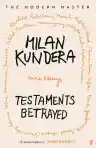
Testaments Betrayed is written like a novel: the same characters appear and reappear throughout the nine parts of the book, as do the principal themes that preoccupy the author. Kundera once again celebrates the art of the novel, from its…
illustrated essay · 1993
essay collection · 2005
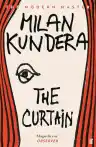
In this entertaining and always stimulating collection of seven essays, Kundera deftly sketches out his personal view of the history and value of the novel. Too often, he suggests, a novel is thought about only within the confines of the…
essay collection · 2009
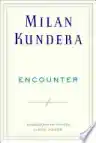
Milan Kundera’s brilliant new collection of essays is a passionate defense of art in an era that, he argues, no longer values art or beauty. With the same dazzling mix of emotion and ideas that characterizes his bestselling novels, the…
poetry collection · 1953
poetry collection · 1955
poetry collection · 1957
play · 1962
play · 1968
play · 1969
play · 1981
Milan Kundera (1929-2023) was a Czech-born French novelist, essayist, playwright, and poet. He became an internationally influential late-twentieth-century writer whose fiction examined politics, memory, identity, and existence.
Sources: brno.cz (opens in a new tab)elysee.fr (opens in a new tab)
He was born in Brno, Czechoslovakia, in 1929. After moving to France in 1975, he became a French citizen in 1981; Czech citizenship was restored in 2019, which is why he is commonly described as Czech-French.
Sources: brno.cz (opens in a new tab)europarl.europa.eu (opens in a new tab)theguardian.com (opens in a new tab)
After the 1968 invasion and subsequent political normalization, he lost his teaching position, his books were removed from libraries, and he could no longer publish in Czechoslovakia. In French exile, he revised earlier Czech works into French and later wrote in French.
Sources: theguardian.com (opens in a new tab)theguardian.com (opens in a new tab)
Kundera named Robert Musil and Hermann Broch among the novelists closest to him, and he admired Czech composer Leoš Janáček. More broadly, his idea of the European novel was tied to the traditions of Cervantes, Musil, and Kafka.
Sources: theparisreview.org (opens in a new tab)elysee.fr (opens in a new tab)mzm.cz (opens in a new tab)
His honors included the Jerusalem Prize in 1985, Austria's State Prize for European Literature in 1987, and the Franz Kafka Prize in 2020. His work helped spur broad debate about Central Europe and European identity and is regarded by cultural institutions as part of the modern world literary canon.
Sources: mzm.cz (opens in a new tab)bmwkms.gv.at (opens in a new tab)theguardian.com (opens in a new tab)europarl.europa.eu (opens in a new tab)elysee.fr (opens in a new tab)