The Master and Margarita
Bulgakov's major novel and most representative synthesis of his satire, fantasy, theology, and historical imagination.
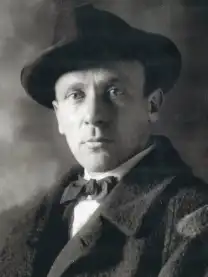
Author guide
Mikhail Afanasyevich Bulgakov was a Russian and Soviet novelist, playwright, memoirist, and satirist. His fiction blends social criticism, grotesque fantasy, historical imagination, and comic invention. His best-known works include The Master and Margarita, The White Guard, Heart of a Dog, A Young Doctor's Notebook, and Theatrical Novel.
Catalog record updated .
Not sure where to begin?
Bulgakov's major novel and most representative synthesis of his satire, fantasy, theology, and historical imagination.
The best entry point to his early fiction and his treatment of the Russian Civil War.
A concise, highly accessible satirical novella.
A vivid autobiographical short-story collection rooted in Bulgakov's medical career.
Outside the series
novella · 1922
novella · 1924
novel · 1925
novella · 1925
As the turbulent years following the Russian revolution of 1917 settle down into a new Soviet reality, the brilliant and eccentric zoologist Persikov discovers an amazing ray that drastically increases the size and reproductive rate of…
novella · 1969
A superb comic masterpiece and fierce parable of the Russian Revolution by the author of The Master and Margarita. WITH A NEW INTRODUCTION BY ANDREY KURKOVA rich, successful Moscow professor befriends a stray dog and attempts a scientific…
biographical novel · 1962
The life of Moliere, Born Jean-Baptiste Poquelin, is a story of struggle and dedication, and Bulgakov tells it with warmth and compassion.
novel · 1965
novel · 1966
An audacious revision of the stories of Faust and Pontius Pilate, The Master and Margarita is recognized as one of the essential classics of modern Russian literature. The novel’s vision of Soviet life in the 1930s is so ferociously…
short-story collection · 1926
short-story collection · 1963
play · 1920
play · 1926
play · 1926
play · 1928
play · 1928
play · 1929
play · 1931
play · 1934
play · 1935
play · 1935
play · 1939
stage adaptation · 1930
stage adaptation · 1932
stage adaptation · 1932
stage adaptation · 1935
stage adaptation · 1938
Mikhail Bulgakov was born in Kyiv in 1891. His father was a professor at the Kyiv Spiritual Academy, and Bulgakov was the eldest of seven children.
Yes. He graduated from the University of Kyiv medical school in 1916, practiced medicine in hospitals and Kyiv, and left the profession for writing in 1920.
Sources: penguinrandomhouse.com (opens in a new tab)encyclopedia.com (opens in a new tab)
Nikolai Gogol strongly influenced Bulgakov’s comic and satirical style, while Goethe’s Faust was an important influence on The Master and Margarita. Bulgakov also adapted Gogol’s Dead Souls for the stage.
Sources: encyclopedia.com (opens in a new tab)sciencedirect.com (opens in a new tab)penguinrandomhouse.com (opens in a new tab)
His independent satire and criticism of Soviet society conflicted with increasingly rigid ideological censorship. Several plays were banned, and works such as Heart of a Dog were considered unpublishable during his lifetime.
Sources: encyclopedia.com (opens in a new tab)penguinrandomhouse.com (opens in a new tab)
Bulgakov is regarded as one of the major Russian writers of the twentieth century, especially for The Master and Margarita. Written between 1928 and 1940, the novel was published posthumously in heavily censored form in 1966–67 and later became internationally acclaimed.
Sources: encyclopedia.com (opens in a new tab)penguinrandomhouse.com (opens in a new tab)