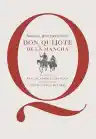
El ingenioso hidalgo don Quijote de la Mancha
The first volume of Cervantes's central and most influential work, and the natural entry point to the Don Quijote series.
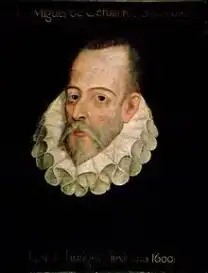
Author guide
Miguel de Cervantes Saavedra (1547–1616) was a Spanish writer, soldier, and former captive whose fiction, drama, and poetry helped shape modern European literature. His major works include the pastoral novel La Galatea, the two-part Don Quijote, the collection Novelas ejemplares, the narrative poem Viaje del Parnaso, the play collection Ocho comedias y ocho entremeses nuevos, and the posthumously published novel Los trabajos de Persiles y Sigismunda.
Catalog record updated .
Not sure where to begin?
The first volume of Cervantes's central and most influential work, and the natural entry point to the Don Quijote series.
A self-contained collection of twelve novellas that introduces the range of Cervantes's prose without requiring a series order.
Read in order
novel-series · complete
Cervantes's two-part novel following the adventures of Don Quixote and Sancho Panza.
Book 1 · novel · 1605
Esta edición de El ingenioso hidalgo don Quijote de la Mancha ha sido adaptada para uso escolar por la Real Academia Española. Con ese objeto, y a fin de facilitar una lectura sin interrupciones de la trama principal de la novela…
Book 2 · novel · 1615
Outside the series
novel · 1585
novel · 1617
short-story-collection · 1613
Even more popular in their day than Don Quixote, Cervantes's Exemplary Stories (1613) blend picaresque narrative, comic irony, moral ambiguity, and sheer mirth. A nobleman undergoes a change of identity to prove his love for a mere gypsy…
narrative-poem · 1614
play-collection · 1615
play · 1784
play · 1784
Miguel de Cervantes Saavedra was a Spanish novelist, poet, playwright, and soldier of the Spanish Golden Age, best known for Don Quixote.
Sources: encyclopedia.com (opens in a new tab)blogs.loc.gov (opens in a new tab)
He was born in Alcalá de Henares, Spain, in 1547. The surviving baptismal record is dated October 9, although his exact birth date is uncertain.
Sources: cervantesvirtual.com (opens in a new tab)encyclopedia.com (opens in a new tab)
Cervantes served as a soldier in Italy and fought at the Battle of Lepanto in 1571, where his left hand was permanently injured. On his journey back to Spain, he was captured and held captive in Algiers for five years.
Sources: encyclopedia.com (opens in a new tab)cervantesvirtual.com (opens in a new tab)
His exposure to Italian Renaissance culture and classical literature, together with his experiences of war, captivity, travel, and Spanish society, shaped his literary imagination and subject matter.
Sources: encyclopedia.com (opens in a new tab)encyclopedia.com (opens in a new tab)
Cervantes is widely regarded as a foundational figure in modern literature, especially because Don Quixote helped establish the modern novel. The work became a landmark of world literature and has been translated into most major languages.
Sources: whc.unesco.org (opens in a new tab)courier.unesco.org (opens in a new tab)