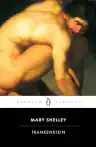
Frankenstein; or, The Modern Prometheus
Shelley's foundational and most influential novel, and the clearest entry point to her Gothic, speculative, and ethical concerns.
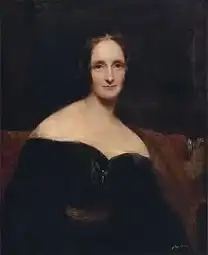
Author guide
Mary Shelley (1797–1851) was an English Romantic writer whose fiction helped establish modern science fiction and whose novels, tales, dramas, travel writing, and biographies explored creation, isolation, political power, grief, and social responsibility. Her major novels include Frankenstein, Valperga, The Last Man, The Fortunes of Perkin Warbeck, Lodore, and Falkner. She also co-authored a travel narrative with Percy Bysshe Shelley, wrote mythological dramas and biographical volumes for Lardner's Cabinet Cyclopaedia, and edited and preserved Percy Shelley's literary legacy.
Catalog record updated .
Not sure where to begin?
Shelley's foundational and most influential novel, and the clearest entry point to her Gothic, speculative, and ethical concerns.
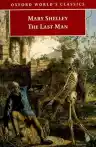
A major apocalyptic novel that broadens the view of Shelley's speculative fiction and political imagination.
Her principal standalone nonfiction work and a concise introduction to her mature travel writing and cultural criticism.
Read in order
reference-series · complete
A multivolume reference series of literary and scientific biographies to which Mary Shelley contributed five volumes covering writers from Italy, Spain, Portugal, and France.
Book 86 · biography · 1835
Book 87 · biography · 1835
Book 88 · biography · 1837
Book 102 · biography · 1838
Book 103 · biography · 1839
Outside the series
novel · 1818
Mary Shelley (then Godwin) and Percy Bysshe Shelley were visiting their friend Lord Byron in Geneva one rainy summer. With the weather against them, they decided to spend their time writing ghost stories for each other. Frankenstein is…
novella · 1959
Mary Shelley’s Mathilda, the story of one woman’s existential struggle after learning of her father’s desire for her, has been identified as Shelley’s most important work after Frankenstein. The two texts share many characteristics,…
novel · 1826
Mary Shelley, the author of [*Frankenstein*][1], wrote the apocalyptic novel The Last Man in 1826. Its first person narrative tells the story of our world standing at the end of the twenty-first century and - after the devastating effects…
novel · 1830
novel · 1835
novel · 1837
short-story-collection · 1976
children's-fiction · 1998
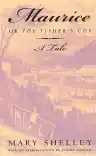
In the fall of 1997, in a palazzo in the Tuscan Hills north of Florence, a small booklet sewn into paper covers turned up in a long-unopened crate of old letters and other documents. It bore the title "Maurice" and an inscription: "for…
play · 1922
play · 1922
Mary Shelley (1797–1851) was an English novelist, editor, biographer, and travel writer, best known for Frankenstein; or, The Modern Prometheus (1818). She was the daughter of philosopher William Godwin and writer Mary Wollstonecraft.
During a 1816 stay near Lake Geneva with Percy Bysshe Shelley and Lord Byron, Byron proposed a ghost-story competition. That challenge prompted Mary Godwin to begin the tale that became Frankenstein, which she completed in England and published in 1818.
Mary Shelley married the Romantic poet Percy Bysshe Shelley in December 1816, after they had met in 1814 and eloped to the Continent. After his death in 1822, she edited and helped preserve his literary work.
Sources: penguinrandomhouse.com (opens in a new tab)cambridge.org (opens in a new tab)
She pursued a professional writing career that included novels, essays, travel writing, and biographical work; she also edited Percy Shelley's poetry. Her editorial and biographical work helped shape the poet's posthumous literary reputation.
Sources: penguinrandomhouse.com (opens in a new tab)oro.open.ac.uk (opens in a new tab)
Frankenstein is often regarded as a foundational work of science fiction and remains one of the most influential English novels. Its continuing adaptations and presence in popular culture have made Shelley a lasting figure in Gothic and speculative fiction.
Sources: bl.uk (opens in a new tab)library.unt.edu (opens in a new tab)smithsonianmag.com (opens in a new tab)