The Annotated Alice
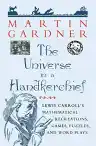
The best entry point to Gardner's literary annotation and one of his most influential books.

Author guide
Martin Gardner (1914–2010) was an American writer whose wide-ranging work included recreational mathematics, popular science, close-up magic, scientific skepticism, philosophy, religion, literary criticism, poetry, and fiction. He wrote Scientific American's influential Mathematical Games column from 1956 to 1981 and published more than 100 books, including The Annotated Alice, Fads and Fallacies in the Name of Science, The Ambidextrous Universe, and numerous collections of mathematical puzzles and essays. His posthumous memoir, Undiluted Hocus-Pocus, was assembled from his autobiographical writing.
Catalog record updated .
Not sure where to begin?
The best entry point to Gardner's literary annotation and one of his most influential books.
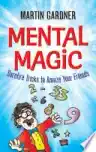
An accessible introduction to Gardner's recreational mathematics and Scientific American writing.
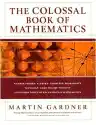
His foundational skeptical work in its original publication form.
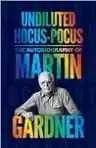
A direct autobiographical introduction to Gardner's life and interests.
Read in order
book-series · complete
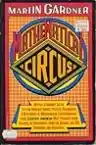
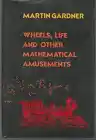
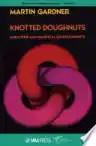
The fifteen principal book collections of Gardner's Mathematical Games columns from Scientific American, commonly called the Canon.
Book 1 · puzzle-book · 1959
Book 2 · puzzle-book · 1961
Book 3 · puzzle-book · 1966
Book 5 · puzzle-book · 1969
Book 6 · puzzle-book · 1971
Book 7 · puzzle-book · 1975
Book 8 · puzzle-book · 1977
Book 9 · puzzle-book · 1979
Book 10 · puzzle-book · 1983
'Martin Gardner is an amateur magician, but, putting in the shade all his sleight-of-hand, is the magic whereby he can take any mathematical subject and make it impossible for me to stop reading till he stops writing- whether I know…
Book 11 · puzzle-book · 1986
Martin Gardner's Mathematical Games columns in Scientific American inspired and entertained several generations of mathematicians and scientists. Gardner in his crystal-clear prose illuminated corners of mathematics, especially…
Book 12 · puzzle-book · 1987
Describes puzzles involving time travel paradoxes, hexes, stars, cards, anamorphic art, magic squares, and polygons
Book 13 · puzzle-book · 1989
Offers puzzles and problems dealing with logic, fractals, negative numbers, topology, and geometry.
Book 14 · puzzle-book · 1991
Book 15 · puzzle-book · 1997
book-series · complete
Gardner's fictionalized books presenting the notebooks and claims of the psychic Uriah Fuller.
Book 1 · nonfiction · 1975
Book 2 · nonfiction · 1980
Outside the series
nonfiction · 1956
nonfiction · 1958
novel · 1973
nonfiction · 1981
nonfiction · 1986
nonfiction · 1995
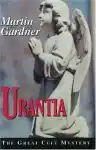
Martin Gardner, one of America's most acclaimed science writers, has here compiled the first complete history of a growing, modern religious cult. Gardner traces the cult's beginnings back to its "bible," The Urantia Book, a book…
novel · 1998
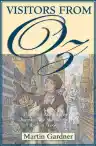
Ever since The Wizard of Oz was first published in 1900, Dorothy and her companions have captured the imaginations of Americans. By placing the story in Manhattan of the late 1990s, with cameo appearances by Rudy Giuliani, Oprah Winfrey,…
nonfiction · 1998
popular science · 1964
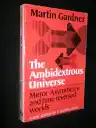
From where does the difference between left and right come? Is it a fundamental property of the universe, or is it arbitrary?
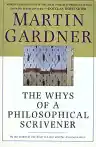
philosophy · 1983
A noted author defends his personal attitudes toward the fundamental issues of classical philosophy, discussing the awesome mystery surrounding science and life and explaining why he considers himself a theist.
short-story-collection · 1981
short-story-collection · 1984
short-story-collection · 1987
short-story-collection · 1987
pamphlet · 1935
pamphlet · 1940
pamphlet · 1941
pamphlet · 1941
pamphlet · 1941
pamphlet · 1942
essay-collection · 1983
essay-collection · 1988
essay-collection · 1989
essay-collection · 1996
essay-collection · 1996
essay-collection · 2000
essay-collection · 2001
"[Gardner] zaps his targets with laserlike precision and wit."—Entertainment Weekly Martin Gardner is perhaps the wittiest, most devastating unmasker of scientific fraud and intellectual chicanery of our time. Here he muses on topics as…
essay-collection · 2001
essay-collection · 2007
essay-collection · 2008
essay-collection · 2009
children's-book · 1957
children's-book · 1966
children's-book · 1972
children's puzzle-book · 1973
Seventy-five brain teasers relating to Lewis Carroll's nonsense poem "The Hunting of the Snark."
children's-book · 1984
Explains various methods used in cryptography and presents examples to help readers in breaking secret codes
children's-book · 1997
A collection of tricks, stunts, and puzzles that explore the properties of water, air, friction, heat, motion, light, and more.
children's puzzle-book · 2001
children's-book · 2004
children's-book · 2008
children's-book · 2009
annotated poetry · 1967
poetry · 1969
co-authored literary study · 1957
co-authored puzzle-book · 2010
magic-book · 1937
magic-book · 1949
annotated-book · 1960
puzzle-book · 1961
annotated-book · 1962
annotated-book · 1965
puzzle-book · 1978
Contains puzzles that first baffle and then delight problem solving addicts. Grew out of a collaboration between Bob Tappay and Martin Gardner to enliven the learning of mathematics.
magic-book · 1978
puzzle-book · 1982
A pocket book of riddles, full of fun and illustrations
annotated-book · 1987
annotated-book · 1990
puzzle-book · 1994
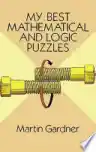
The noted expert selects 70 of his favorite "short" puzzles, including such mind-bogglers as The Returning Explorer, The Mutilated Chessboard, Scrambled Box Tops, and dozens more involving logic and basic math. Solutions included.
magic-book · 1995
literary mathematics · 1996
This book contains scores of intriguing puzzles and paradoxes from Lewis Carroll, the author of Alice in Wonderland, whose interests ranged from inventing new games like Arithmetical Croquet to important problems in symbolic logic and…
magic-book · 1999
A collection of math tricks using the magic of numbers in which the marvelous Professor Picanumba can seemingly predict random events in dozens of numerical exercises. Includes answers at the end.
correspondence · 1999
annotated-book · 1999
puzzle-book · 2001
puzzle-book · 2005
magic-book · 2015
Martin Gardner was an American writer and popularizer of mathematics and science. He was born in Tulsa, Oklahoma, on October 21, 1914, and died in Norman, Oklahoma, on May 22, 2010.
Sources: martin-gardner.org (opens in a new tab)mathshistory.st-andrews.ac.uk (opens in a new tab)
He was best known for writing Scientific American’s “Mathematical Games” column from 1956 to 1981. The column made recreational mathematics, puzzles, and mathematical ideas accessible to a broad audience.
Sources: scientificamerican.com (opens in a new tab)old.maa.org (opens in a new tab)
His interests included magic, philosophy, literature—especially Lewis Carroll—and scientific skepticism. Although he had no formal mathematics training, his wide-ranging reading and lifelong fascination with puzzles helped shape his distinctive style.
Sources: scientificamerican.com (opens in a new tab)mathshistory.st-andrews.ac.uk (opens in a new tab)
Major honors included the American Mathematical Society’s Leroy P. Steele Prize for exposition in 1987 and the Joint Policy Board for Mathematics Communications Award in 1994. These recognized his influential writing and public communication of mathematics.
Sources: maa.org (opens in a new tab)mathshistory.st-andrews.ac.uk (opens in a new tab)
Gardner helped popularize recreational mathematics and inspired generations of readers and mathematicians through clear, playful exposition. His influence continues through the Mathematical Association of America’s Martin Gardner Lecture and the Gathering 4 Gardner organization.
Sources: scientificamerican.com (opens in a new tab)maa.org (opens in a new tab)martin-gardner.org (opens in a new tab)