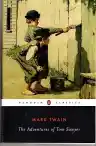
The Adventures of Tom Sawyer
The clearest entry to Twain's fiction and the beginning of the Tom Sawyer cycle.
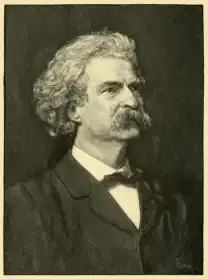
Author guide
Samuel Langhorne Clemens (1835–1910), known by his pen name Mark Twain, began as a printer and journalist before becoming one of the most influential American writers of the nineteenth century. His fiction, travel books, sketches, essays, speeches, plays, and autobiographical writings combine vernacular humor with social criticism, especially concerning slavery, imperialism, religion, race, politics, and human nature. His major works include The Adventures of Tom Sawyer, Adventures of Huckleberry Finn, Roughing It, Life on the Mississippi, A Connecticut Yankee in King Arthur's Court, and The Innocents Abroad.
Catalog record updated .
Not sure where to begin?
The clearest entry to Twain's fiction and the beginning of the Tom Sawyer cycle.
A representative, accessible introduction to Twain's travel satire and comic nonfiction.
His central mature novel and a natural follow-up to The Adventures of Tom Sawyer.
Read in order
novel-cycle · complete
A connected sequence of novels and adventure narratives centered on Tom Sawyer, Huck Finn, and their world along the Mississippi.
Book 1 · novel · 1876
The book that introduced the world to the iconic American characters of Tom Sawyer and Huckleberry Finn, this 1876 novel by Mark Twain follows the mischievous exploits of the two young boys, who find themselves in situations both humorous…
Book 2 · novel · 1884
Book 3 · novel · 1894
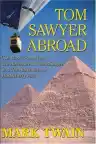
Tom's plan to become famous involves Huck Finn and his friend Jim in a crusade to the Holy Land by balloon ascension.
Book 4 · novella · 1896
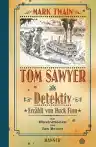
Tom Sawyer, Detective follows Twain's popular novels The Adventures of Tom Sawyer, Adventures of Huckleberry Finn, and Tom Sawyer Abroad. In this novel, Tom turns detective, trying to solve a murder. Twain plays with and celebrates the…
Outside the series
novel · 1873
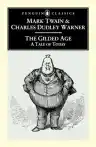
A biting satire and a revealing portrait of post-Civil War America in which Twain and his neighbor attack the greed, lust, and naivete of their time.
novel · 1889
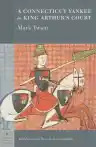
A blow on the head transports a Yankee to 528 A.D. where he proceeds to modernize King Arthur's kingdom by organizing a school system, constructing telephone lines, and inventing the printing press.
novel · 1892
novel · 1894
This work has been selected by scholars as being culturally important, and is part of the knowledge base of civilization as we know it. This work was reproduced from the original artifact, and remains as true to the original work as…
historical-novel · 1896
novella · 1902
nonfiction · 1907
From the book:This last summer, when I was on my way back to Vienna from the Appetite-Cure in the mountains, I fell over a cliff in the twilight, and broke some arms and legs and one thing or another, and by good luck was found by some…
novel · 1907
In Mark Twain's comical satire of the art of telling tall tales in America "A Horse's Tail", there was "night so dark the cats ran against each other he wrote of "a horse so fast the wagon started thirty yards ahead of the cloudburst and…
novel · 1916
novella · 2001
travel · 1869
travel-memoir · 1872
Samuel Langhorne Clemens (1835-1910), better known as "Mark Twain," left Missouri in 1861 to work with his brother, the newly appointed Secretary of the Nevada Territory. Once settled in Nevada, Clemens fell victim to gold fever and went…
travel · 1880
A Tramp Abroad is a work of travel literature, including a mixture of autobiography and fictional events, by American author Mark Twain, published in 1880. The book details a journey by the author, with his friend Harris (a character…
travel-memoir · 1883
At once a romantic history of a mighty river, an autobiographical account of Twains early steamboat days, and a storehouse of humorous anecdotes and sketches, here is the raw material from which Mark Twain wrote his finest novel,…
travel · 1897
philosophical-dialogue · 1906
literary-criticism · 1909
autobiography · 1924
short-story-collection · 1867
The celebrated jumping frog of Calaveras County -- Aurellia's unfortunate young man -- A complaint about correspondents, dated in San Francisco -- Answers to correspondents -- Among the Fenlans -- The story of the bad little boy who…
short-story-collection · 1871
short-story-collection · 1877
short-story-collection · 1882
short-story-collection · 1892
Contains: The private history of a campaign that failed. The invalid's story. Luck. The captain's story. A curious experience. Mrs. McWilliams and the lightning. Meisterschaft.
short-story-collection · 1893
short-story-collection · 1900
Many years ago Hadleyburg was the most honest and upright town in all the region round about. And was very proud of it.
essay-and-story-collection · 1903
short-story-collection · 1906
Contains 37 stories: The 30,000 dollars bequest -- A dog's tale -- Was it heaven? or hell? -- The Californian's tale -- A helpless situation -- A telephonic conversation -- Edward Mills and George Benton: a tale -- Saint Joan of Arc --…
short-fiction · 1909
pamphlet · 1866
pamphlet · 1874
essay-collection · 1897
In How to Tell a Story and Other Essays, iconic American author Mark Twain discusses his own experience as a writer and his personal style.
pamphlet · 1901
pamphlet · 1905
This volume offers Twain's 1905 political satire.
speech-collection · 1910
essay-collection · 1910
essay-collection · 1917
essay-collection · 1923
essay-and-letter-collection · 1962
Letters from the Earth is one of Mark Twain's posthumously published works. Initially, his daughter objected to its publication, probably because of its controversial and iconoclastic views on religion. The book consists of a series of…
poem · 1931
play · 2003
play · 1961
posthumous-manuscript-collection · 1966
posthumous-manuscript-collection · 1969
posthumous-manuscript-collection · 1969
posthumous-manuscript-collection · 1972
posthumous-manuscript-collection · 1989
fable-collection · 1875
sketch-collection · 1875
sketch-collection · 1876
sketch-collection · 1878
satirical-dialogue · 1880
humor-and-language · 1887
illustrated-story · 1903
My father was a St. Bernard, my mother was a collie, but I am a Presbyterian. This is what my mother told me, I do not know these nice distinctions myself. To me they are only fine large words meaning nothing. My mother had a fondness for…
illustrated-story · 1904
sketch-collection · 1919
Mark Twain was the pen name of Samuel Langhorne Clemens, an American author, humorist, satirist, journalist, and lecturer.
He was born on November 30, 1835, in Florida, Missouri, and died on April 21, 1910.
Sources: loc.gov (opens in a new tab)guides.loc.gov (opens in a new tab)
He started in printing and journalism, later piloted Mississippi River steamboats, and gained wider attention as a newspaper writer in the American West. He adopted the pseudonym Mark Twain while writing for Virginia City's Territorial Enterprise in 1862.
Sources: loc.gov (opens in a new tab)loc.gov (opens in a new tab)
His childhood in Hannibal, life on the Mississippi, and newspaper work shaped his use of American vernacular, personal experience, humor, and satire.
Sources: loc.gov (opens in a new tab)academic.oup.com (opens in a new tab)
Yes. The University of Missouri awarded him an honorary LL.D. in 1902 and lists Samuel L. Clemens, or Mark Twain, among its honorary-doctorate recipients.
Sources: muarchives.missouri.edu (opens in a new tab)commencement.missouri.edu (opens in a new tab)