Archipiélago
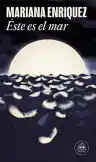
memoir · First published 2025
Author guide
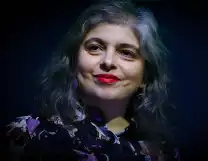
Mariana Enriquez is an Argentine writer and journalist born in Buenos Aires in 1973. Her work spans novels, novellas, short-story collections, essays, literary biography, travel writing, memoir, and illustrated or graphic books. Her fiction is associated with contemporary literary horror and the nueva narrativa argentina, often combining supernatural motifs with political history, urban life, social violence, and popular culture. She has also worked as a journalist and editor for Página/12 and taught literature and writing.
Catalog record updated .
memoir · First published 2025
Not sure where to begin?
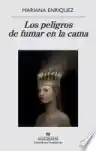
A concise introduction to Enriquez's distinctive literary-horror short fiction.
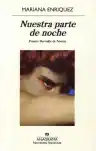
Her major award-winning novel and fullest introduction to her historical, political, and supernatural fiction.
Outside the series
novel · 1994
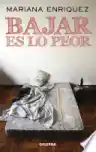
Bajar es lo peor, el primer libro de Mariana Enriquez, se publicó cuando la autora tenía apenas veintiún años. Enriquez muestra crudamente la Buenos Aires de la década del '90 y, aunque parezca extraño, éste lo hace con resonancias de…
novel · 2004
An atmospheric and unsettling novel that gives voice to the forgotten living on the margins, this is the chronicle of Matías Kovac, a sixteen-year-old apathetic and marginalized boy who needs to break out of himself. The path forward…
nonfiction · 2007
travel_nonfiction · 2013
novel · 2017
Ritos de pasaje, adolescentes fanatizadas con estrellas de rock, inframundos donde conviven seres que han complotado para que Kurt Cobain, Sid Vicious y Jim Morrison mueran repentinamente y pasen a la historia...
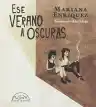
illustrated_novella · 2019
novel · 2019
literary_biography · 2014
memoir · 2025
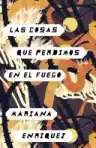
short_story_collection · 2009
Una niña desentierra en el jardín unos huesos que resultan no ser de un animal; la bucólica escena veraniega de unas chicas que se bañan en un paraje natural acaba convertida en un infierno de celos de inquietantes consecuencias; un…
short_story_collection · 2013
short_story_collection · 2016
La adaptación gráfica de cuatro relatos de una de las obras narrativas de terror más originales y sorprendentes del siglo XXI. Un coche se encuentra abandonado de noche en medio de la llanura pampeana con un bidón de gasolina al lado. De…
short_story_collection · 2024
essay_collection · 2020
We find in these pages from an interview with the legendary Argentinian rocker Charly García to a text about the fixation with the author's low-cut dress. Poignant personal pieces of hers about her beginnings as a writer, the first time…
graphic_work · 2021
Mariana Enriquez is an Argentine novelist, short-story writer, journalist, and essayist born in Buenos Aires in 1973. She is internationally known for literary horror that connects supernatural elements with social and political history.
Sources: anagrama-ed.es (opens in a new tab)cervantes.es (opens in a new tab)
She studied journalism and social communication at the National University of La Plata. She has worked as a journalist, including as subeditor of Página/12’s cultural supplement Radar, and has also taught.
Sources: sedici.unlp.edu.ar (opens in a new tab)anagrama-ed.es (opens in a new tab)
Enriquez has identified Stephen King as a formative influence, alongside writers such as Shirley Jackson, Ray Bradbury, and the Brontë sisters. She has also drawn on her grandmother’s ghost stories and Argentina’s history, particularly the legacy of dictatorship and violence.
Sources: theguardian.com (opens in a new tab)lemonde.fr (opens in a new tab)
Her novel Nuestra parte de noche won the Premio Herralde de Novela in 2019. She also received the Ibero-American José Donoso Literature Prize in 2024.
Sources: anagrama-ed.es (opens in a new tab)utalca.cl (opens in a new tab)
She is widely regarded as one of the leading voices in contemporary Latin American horror, using gothic and supernatural forms to address political violence, inequality, gender, and historical trauma. Her work has been translated into more than thirty languages, extending that literary conversation internationally.
Sources: theguardian.com (opens in a new tab)anagrama-ed.es (opens in a new tab)