Gone with the Wind
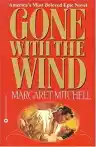
Mitchell's major novel and the only novel published during her lifetime.
Author guide
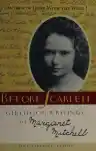
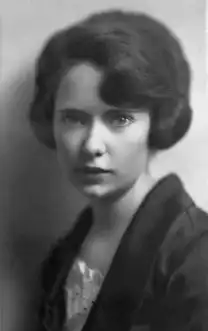
Margaret Munnerlyn Mitchell (1900–1949) was an American novelist and journalist from Atlanta, Georgia. Her sole novel published during her lifetime, Gone with the Wind (1936), won the Pulitzer Prize for Fiction in 1937. Posthumously published books include the novella Lost Laysen, collections of her correspondence and journalism, and Before Scarlett, a substantial collection of previously unpublished girlhood writings.
Catalog record updated .
Not sure where to begin?
Mitchell's major novel and the only novel published during her lifetime.
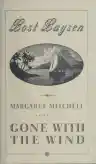
A short, independently published posthumous novella based on a manuscript she wrote as a teenager.
Outside the series
novel · 1936
Margaret Mitchell's monumental epic of the South won a Pulitzer Prize, gave rise to the most popular motion picture of our time, and inspired a sequel that became the fastest selling novel of the century. It is one of the most popular…
novella · 1996
Lost Laysen is a short novel written by Margaret Mitchell in 1916, when she was 15 and given to her lover, Henry Love Angel. It was published only after 1996 when Angel's son found the manuscript with a number of letters Mitchell had sent…
journalism-collection · 2000
correspondence · 1985
correspondence · 1976
juvenilia-collection · 2000
"The discovery - quite by accident - of the cache of writing by the best-known and best-selling author of all time contained in this volume seems almost too romantic to be true. Eskridge and Thomas found two hundred pages of short…
Margaret Munnerlyn Mitchell (1900–1949) was an American novelist and journalist from Atlanta, Georgia, best known for Gone With the Wind.
She worked for the Atlanta Journal Sunday Magazine from 1922 to 1926, writing interviews, profiles, and features. She produced 129 articles before a broken ankle ended her journalism career.
Her Atlanta upbringing and family connections to Civil War history informed her perspective; her grandfather had fought in the war, and she interviewed people who had lived through it. She also researched books, documents, letters, diaries, and newspapers extensively.
Yes. She won the 1937 Pulitzer Prize for Novel for Gone With the Wind.
Her work remains culturally influential, but its depiction of the Civil War and Reconstruction is contested. The Atlanta History Center notes that Gone With the Wind reflected and advanced common historical myths about that era, while its former home now interprets the book's cultural impact.