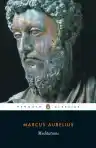
Meditations
Marcus Aurelius's sole surviving standalone philosophical work and the essential starting point for his thought.
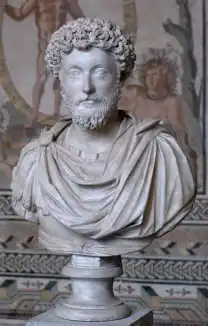
Author guide
Marcus Aurelius (121–180 CE) was Roman emperor from 161 to 180 and a major representative of later Stoicism. His surviving philosophical work, Meditations, is a collection of private Greek notes written chiefly during the latter part of his reign, especially while on military campaigns. His letters and official writings survive in other ancient collections but do not constitute separate standalone books authored solely by him.
Catalog record updated .
Not sure where to begin?
Marcus Aurelius's sole surviving standalone philosophical work and the essential starting point for his thought.
Outside the series
nonfiction · 0180
Written in Greek by an intellectual Roman emperor without any intention of publication, the Meditations of Marcus Aurelius offer a wide range of fascinating spiritual reflections and exercises developed as the leader struggled to…
Marcus Aurelius was a Roman emperor from 161 to 180 CE and a Stoic philosopher.
He was born in Rome in 121 CE into a wealthy patrician family.
He succeeded his adoptive father, Antoninus Pius, as emperor in 161 CE after receiving extensive education in rhetoric and philosophy.
Stoicism was his chief philosophical influence, particularly the teachings of Epictetus, which Marcus studied with encouragement from his teacher Rusticus. He also engaged with ideas from philosophers including Epicurus and Plato.
He is remembered for trying to apply Stoic principles to the responsibilities and hardships of imperial rule. His Meditations remains widely read as a personal record of practical ethical reflection.
Sources: plato.stanford.edu (opens in a new tab)yalebooks.yale.edu (opens in a new tab)