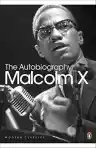
The Autobiography of Malcolm X
The foundational memoir and essential starting point for Malcolm X's life, ideas, and political evolution.
Author guide
Malcolm X (1925–1965), born Malcolm Little and later known as El-Hajj Malik El-Shabazz, was an American Muslim minister, civil-rights-era activist, and major voice of Black nationalism. His published work consists primarily of a co-authored autobiography and posthumously collected speeches, interviews, statements, and letters documenting his intellectual and political evolution.
Catalog record updated .
Not sure where to begin?
The foundational memoir and essential starting point for Malcolm X's life, ideas, and political evolution.
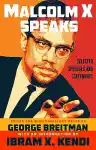
The best concise introduction to his major speeches and changing political thought.
Outside the series
memoir · 1965
Biography of the American black religious leader and activist who was born Malcolm Little, published in 1965. Written by Alex Haley, who had conducted extensive audiotaped interviews with Malcolm X just before his assassination in 1965,…
speech-collection · 1965
speech-collection · 1965
speech-collection · 1965
speech-collection · 1967
(Pathfinder)MARION--PLEASE CHANGE THE PRICE TO $8.95
speech-collection · 1968
speech-and-interview-collection · 1970
speech-collection · 1971
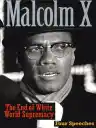
The End of White World Supremacy is a collection of four major speeches by Malcolm X, including the famous "Chickens Come Home to Rooost" speech and "Black Man's History," "the Black Revolution," and "The Old Negro and the New Negro."…
Malcolm X, born Malcolm Little and later known as El-Hajj Malik El-Shabazz, was an African American Muslim minister, human-rights activist, writer, and powerful advocate for Black empowerment.
Sources: archives.gov (opens in a new tab)nmaahc.si.edu (opens in a new tab)
After a troubled youth and time in foster care, Malcolm served a prison sentence for larceny and breaking and entering. While incarcerated, he joined the Nation of Islam; after his release, he became its leading public spokesman.
Malcolm X became the national spokesman for the Nation of Islam. After leaving it in 1964, he founded Muslim Mosque, Inc. and the Organization of Afro-American Unity.
Sources: ccnmtl.columbia.edu (opens in a new tab)archives.gov (opens in a new tab)
His 1964 hajj and conversion to traditional Islam broadened his perspective on race and encouraged a more inclusive view of humanity. He increasingly presented the struggle of African Americans as an international human-rights issue while maintaining his commitment to freedom for oppressed people.
Sources: columbia.edu (opens in a new tab)ccnmtl.columbia.edu (opens in a new tab)
Malcolm X was assassinated in 1965, but his speeches and ideas continue to influence movements for Black identity, self-determination, racial justice, and human rights. He remains a major symbol of the Black Power movement and its legacy.
Sources: nmaahc.si.edu (opens in a new tab)nmaahc.si.edu (opens in a new tab)