War and Peace
Tolstoy's central historical novel and the broadest introduction to his fiction.
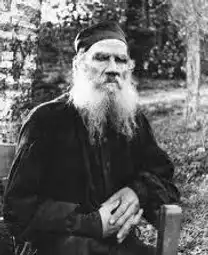
Author guide
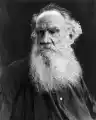
Leo Tolstoy (1828–1910) was a Russian writer whose career encompassed realist novels, novellas, short stories, plays, children's literature, educational works, memoir, religious philosophy, social criticism, and literary criticism. His major fiction includes War and Peace, Anna Karenina, Resurrection, The Death of Ivan Ilyich, The Kreutzer Sonata, and Hadji Murad. His later nonfiction developed a radical Christian ethic centered on nonviolence, moral responsibility, simplicity, and resistance to institutional authority.
Catalog record updated .
Not sure where to begin?
Tolstoy's central historical novel and the broadest introduction to his fiction.
The natural starting point for his autobiographical trilogy and early development as a writer.
A concise, representative novella of Tolstoy's mature moral and psychological fiction.
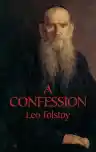
The clearest entry point into Tolstoy's mature religious and philosophical writing.
Read in order
trilogy · complete
Tolstoy's fictionalized trilogy tracing Nikolenka's development from childhood through youth.
Book 1 · novel · 1852
Book 2 · novel · 1854
"Leo Tolstoy (1828-1910) was born at Yasnya Polyana, in Tula Province, fourth of five children. Tolstoy is widely regarded as one of the greatest of all novelists, particularly noted for his masterpieces War and Peace and Anna Karenina;…
Book 3 · novel · 1857
religious-treatise · complete
Tolstoy's interconnected religious-philosophical project comprising an autobiographical introduction, a critique of theology, a harmonized Gospel, and a statement of faith.
Book 1 · memoir · 1884
This work marks the author's movement from the pursuit of aesthetic ideals toward matters of religious and philosophical consequence. The poignant text describes Tolstoy's heartfelt reexamination of Christian orthodoxy and subsequent…
Book 2 · nonfiction · 1882
Book 3 · nonfiction · 1882
Book 4 · nonfiction · 1884
See also [My Religion][1]; another translation of the same book. [1]: http://openlibrary.org/works/OL457778W/My_Religion
educational-series · complete
Tolstoy's educational textbooks and reading collections prepared for peasant schools.
Book 1 · textbook · 1872
Book 2 · textbook · 1875
Book 3 · short-story-collection · 1875
Outside the series
novella · 1856
novella · 1856
novella · 1859
Family Happiness is an 1859 novella written by Leo Tolstoy, first published in The Russian Messenger. The story concerns the love and marriage of a young girl, Mashechka (17 years old), and the much older Sergey Mikhaylych (36), an old…
novella · 1860
novella · 1863
"The Cossacks" by Leo Tolstoy (translated by Louise Maude, Aylmer Maude). Published by Good Press. Good Press publishes a wide range of titles that encompasses every genre. From well-known classics & literary fiction and non-fiction to…
novel · 1869
A stunning clothbound Hardcover Classics edition of Tolstoy’s great novel, one of the undisputed masterpieces of world literature. Nominated as one of America’s best-loved novels by PBS’s The Great American Read
novel · 1878
Described by William Faulkner as the best novel ever written and by Fyodor Dostoevsky as “flawless,” Anna Karenina tells of the doomed love affair between the sensuous and rebellious Anna and the dashing officer, Count Vronsky. Tragedy…
nonfiction · 1874
novella · 1886
This satirical novella tells the story of the life and early death of a high court judge. Ivan Ilych is proud of his achievements and his status in society, despite his poor relations with his wife which renders his home life bleak and…
nonfiction · 1882
nonfiction · 1886
nonfiction · 1887
'On Life' and 'What is religion?' were published by the Fee Age Press in England; a publishing house set up to side-step the censorship of Tolstoy in Russia, and to give him an international voice. So what is life? 'Life is the sum of…
nonfiction · 1888
novella · 1886
novella · 1888
nonfiction · 1893
Banned in Russia, Tolstoy's The Kingdom of God Is Within You was deemed a threat to church and state. The culmination of a lifetime's thought, it espouses a commitment to Jesus's message of turning the other cheek. In a bold and original…
novella · 1889
On comparing with the original Russian some English translations of Count Tolstoi's works, published both in this country and in England, I concluded that they were far from being accurate. The majority of them were retranslations from…
nonfiction · 1897
Marathi translation of the what is art?, English translation by Charles Johnston from Russian.
novella · 1895
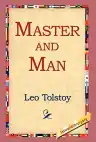
In this short story, a land owner named Vasili Andreevich Brekhunov takes along one of his peasants, Nikita, for a short journey to the house of the owner of a forest. He is impatient and wishes to get to the town more quickly 'for…
nonfiction · 1898
novel · 1899
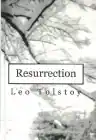
Though Resurrection is much less widely known and honored than Tolstoy's earlier great novels, War and Peace and Anna Karenina, it still is infused with the Tolstoy magic. Many of its scenes seem not like fiction but like windows opening…
nonfiction · 1902
novella · 1911
nonfiction-collection · 1906
nonfiction-collection · 1904
nonfiction-collection · 1909
novella · 1911
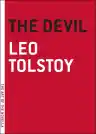
Leo Tolstoy is known for epic novels that brilliantly dissect society, but the novella The Devil may be the most personally revealing—and startling—fiction he ever wrote. He thought it so scandalous, in fact, that he hid the manuscript in…
novella · 1912
Vers l'annee 1840, St-Petersbourg fut bouleverse par un evenement dont tous resterent stupefaits: le beau prince Kassatski, chef de l'escadron d'elite du regiment des cuirassiers, futur aide de camp de l'empereur Nicolas 1er, etait alors…
novella · 1912
Hadji Murad by Leo Tolstoy was published posthumously in 1912. In the novella, Tolstoy presents the rather fictionalized version of the last days of the Chechen rebel leader Murad who defected from his ranks and joined Russian forces.…
literary-criticism · 1909
short-story · 1852
short-story · 1855
short-story · 1855
short-story · 1856
short-story · 1857
short-story · 1858
short-story · 1859
short-story-collection · 1855
In the Sevastopol Sketches, Leo Tolstoy evocatively recollects his experiences at the Siege of Sevastopol in 1854-1855, over the course of three short stories. Although the trio of tales which comprise the Sevastopol Sketches are…
short-story · 1872
short-story · 1872
short-story · 1881
short-story · 1885
short-story · 1885
short-story · 1903
short-story · 1905
pamphlet · 1890
pamphlet · 1894
pamphlet · 1900
pamphlet · 1900
PREFACE. THE Author of this very practical treatise on Scotch Loch - Fishing desires clearly that it may be of use to all who had it. He does not pretend to have written anything new, but to have attempted to put what he has to say in as…
pamphlet · 1900
pamphlet · 1901
pamphlet · 1902
pamphlet · 1902
pamphlet · 1904
pamphlet · 1905
pamphlet · 1905
pamphlet · 1907
pamphlet · 1908
pamphlet · 1909
play · 1886
The central character is a peasant, Nikita, who seduces and abandons a young orphan girl Marinka; then the lovely Anisija murders her own husband to marry Nikita. He impregnates his new stepdaughter, then, under his wife's influence,…
play · 1886
play · 1889
play · 1911
play · 1911
play · 1910
Leo Tolstoy, also known as Lev Nikolayevich Tolstoy, was a Russian novelist, short-story writer, moral philosopher, and social critic. He also served in the Caucasus and during the Crimean War.
Tolstoy was born on September 9, 1828, at Yasnaya Polyana in Tula province, Russia. He died on November 20, 1910, at Astapovo railway station after falling ill with pneumonia and was buried at Yasnaya Polyana.
Sources: encyclopedia.com (opens in a new tab)ypmuseum.ru (opens in a new tab)
His thinking was shaped by Jean-Jacques Rousseau’s ideas about human nature and society, his experiences in the Caucasus and Crimean War, and later his radical reading of the Sermon on the Mount. These influences contributed to his emphasis on moral responsibility, simplicity, and nonviolence.
Sources: encyclopedia.com (opens in a new tab)academic.oup.com (opens in a new tab)
No, Tolstoy was never a Nobel laureate. Nobel records show that he was nominated for both the Peace and Literature prizes, but the Nobel Prize organization lists him among nominees who were not awarded the prize.
Sources: nobelprize.org (opens in a new tab)nobelprize.org (opens in a new tab)
Tolstoy remains influential both as a major figure in world literature and as a thinker whose writings on nonviolence influenced Mohandas Gandhi and later peace movements. Yasnaya Polyana, where he was born and lived much of his life, is preserved as a museum and cultural center.
Sources: academic.oup.com (opens in a new tab)ypmuseum.ru (opens in a new tab)