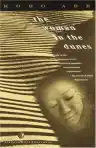
The Woman in the Dunes
A definitive and accessible entry point into Abe’s surreal, existential fiction.
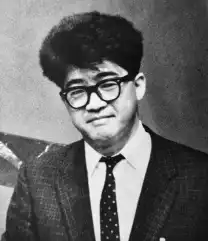
Author guide
Kōbō Abe (1924–1993), born Kimifusa Abe, was a Japanese novelist, playwright, poet, essayist, and filmmaker. A physician by training, he became one of postwar Japan’s leading avant-garde writers. His fiction frequently uses surreal, speculative, and absurdist situations to examine identity, isolation, language, bureaucracy, and the unstable boundary between reality and imagination. His best-known novels include The Woman in the Dunes, The Face of Another, The Ruined Map, The Box Man, Secret Rendezvous, The Ark Sakura, and Kangaroo Notebook. He also wrote influential plays, poetry, criticism, screenplays, and experimental prose, and founded the Abe Studio theater company.
Catalog record updated .
Not sure where to begin?
A definitive and accessible entry point into Abe’s surreal, existential fiction.
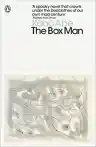
A concentrated example of Abe’s experimental narrative style and recurring concerns with identity and social isolation.
Outside the series
novel · 1948
novella · 1951
novel · 1954
novel · 1957
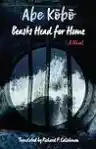
In the aftermath of World War II, Kuki Kyūzō, a Japanese youth raised in the puppet state of Manchuria, struggles to return home to Japan. What follows is a wild journey involving drugs, smuggling, chases, and capture. Kyūzō finally makes…
novel · 1959
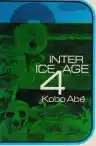
In near-future Japan threatened by the melting of the polar icecaps, Professor Katsumi develops a computer that can predict human behavior. Unfortunately for the Professor, the computer predicts that he will oppose a new government…
novel · 1960
novel · 1962
The Woman in the Dunes, by celebrated writer and thinker Kobo Abe, combines the essence of myth, suspense and the existential novel. After missing the last bus home following a day trip to the seashore, an amateur entomologist is offered…
novel · 1964
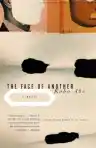
The Japanese novelist Abe has often been compared to Kafka and this 1966 novel suggests an elegantly chilling postscript to "The Metamorphosis." Abe's narrator is a scientist who has been hideously deformed in a laboratory accident, a man…
novel · 1965
novel · 1966
novel · 1967
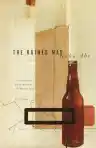
Of all the great Japanese novelists, Kobe Abe was indubitably the most versatile. With The Ruined Map, he crafted a mesmerizing literary crime novel that combines the narrative suspense of Chandler with the psychological depth of…
novel · 1973
'This is the record of a box man' The streets of Tokyo have been seeing a strange phenomenon recently - people who have decided to live their lives in a box on the street. Behind their cut-out eyeholes, they sit and watch from behind…
novel · 1977
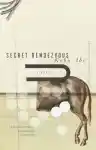
As a jump-shoe salesman searches for his wife in a sinister underground hospital, his fascination with the hospital's strange inhabitants, including a girl whose bones are gradually liquefying, causes him to barely notice his wife's…
novel · 1984
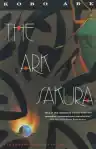
Mole has converted a huge underground quarry into an "ark" capable of surviving the coming nuclear holocaust and is now in search of his crew. He falls victim, however, to the wiles of a con-man-cum-insect-dealer. In the surreal drama…
novel · 1991
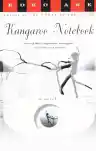
An ordinary man finds himself caught in the power of bizarre and unpredictable forces when he discovers one morning at breakfast that radish sprouts have begun to grow out of his shins
incomplete-novel · 1994
short-story-collection · 1956
short-story-collection · 1964
short-story-collection · 1964
short-story-collection · 1968
short-story-collection · 1988
essay-collection · 1965
essay-collection · 1971
essay-collection · 1986
poetry-collection · 1947
poetry-collection · 1978
play-collection · 1955
play-collection · 1967
play-collection · 1969
play · 1971
play · 1973
play · 1974
play · 1975
theater-nonfiction · 1979
posthumous-short-story-collection · 2013
interview-collection · 1973
prose-collection · 1975
Kōbō Abe was a Japanese novelist, playwright, and theatrical producer-director known for avant-garde, surrealist, and absurdist writing about alienation, identity, and modern society.
Sources: amacad.org (opens in a new tab)encyclopedia.com (opens in a new tab)
Kōbō Abe was the pen name of Kimifusa Abe. Born in Tokyo in 1924, he spent his childhood in Mukden, Manchuria, now Shenyang, China.
Sources: ndl.go.jp (opens in a new tab)encyclopedia.com (opens in a new tab)
Yes. He studied medicine at the University of Tokyo, earned his medical degree in 1948, and then pursued literature rather than practicing medicine.
Sources: encyclopedia.com (opens in a new tab)shinchosha.co.jp (opens in a new tab)
His influences included Franz Kafka, Fyodor Dostoevsky, Edgar Allan Poe, and Friedrich Nietzsche. He also drew on European surrealism, existentialism, and Marxism.
Sources: encyclopedia.com (opens in a new tab)washingtonpost.com (opens in a new tab)
He received major honors including the Akutagawa Prize, the Yomiuri Literary Prize, and the Tanizaki Junichiro Prize. He is remembered as a leading postwar Japanese avant-garde writer whose work achieved lasting international recognition.
Sources: shinchosha.co.jp (opens in a new tab)ndl.go.jp (opens in a new tab)encyclopedia.com (opens in a new tab)