The Wind in the Willows
Grahame's best-known and most enduring work, and the clearest introduction to his imaginative world.
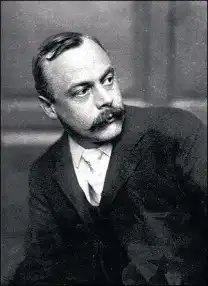
Author guide
Kenneth Grahame (1859–1932) was a Scottish-born English writer and Bank of England official. He established his literary reputation with the essay collection Pagan Papers and the childhood-story collections The Golden Age and Dream Days. His enduring classic, The Wind in the Willows, was published in 1908. Grahame also wrote the satirical novella The Headswoman, the booklet Fun o' the Fair, and edited or left several posthumously published works, including First Whisper of The Wind in the Willows and Bertie's Escapade.
Catalog record updated .
Not sure where to begin?
Grahame's best-known and most enduring work, and the clearest introduction to his imaginative world.
The foundational collection for Grahame's distinctive nostalgic, satirical childhood fiction.
Outside the series
novella · 1898
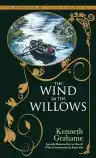
novel · 1908
The adventures of four amiable animals, Rat, Toad, Mole and Badger, along a river in the English countryside.
short-story-collection · 1895
The adventures of five brothers and sisters growing up in rural England in the late nineteenth century.
short-story-collection · 1898
The adventures of five children growing up in rural England at the turn of the century.
essay-collection · 1893
posthumous-collection · 1944
posthumous-short-fiction · 1949
Bertie the pig and two rabbit friends get into mischief when they decide to leave the farm and go carol-singing.
illustrated-booklet · 1929
Kenneth Grahame was a Scottish-born English writer, born in Edinburgh in 1859. He is best known for The Wind in the Willows.
Grahame worked at the Bank of England, joining its staff in 1879 and eventually becoming the bank’s secretary. He retired in 1908, the year The Wind in the Willows was published.
The book grew from bedtime stories Grahame told his son, Alastair. Grahame’s memories of the Thames countryside and the woods around Cookham also helped shape its setting.
Sources: oxfordlearnersdictionaries.com (opens in a new tab)nationaltrust.org.uk (opens in a new tab)
After his mother died, Grahame spent much of his childhood with his grandmother near Cookham in Berkshire. His affection for that landscape and for childhood imagination became important foundations of his later writing.
Grahame’s best-known book became a lasting classic of children’s literature and helped establish a major tradition of animal fantasy. Its influence can be seen in writers including Alison Uttley and Richard Adams.
Sources: encyclopedia.com (opens in a new tab)press.uchicago.edu (opens in a new tab)