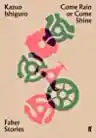
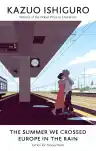
Cellists
short-story · First published 2025
Author guide
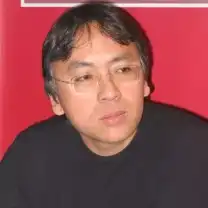
Kazuo Ishiguro was born in Nagasaki in 1954 and moved to Britain as a child. He studied English and Philosophy at the University of Kent and Creative Writing at the University of East Anglia. His fiction includes eight novels, short-story collections, standalone stories, a Nobel lecture, and a collection of lyrics written for Stacey Kent. His major honors include the Booker Prize for The Remains of the Day and the 2017 Nobel Prize in Literature.
Catalog record updated .
short-story · First published 2025
Not sure where to begin?
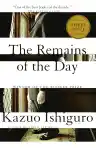
A celebrated, accessible introduction to Ishiguro's controlled prose, unreliable narration, and central themes.
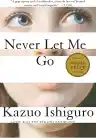
A highly readable entry point that combines emotional intimacy with speculative fiction.
Outside the series
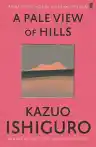
novel · 1982
Etsuko, a middle-aged Japanese woman now living alone in England, dwells on the recent suicide of her elder daughter, Keiko. Despite the efforts of her surviving daughter to distract her thoughts, Etsuko finds herself recalling a…
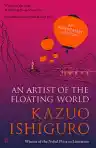
novel · 1986
The Man Booker Prize-shortlisted novel by 2017 Nobel Prize in Literature winner, Kazuo Ishiguro From A to Z, the Penguin Drop Caps series collects 26 unique hardcovers—featuring cover art by Jessica Hische It all begins with a letter.…
novel · 1989
Overview: The Remains of the Day is a profoundly compelling portrait of the perfect English butler and of his fading, insular world postwar England. At the end of his three decades of service at Darlington Hall, Stevens embarks on a…
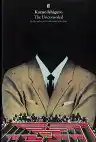
novel · 1995
Ryder, a musician of international renown, is checking in to a hotel in a city somewhere in Central Europe. He has the distinct recollection he is due to perform in the Civic Concert Hall in a few days time, but as Gustav, the hotel…
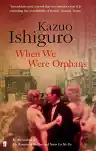
novel · 2000
'You seldom read a novel that so convinces you it is extending the possibilities of fiction.' Sunday TimesEngland, 1930s. Christopher Banks has become the country's most celebrated detective, his cases the talk of London society. Yet one…
novel · 2005
It was a place of mercurial cliques and mysterious rules where teachers were constantly reminding their charges of how special they were. Now, years later, Kathy is a young woman. Ruth and Tommy have reentered her life. And for the first…
novel · 2015
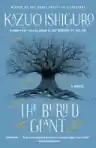
In post-Arthurian Britain, the wars that once raged between the Saxons and the Britons have finally ceased. Axl and Beatrice, an elderly British couple, set off to visit their son, whom they haven't seen in years. And, because a strange…
nonfiction · 2017
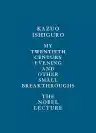
Presents the author and Nobel Prize winner's lecture in literature, revealing his influences and what he thinks about the future of literature.
novel · 2021
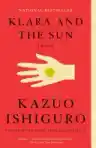
"Klara and the Sun, the first novel by Kazuo Ishiguro since he was awarded the Nobel Prize in Literature, tells the story of Klara, an Artificial Friend with outstanding observational qualities, who, from her place in the store, watches…
short-story-collection · 2000
short-story-collection · 2009
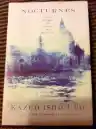
One of the most celebrated writers of our time gives us his first cycle of short fiction: five brilliantly etched, interconnected stories in which music is a vivid and essential character.A once-popular singer, desperate to make a…
short-story · 2019
short-story · 2025
poetry · 2024
From the Nobel Prize–winning author of Klara and the Sun and Never Let Me Go comes a gorgeously illustrated volume of lyrics written for the platinum-selling, Grammy-nominated jazz singer Stacey Kent. Memorably introduced by Ishiguro…
He was born in Nagasaki, Japan, in 1954, and moved with his family to Guildford, England, at age five. He is widely described as a British novelist of Japanese birth, and his bicultural upbringing shaped his perspective.
Sources: nobelprize.org (opens in a new tab)thebookerprizes.com (opens in a new tab)
He initially wanted to be a musician and wrote songs before studying English and philosophy at the University of Kent. He later earned a creative-writing master’s degree at the University of East Anglia and became a full-time author after his debut novel was published in 1982.
Sources: nobelprize.org (opens in a new tab)nobelprize.org (opens in a new tab)
Ishiguro has identified Bob Dylan as an early creative influence and cited Charlotte Brontë, especially Jane Eyre and Villette, as a major literary influence. He has also discussed the importance of Proust, Kafka, and Dostoevsky to his development.
Sources: nobelprize.org (opens in a new tab)nobelprize.org (opens in a new tab)
He won the Booker Prize in 1989 and the Nobel Prize in Literature in 2017. He was also knighted in 2018 for services to literature.
Sources: thebookerprizes.com (opens in a new tab)nobelprize.org (opens in a new tab)
His fiction is known for restrained, precise prose and powerful examinations of memory, self-deception, history, and the relationship between past and present. The Nobel committee praised his emotionally forceful novels and his ability to extend the novel across forms including realism, detective fiction, science fiction, and myth.
Sources: nobelprize.org (opens in a new tab)nobelprize.org (opens in a new tab)