Shisei (The Tattooer)
A compact introduction to Tanizaki's early erotic and aesthetic fiction.
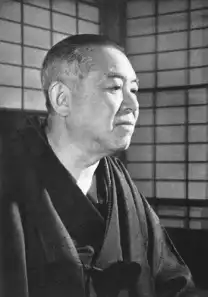
Author guide
Jun'ichirō Tanizaki (1886–1965) was a major Japanese writer whose career spanned the late Meiji, Taishō, and Shōwa periods. His early fiction drew on Western modernism, eroticism, and decadent aesthetics; after the 1923 Kantō earthquake, his work increasingly engaged with Kansai culture, classical Japanese literature, and traditional aesthetics. His major works include Naomi, Some Prefer Nettles, Quicksand, A Portrait of Shunkin, In Praise of Shadows, The Makioka Sisters, Captain Shigemoto's Mother, The Key, and Diary of a Mad Old Man. He also wrote plays, essays, memoirs, screenplays, and a celebrated modern-Japanese translation of The Tale of Genji.
Catalog record updated .
Not sure where to begin?
A compact introduction to Tanizaki's early erotic and aesthetic fiction.
A central novel representing his transition toward Kansai settings and traditional Japanese culture.
His major mature family novel and one of the defining works of twentieth-century Japanese literature.
Outside the series
novella · 1914
novella · 1915
novella · 1918
novella · 1919
novella · 1919
novella · 1922
novel · 1925
novella · 1926
novel · 1928
novel · 1928
novel · 1929
novella · 1931
novel · 1931
novella · 1932
novella · 1933
nonfiction · 1934
novella · 1935
novel · 1936
novel · 1943
novel · 1959
novel · 1956
novel · 1961
novel · 1962
memoir · 1934
memoir · 1950
memoir · 1957
short-story-collection · 1911
short-story-collection · 1912
short-story-collection · 1921
short-story-collection · 1938
essay · 1933
essay-collection · 1965
illustrated-book · 1918
Jun'ichirō Tanizaki (1886–1965) was a Japanese novelist, playwright, essayist, and literary figure born in Tokyo. He became one of the major writers of modern Japanese literature.
Sources: ndl.go.jp (opens in a new tab)rem.routledge.com (opens in a new tab)
He began writing while studying at Tokyo Imperial University and entered literary circles with the aesthetic story “The Tattooer” in 1910. After the 1923 Great Kantō Earthquake, he moved to the Kansai region, where his work increasingly turned toward classical Japanese culture and traditional aesthetics.
Sources: ndl.go.jp (opens in a new tab)rem.routledge.com (opens in a new tab)
Tanizaki drew on classical Japanese literature and the Japanese artistic past, while also engaging with Western writers such as Edgar Allan Poe, Charles Baudelaire, and Oscar Wilde. The tension between Japanese tradition and Western modernity became a recurring concern in his writing.
Sources: encyclopedia.com (opens in a new tab)rem.routledge.com (opens in a new tab)
He received Japan's Order of Culture in 1949 and was elected an honorary member of the American Academy and Institute of Arts and Letters in 1964.
Source: ndl.go.jp (opens in a new tab)
Tanizaki is remembered as a leading modern Japanese novelist who combined elaborate storytelling with eroticism, aestheticism, and questions of cultural identity. His work helped define literary debates about modernity, tradition, and the possibilities of fiction in twentieth-century Japan.
Sources: rem.routledge.com (opens in a new tab)encyclopedia.com (opens in a new tab)