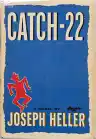
Catch-22
The defining novel and the best entry point to Heller's fiction and satirical style.
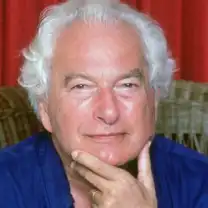
Author guide
Joseph Heller (1923–1999) was an American novelist, satirist, short-story writer, playwright, and memoirist. His debut novel, Catch-22, became a landmark antiwar satire and established the term “catch-22.” He subsequently wrote six more novels, three separately published plays, two nonfiction memoirs, and a posthumous collection of stories and other writings.
Catalog record updated .
Not sure where to begin?
The defining novel and the best entry point to Heller's fiction and satirical style.
Read in order
novel-series · complete
A linked novel series comprising Catch-22 and its sequel, Closing Time.
Book 1 · novel · 1961
Catch-22 is like no other novel. It has its own rationale, its own extraordinary character. It moves back and forth from hilarity to horror. It is outrageously funny and strangely affecting. It is totally original. Set in the closing…
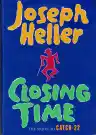
Book 2 · novel · 1994
In a novel as darkly comic and audaciously ambitious as was Catch-22, Joseph Heller has dared to write the sequel to his American classic, using many of Catch-22's characters, now older if not wiser, to deftly satirize the realities and…
Outside the series
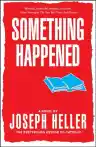
novel · 1974
Bob Slocum, an average, middle-aged man with a good job, slowly becomes more and more unhappy with the routine of his life.
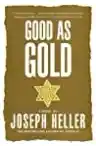
novel · 1979
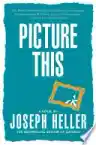
Bruce Gold, a middle-aged, Jewish professor of English literature, finds himself on the brink of a golden career in politics -- and not a moment too soon, as Gold yearns for an opportunity to transform a less-than-picture-perfect life:…
novel · 1984
David (as in Biblical King David of Judea) remembers his life and times as he is old and near his time. We get a fresh perspective into his life, his complicated family, and even more complicated relationship with God. All well-written,…
novel · 1988
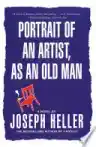
As Rembrandt is creating his famous painting of Aristotle contemplating the bust of Homer, Aristotle is soon able to see and hear. As the masterpiece makes its way through history, Aristotle's complicated mind finds unanswerable dilemmas.
novel · 2000
memoir · 1986
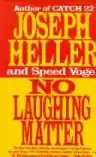
(Auto)-biographical book (with Speed Vogel), documenting the period of illness starting with December 1981, when Heller was diagnosed with Guillain-Barre syndrome. The two friends write alternate chapters, chronicling that period and dire…
memoir · 1998
short-story-collection · 2003
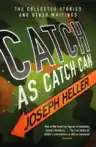
"Of the stories in this collection, thirteen were written before 1961, when Catch-22 was published; of those, five have never before been published. After Catch-22, Heller forsook the short story form. Though five stories were published…
play · 1968
play · 1971
play · 1973
Joseph Heller was an American novelist and dramatist, born in Brooklyn in 1923 and best known for Catch-22, his celebrated darkly comic antiwar novel.
Sources: c250.columbia.edu (opens in a new tab)encyclopedia.com (opens in a new tab)
During World War II, Heller served as an Army Air Corps bombardier and flew 60 missions. Afterward, he studied at New York University and Columbia, attended Oxford as a Fulbright scholar, taught English, and worked for magazines including Time, Look, and McCall’s.
Sources: c250.columbia.edu (opens in a new tab)d2sw33r0wd4m0d.cloudfront.net (opens in a new tab)
His World War II experience provided material for Catch-22, while the innovative writing of Evelyn Waugh, Vladimir Nabokov, and Louis-Ferdinand Céline influenced its style and blend of grotesque comedy with tragedy.
Sources: simonandschuster.net (opens in a new tab)c250.columbia.edu (opens in a new tab)
His honors included a National Institute of Arts and Letters grant in literature, France’s Prix Interallié and Prix Médicis étranger, the Thomas Cooper Medal, and election to the American Academy of Arts and Letters.
Sources: encyclopedia.com (opens in a new tab)d2sw33r0wd4m0d.cloudfront.net (opens in a new tab)
Catch-22 became an American literary classic, and its title entered English as shorthand for an absurd no-win situation. Heller’s satire of war and bureaucracy remains central to his literary legacy.
Sources: simonandschuster.net (opens in a new tab)c250.columbia.edu (opens in a new tab)encyclopedia.com (opens in a new tab)