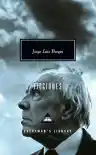
Ficciones
The central short-story collection and the most widely recognized entry point to Borges's fiction.
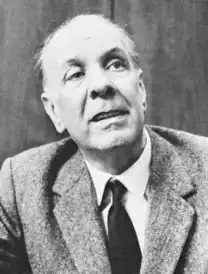
Author guide
Jorge Luis Borges (1899–1986) was an Argentine author whose fiction, poetry, essays, and criticism transformed twentieth-century literature. His work repeatedly explores infinity, language, identity, time, memory, books, and labyrinths through densely allusive, often philosophical forms. He also worked as a translator, editor, lecturer, and librarian, and wrote in collaboration with other authors, notably Adolfo Bioy Casares, Margarita Guerrero, and María Esther Vázquez.
Catalog record updated .
Not sure where to begin?
The central short-story collection and the most widely recognized entry point to Borges's fiction.
A representative collection combining his metaphysical, philosophical, and literary fiction.
A concise introduction to the interplay of Borges's poetry and prose.
Outside the series
novella · 1971
literary criticism · 1930
literary criticism · 1950
literary criticism · 1951
literary criticism · 1953
literary criticism · 1955
mythological-reference · 1957
Jorge Luis Borges y Margarita Guerrero hacen una recreaci n de las experiencias literarias, filos ficas y aun teol gicas, de textos hist ricos y sagrados chinos e hind es o incluso europeos medievales, que recogen mitos y concepciones…
literary criticism · 1965
literary criticism · 1967
mythological-reference · 1967
short-story-collection · 1935
In his writing, Borges always combined high seriousness with a wicked sense of fun. Here he reveals his delight in re-creating (or making up) colorful stories from the Orient, the Islamic world, and the Wild West, as well as his horrified…
short-story-collection · 1941
short-story-collection · 1944
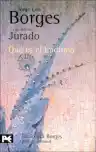
A collection of his short stories in which Borges often uses the labyrinth as a literary device to expound his ideas on all aspects of human life and endeavor. ---------- Contains: [Tlön, Uqbar, Orbis…
short-story-collection · 1949
In Borges' story, the Aleph is a point in space that contains all other points. Anyone who gazes into it can see everything in the universe from every angle simultaneously, without distortion, overlapping, or confusion. The story traces…
short-story-collection · 1970
short-story-collection · 1975
Un libro fundamental de Borges, «el escritor en español más importante desde Cervantes» (Mario Vargas Llosa), considerado por el autor su obra maestra, y que incluye su único relato de amor. «Borges es y debería ser el centro de nuestro…
short-story-collection · 1977
short-story-collection · 1983
essays · 1925
essays · 1926
"Reedición del libro publicado originariamente en 1926 y cuya reedición fue prohibida por el autor. Resulta de gran interés puesto que prefigura los temas desarrollados posteriormente. Permite asimismo establecer grandes diferencias en…
essays · 1928
essays · 1932
essays · 1936
En los tratados aquíreunidos, Borges habla de la esencia del tiempo, que se concreta bien en el mecanismo de una metáfora, bien en una refutación filosófica. El asunto es la coincidencia, la ocupación de un mismo lugar fí́sico o mental,…
essays · 1952
Bundel met 35 korte essays door de auteur gepubliceerd in Argentijnse kranten en tijdschriften tussen 1937 en 1952. Deze door Borges zelf samengestelde bloemlezing verscheen in 1952 onder de titel 'Otras inquisiciones'. De eerste druk van…
essays · 1963
lectures · 1979
lectures · 1980
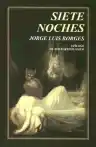
Las sutiles y agudas reflexiones de Borges sobre los libros y los temas que lo apasionaron a lo largo de su vida se encuentran en estas conferencias que vieron su edici n impresa bajo el t tulo Siete noches. a lo largo de sus p ginas…
essays · 1982
poetry · 1923
poetry · 1925
poetry · 1929
poetry-and-prose · 1960
Poems, stories, and personal reflections reveal the interwoven existence of imagination and reality in the mind of the South American writer.
poetry · 1964
poetry · 1965
poetry · 1969
poetry · 1972
poetry · 1975
poetry · 1976
poetry · 1977
illustrated-poetry-book · 1977
poetry · 1981
This is a duplicate. Please update your lists. See https://openlibrary.org/works/OL110941W.
poetry · 1985
poetry · 1978
screenplay · 1955
screenplay · 1955
posthumous-collection · 1995
posthumous-collection · 1997
posthumous-lectures · 2000
**From Library Journal:** For Borges (1899-1986), the central fact of life was the existence of words and their potential as building blocks of poetry. In this series of six long-forgotten lectures given at Harvard more than 30 years ago,…
posthumous-collection · 2001
posthumous-collection · 2003
posthumous-lectures · 2013
A compilation of the twenty-five lectures Borges gave in 1966 at the University of Buenos Aires, where he taught English literature.
collaborative-detective-fiction · 1942
Siempre hay duplas exitosas, y no sólo por que el resultado de la dupla sea un éxito económico, si no por que algunas veces dos personas talentosas se unen para formar un todo que va más allá de sus talentos individuales. Eso ocurre con…
collaborative-detective-fiction · 1946
collaborative-fiction · 1946
collaborative-short-story-collection · 1955
collaborative-essays · 1960
collaborative-literary-satire · 1967
'Crônicas de Bustos Domecq - Novos contos de Bustos Domecq', da dupla Borges e Casares, têm como alvo a argentina de acadêmicos a políticos, passando por alguns artistas, além de personagens internacionais do mesmo tipo. Abordando assim…
collaborative-short-story-collection · 1972
advertising-brochure · 1935
prose-collection · 1975
dialogue-book · 1976
interview-book · 1977
prose-and-photography · 1984
Borges was born in Buenos Aires, Argentina, on August 24, 1899, and died in Geneva, Switzerland, on June 14, 1986.
He worked as a librarian, translator, lecturer, and professor. From 1955 to 1974, he directed Argentina’s National Library.
Sources: cervantes.es (opens in a new tab)turismo.buenosaires.gob.ar (opens in a new tab)
His influences included Shakespeare, Thomas De Quincey, Rudyard Kipling, Joseph Conrad, the Bible, Jewish Kabbalah, classical and early European literature, and philosophy.
He shared the 1961 Formentor Prize with Samuel Beckett and received the Miguel de Cervantes Prize in 1979.
His short stories and philosophical essays made him one of the most inventive and widely regarded authors in world literature, influencing writers such as Michel Foucault, Jacques Derrida, Susan Sontag, and Umberto Eco.