The Grapes of Wrath
A landmark novel and the clearest entry to Steinbeck’s social realism, historical perspective, and concern with economic injustice.
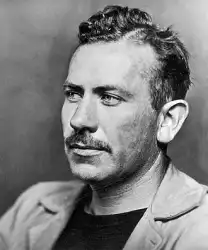
Author guide
John Steinbeck was an American writer whose fiction and nonfiction combine social observation, regional realism, philosophical inquiry, and sympathy for marginalized people. Born in Salinas, California, he drew extensively on the landscapes and communities of the central California coast. His major works include The Grapes of Wrath, Of Mice and Men, East of Eden, Cannery Row, and The Pearl. He also wrote journalism, war reportage, travel writing, memoir, essays, plays, screenplays, and a coauthored account of a marine expedition with Edward F. Ricketts. He won the Pulitzer Prize for The Grapes of Wrath in 1940 and the Nobel Prize in Literature in 1962.
Catalog record updated .
Not sure where to begin?
A landmark novel and the clearest entry to Steinbeck’s social realism, historical perspective, and concern with economic injustice.
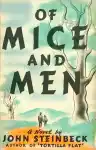
A short, concentrated novella that showcases Steinbeck’s narrative economy, dialogue, and treatment of friendship and vulnerability.
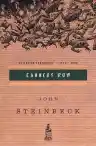
An accessible, comic, and humane introduction to Steinbeck’s Monterey setting and his interest in unconventional communities.
Outside the series
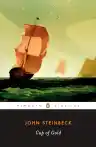
novel · 1929
A STANDOUT in the Steinbeck canon, Cup of Gold is edgy and adventurous, brash and distrustful of society, and sure to add a new dimension to the common perception of this all-American writer. Steinbeck's first novel and sole work of…
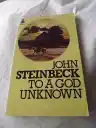
novel · 1933
While fulfilling his dead father's dream of creating a prosperous farm in California, Joseph Wayne comes to believe that a magnificent tree on the farm embodies his father's spirit. His brothers and their families share in Joseph's…
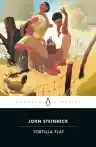
novel · 1935
Adopting the structure and themes of the Arthurian legend, Steinbeck created a "Camelot" on a shabby hillside above Monterey on the California coast and peopled it with a colorful band of knights. As Steinbeck chronicles their thoughts…
novel · 1936
At once a relentlessly fast-paced, admirably observed novel of social unrest and the story of a young man's struggle for identity, In Dubious Battle is set in the California apple country, where a strike by migrant workers against…
novella · 1937
The tragic story of George and Lennie, who move from one farm to another, looking for work. George is clever but Lennie's size and slowness is always getting him into trouble. One day the two men get a job on a farm. Things are going well…
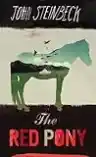
novella · 1937
Raised on a ranch in northern California, Jody is well-schooled in the hard work and demands of a rancher's life. He is used to the way of horses, too; but nothing has prepared him for the special connection he will forge with Gabilan,…
novel · 1939
Steinbeck’s classic novel of the Great Depression is as vivid now as ever. The story focuses on a family of Oklahoma sharecroppers, farmers who work another man’s land for a share of the crops. Driven from their home by drought and…
illustrated-nonfiction · 1941
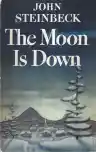
novella · 1942
In this masterful tale set in Norway during World War II, Steinbeck explores the effects of invasion on both the conquered and the conquerors. As he delves into the emotions of the German commander and the Norwegian traitor, and depicts…
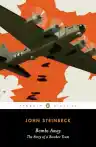
nonfiction · 1942
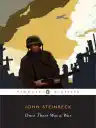
A magnificent volume of short novels and an essential World War II report from one of America’s great twentieth-century writersOn the heels of the enormous success of his masterwork The Grapes of Wrath—and at the height of the American…
novel · 1945
In the din and stink that is Cannery Row a colourful blend of misfits – gamblers, whores, drunks, bums, and artists – survive side by side in a jumble of adventure and mischief. Doc, who owns the laboratory, is the fount of all generosity…
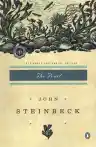
novella · 1947
John Steinbeck's The Pearl, first published in 1947, follows a pearl diver, Kino, and explores man’s purpose as well as greed, defiance of societal norms, and evil.
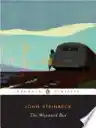
novel · 1947
A Penguin Classic In his first novel to follow the publication of his enormous success, The Grapes of Wrath, Steinbeck’s vision comes wonderfully to life in this imaginative and unsentimental chronicle of a bus traveling California’s back…
novella · 1950
A short novel written in an experimental blend of play and novel. The story is a simple morality play set in a circus. When an ageing man’s young wife suspects that her husband is sterile she decides to seduce his young assistant solely…
novel · 1952
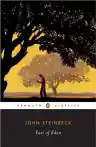
Part allegory, part autobiography, and part epic, East of Eden was an ambitious project from the start – a gift to Steinbeck’s sons that was meant to teach them about identity, grief, and what it means to be human. Tinged with biblical…
novel · 1954
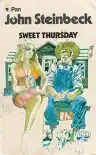
In Monterey, on the California coast, Sweet Thursday is what they call the day after Lousy Wednesday, which is one of those days that is just naturally bad. Returning to the scene of Cannery Row, the weedy lots and junk heaps and…
novel · 1957
Steinbeck's only work of political satire turns the French Revolution on its head, as amateur astronomer Pippin Heristal is drafted in to rule the unruly French. Enchanting comedy ensues as Steinbeck creates the most hilarious royal court…
nonfiction · 1958
A Penguin Classic “Age can never dull this kind of writing,” writes the Chicago Tribune of John Steinbeck’s dispatches from World War II, filed for the New York Herald Tribune in 1943, which vividly captured the human side of war. Writing…
novel · 1961
Steinbeck's last great novel focuses on the theme of success and what motivates men towards it. Reflecting back on his New England family's past fortune, and his father's loss of the family wealth, the hero, Ethan Allen Hawley,…
unfinished-novel · 1976
memoir · 1962
journal · 1969
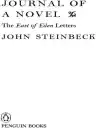
"Each working day from January 29 to November 1, 1951, John Steinbeck warmed up to the work of writing East of Eden with a letter to the late Pascal Covici, his friend and editor at The Viking Press. It was his way, he said, of 'getting…
journal · 1989
short-story-collection · 1932
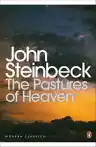
A series of short stories connected by a moral, hardworking, compassionate family that moves into a rural California valley and, while meaning well, pretty much destroys the lives of the characters in each story. Fascinating read that…
short-story-collection · 1938
A collection of interconnected short stories, all set in the Salinas Valley in California. The book includes classic Steinbeck stories such as ‘The Vigilante’ and ‘The Red Pony’.
pamphlet · 1938
essay-collection · 1966
play · 1937
play · 1942
play · 1951
screenplay · 1952
coauthored-nonfiction · 1941
coauthored-nonfiction · 1948
Just after the iron curtain fell on Eastern Europe John Steinbeck and acclaimed war photographer, Robert Capa ventured into the Soviet Union to report for the New York Herald Tribune. This rare opportunity took the famous travellers not…
John Steinbeck was an American novelist, short-story writer, journalist, memoirist, and playwright known for socially engaged writing about working people and California.
Sources: nobelprize.org (opens in a new tab)steinbeck.org (opens in a new tab)
He was born in Salinas, California, on February 27, 1902, and died in New York City on December 20, 1968.
Source: sjsu.edu (opens in a new tab)
His childhood in California’s Salinas Valley, experiences working alongside migrants and ranch laborers, and close friendship with marine biologist Ed Ricketts strongly shaped his social and ecological perspectives.
Sources: sjsu.edu (opens in a new tab)sjsu.edu (opens in a new tab)
He won the Pulitzer Prize for Fiction in 1940 for The Grapes of Wrath and the Nobel Prize in Literature in 1962.
Sources: pulitzer.org (opens in a new tab)nobelprize.org (opens in a new tab)
Steinbeck remains important for combining literary realism with sustained attention to poverty, displacement, social injustice, and the dignity of ordinary people. Universities and museums continue to preserve and study his work as a major part of American literary and cultural history.
Sources: sjsu.edu (opens in a new tab)steinbeck.org (opens in a new tab)