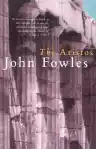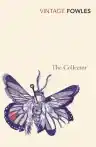
The Collector
A concise and gripping introduction to Fowles's psychological and existential fiction.
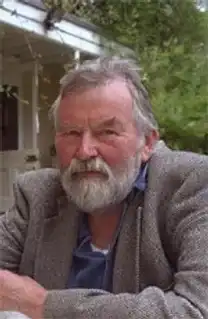
Author guide
John Fowles (1926–2005) was an English writer whose fiction combines psychological, existential, historical, and metafictional elements. His major novels include The Collector, The Magus, The French Lieutenant's Woman, Daniel Martin, Mantissa, and A Maggot. He also published philosophical writing, poetry, short fiction, essays, memoir-like journals, natural-history and local-history books, and photographic collaborations. He lived for much of his later life in Lyme Regis, Dorset, where he served as curator of the Lyme Regis Museum.
Catalog record updated .
Not sure where to begin?
A concise and gripping introduction to Fowles's psychological and existential fiction.
A central, highly imaginative novel that showcases Fowles's interest in freedom, identity, and manipulation.
His most ambitious historical and metafictional novel.
Outside the series
novel · 1963
Fowles’ stunning debut is a study of a lonely young sociopath who kidnaps the woman he has fixated on, keeping her in his cellar in the belief that she will eventually come to love him. The story is narrated in turns by the young man and…
nonfiction · 1964
This book was first published against the advice of almost everyone who read it. I was told that it would do my ‘image’ no good; and I am sure that my belief that a favourable ‘image’ is conceivably not of any great human – or literary –…
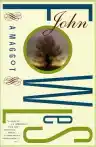
novel · 1965
WITH AN AFTERWORD FROM THE AUTHOR 'A major work of mounting tensions in which the human mind is the guinea-pig... Mr Fowles has taken a big swing at a difficult subject and his hits are on the bull's eye' Sunday Times On a remote Greek…
novel · 1969
By the author of *The Collector* and *The Magus*, a haunting love story of the Victorian era. Over one year on the N.Y. Times Bestseller List and an international bestseller. "Filled with enchanting mysteries, charged with erotic…
novel · 1977
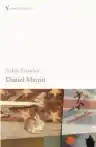
Daniel Martin's (1977) eponymous protagonist returns to England after a sojourn in Hollywood -- and sets out to rectify the sins and omissions of his past. The book covers three decades and is very much about being English with a lot of…
nonfiction · 1979
nonfiction · 1980
novel · 1982
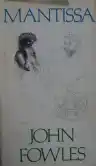
In Mantissa (1982), a novelist awakes in the hospital with amnesia -- and comes to believe that a beautiful female doctor is, in fact, his muse.
novel · 1985
A modern narrator supplements the views of a group of eighteenth-century travelers as they make an inquiry into the mysterious death by hanging of one traveler and the disappearance--into thin air--of another
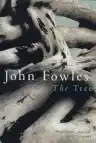
nonfiction · 2000
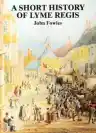
local-history · 1984
local-history · 1982
diary · 2003
diary · 2006
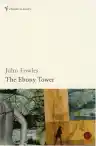
short-story-collection · 1974
The five masterful works of short fiction in The Ebony Tower bring us once again into the company of a great contemporary novelist working his intriguing and dazzling themes, probing the fitful relationships of fantasy and reality, love…
pamphlet · 1981
pamphlet · 1983
essay · 1983
essay · 1994
essay · 1995
essay · 1997
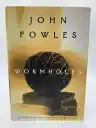
essay-collection · 1998
Divided into four sections--Writing and the Self, Culture and Society, Literature and Literary Criticism, and Nature and the Nature of Nature--"Wormholes" contains 30 pieces, dating from 1963 to the present, which reflect on Fowles' views…
poetry-collection · 1973
photographic-book · 1978
photographic-book · 1974
photographic-book · 1985
photographic-book · 1990
John Fowles was an English novelist, essayist, poet, translator, and educator. The success of his first published novel in 1963 allowed him to become a full-time writer.
Sources: research.hrc.utexas.edu (opens in a new tab)chapman.edu (opens in a new tab)
He was born on March 31, 1926, in Leigh-on-Sea, Essex, England, and died on November 5, 2005, in Lyme Regis, Dorset.
Sources: research.hrc.utexas.edu (opens in a new tab)encyclopedia.com (opens in a new tab)
His work was strongly shaped by existentialist ideas about freedom and authenticity, especially those associated with Albert Camus and Jean-Paul Sartre, which he encountered at Oxford. He also described Carl Jung as a particularly fruitful influence on his fiction.
Sources: theparisreview.org (opens in a new tab)chapman.edu (opens in a new tab)
Fowles received the Silver Pen Award and the W.H. Smith Literary Award for The French Lieutenant’s Woman, as well as the Christopher Award for The Tree. He also received an honorary degree from the University of Exeter in 1983.
Sources: encyclopedia.com (opens in a new tab)exeter.ac.uk (opens in a new tab)
Fowles helped bring formally experimental, self-conscious fiction to a broad popular audience, particularly through The French Lieutenant’s Woman. His legacy is preserved through the John Fowles Center for Creative Writing at Chapman University and a dedicated display at Lyme Regis Museum.
Sources: theguardian.com (opens in a new tab)chapman.edu (opens in a new tab)lymeregismuseum.co.uk (opens in a new tab)