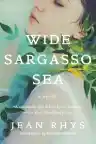
Wide Sargasso Sea
Rhys's best-known novel and a strong entry point into her themes of colonialism, identity, and gender.
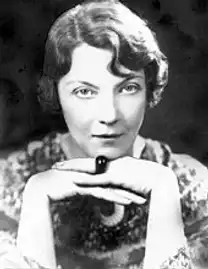
Author guide
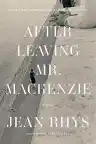
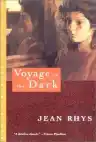
Jean Rhys (born Ella Gwendolen Rees Williams, 24 August 1890–14 May 1979) was a novelist and short-story writer from Dominica who spent most of her adult life in Britain. Her early fiction drew on expatriate and bohemian life in Europe, while her later work returned imaginatively to the Caribbean and colonial history. She is best known for Wide Sargasso Sea and for novels including Quartet, After Leaving Mr MacKenzie, Voyage in the Dark, and Good Morning, Midnight. Her work is marked by spare prose, divided identity, economic and emotional precarity, and the constrained lives of women.
Catalog record updated .
Not sure where to begin?
Rhys's best-known novel and a strong entry point into her themes of colonialism, identity, and gender.
A concise, representative novel that foregrounds Rhys's distinctive voice and psychological intensity.
Outside the series
novel · 1928
novel · 1931
Julia Martin is in Paris and at the end of her rope. Once beautiful, she was taken care of by men. Now after being dropped by her latest lover, she visits London to see her ailing mother and meets up with her distrustful sister, Norah.…
novel · 1934
novel · 1939
novel · 1966
Inspired by, but independent of Charlotte Bronte's Jane Eyre, the story of the first Mrs Rochester, the mad wife in Charlotte Brontë's Jane Eyre.
memoir · 1979
short-story-collection · 1927
short-story-collection · 1968
short-story-collection · 1976
essay-collection · 1975
letters · 1984
Jean Rhys was born Ella Gwendolen Rees Williams on August 24, 1890, in Roseau, Dominica. She later adopted Jean Rhys as her literary name.
Sources: english-heritage.org.uk (opens in a new tab)encyclopedia.com (opens in a new tab)
Her childhood as a white Creole in Dominica and her later life between the Caribbean, England, and Europe made cultural dislocation central to her fiction. Her writing often connects women’s marginalization with colonial history and divided identity.
Sources: english-heritage.org.uk (opens in a new tab)kar.kent.ac.uk (opens in a new tab)unsw.edu.au (opens in a new tab)
Ford Madox Ford was her most important early literary mentor. After publishing one of her stories in The Transatlantic Review, he helped bring her first story collection into print and recognized the force of her colonial perspective and modernist technique.
Sources: english-heritage.org.uk (opens in a new tab)encyclopedia.com (opens in a new tab)
She received the W. H. Smith Award and the Royal Society of Literature’s Heinemann Award in 1967. She was appointed a Commander of the Order of the British Empire (CBE) in 1978.
Rhys remains an important Caribbean literary voice because her spare, unsentimental fiction gives unusual attention to exile, gender, and marginalized lives. Her work has strongly shaped feminist and postcolonial criticism and influenced later Caribbean writers.
Sources: kar.kent.ac.uk (opens in a new tab)unsw.edu.au (opens in a new tab)liverpool.ac.uk (opens in a new tab)