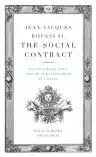
The Social Contract
Best starting point for Rousseau's mature political theory of sovereignty, freedom, equality, and the general will.
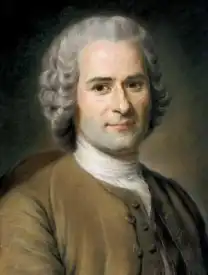
Author guide
Jean-Jacques Rousseau (1712–1778) was a Genevan philosopher, novelist, autobiographer, composer, and political theorist. His writings criticized social inequality and artificiality, explored natural education and religion, and developed influential accounts of popular sovereignty and the general will. His major works include Julie, or the New Heloise, Emile, The Social Contract, the Discourses, The Confessions, and The Reveries of the Solitary Walker. He also wrote plays, operas, works on music, botany, and political reform.
Catalog record updated .
Not sure where to begin?
Best starting point for Rousseau's mature political theory of sovereignty, freedom, equality, and the general will.
A major novel that presents Rousseau's ideas about passion, virtue, society, and nature through fiction.
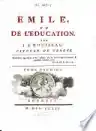
The central work for Rousseau's theories of education, human development, morality, and natural religion.
The fullest introduction to Rousseau's self-understanding, literary voice, and autobiographical project.
Outside the series
novel · 1761
nonfiction · 1781
novella · 1780
music treatise · 1742
music treatise · 1743
political treatise · 1762
Jean-Jacques Rousseau (28 June 1712 – 2 July 1778) was a major Genevan philosopher, writer, and composer of 18th-century Romanticism. His political philosophy heavily influenced the French Revolution, as well as the overall development of…
educational treatise · 1762
reference work · 1767
political treatise · 1782
memoir · 1782
autobiographical dialogue · 1782
memoir · 1782
political treatise · 1861
essay · 1750
pamphlet · 1753
political essay · 1755
pamphlet · 1758
pamphlet · 1763
political pamphlet · 1764
political pamphlet · 1776
political pamphlet · 1776
essay · 1781
play · 1753
play · 1771
opera · 1745
opera · 1745
opera · 1753