Guns, Germs, and Steel: The Fates of Human Societies
The clearest introduction to Diamond’s large-scale account of human history and geographic inequality.
Author guide
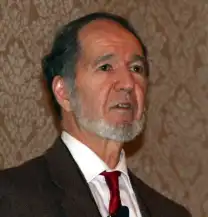
Jared Mason Diamond is an American scholar and author whose work spans physiology, evolutionary biology, ecology, ornithology, geography, anthropology, and history. He is professor emeritus of geography at the University of California, Los Angeles, and is known for research on New Guinea birds and influential books explaining human societies through environmental, biological, geographic, and historical perspectives.
Catalog record updated .
Not sure where to begin?
The clearest introduction to Diamond’s large-scale account of human history and geographic inequality.
Best starting point for Diamond’s work on human evolution and human nature.

Recommended for his environmental and historical analysis of societal success and failure.
Outside the series
adapted-nonfiction · 2015
At some point during the last 100,000 years, humans began exhibiting traits and behavior that distinguished us from other animals, eventually creating language, art, religion, bicycles, spacecraft, and nuclear weapons—all within a…
field-guide · 1986
popular-science · 1991
The Development of an Extraordinary Species We human beings share 98 percent of our genes with chimpanzees. Yet humans are the dominant species on the planet -- having founded civilizations and religions, developed intricate and diverse…
popular-science · 1997
How human sexuality came to be what it now is. Human sexuality seems normal to us but it is bizarre by the standards of other animals. Jarad Diamond Argues that our stange SEX lives were as crucial to our rise to human atatus as were our…
popular-science · 1997
An epic detective story that offers a gripping expose on why the world is so unequal. Professor Jared Diamond traveled the globe for over 30 years trying to answer this question. Based on the Pulitzer Prize-winning book.
popular-science · 2005
"In his Pulitzer Prize-winning bestseller Guns, Germs, and Steel, Jared Diamond examined how and why Western civilizations developed the technologies and immunities that allowed them to dominate much of the world. Now, Diamond probes the…
popular-science · 2012
Draws on decades of field work in the Pacific islands and other world regions to illuminate the degree to which modern society reflects traditional cultures from earlier and ancient time periods.
popular-science · 2019
scientific-monograph · 1972
scientific-monograph · 2001
Jared Mason Diamond is an American scholar and author whose work spans physiology, evolutionary biology, ecology, ornithology, geography, anthropology, and history. He is professor emeritus of geography at UCLA.
Sources: ioes.ucla.edu (opens in a new tab)socialsciences.ucla.edu (opens in a new tab)
He earned a bachelor’s degree from Harvard and a Ph.D. from the University of Cambridge. His early career focused on physiology before expanding into evolutionary biology and biogeography, and he spent most of his academic career at UCLA.
Sources: ioes.ucla.edu (opens in a new tab)pulitzer.org (opens in a new tab)
Diamond first visited New Guinea in 1964 to study its birds. His fieldwork there, including a pivotal 1972 conversation with Yali, helped inspire the questions about unequal social development that shaped his later public writing.
Sources: newsroom.ucla.edu (opens in a new tab)pmc.ncbi.nlm.nih.gov (opens in a new tab)
He won the 1998 Pulitzer Prize for General Nonfiction and received the U.S. National Medal of Science for scholarship in physiology, ecology, conservation biology, and history, as well as for communicating science to the public.
Sources: pulitzer.org (opens in a new tab)nsf.gov (opens in a new tab)
Diamond helped popularize interdisciplinary explanations of human history that connect geography, environment, biology, and technology. UCLA credits his work with broadening public perspectives on anthropology, ecology, geography, and evolutionary biology.
Sources: ucla.edu (opens in a new tab)nsf.gov (opens in a new tab)