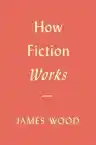
How Fiction Works
A concise, accessible introduction to Wood’s central ideas about literary technique and the novel.
Author guide
James Wood is an English literary critic, essayist, and novelist. He has been a staff writer and book critic at The New Yorker since 2007 and is a professor of the practice of literary criticism at Harvard University. His books combine literary criticism, reflections on fiction and belief, memoir, and novels.
Catalog record updated .
Not sure where to begin?
A concise, accessible introduction to Wood’s central ideas about literary technique and the novel.
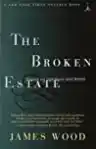
Wood’s first major essay collection and a foundation for his criticism of literature and belief.
Outside the series
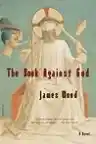
novel · 2003
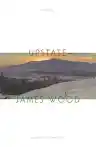
novel · 2018
New Yorker book critic and award-winning author James Wood delivers a novel of a family struggling to connect with one another and find meaning in their own lives. In the years since his daughter Vanessa moved to America to become a…
literary-criticism · 2004
"James Wood has been called our best young critic. This is not true. He is our best critic; he thinks with a sublime ferocity."--Cynthia Ozick Following the collection The Broken Estate--which established James Wood as the leading critic…
literary-criticism · 2008
An elegant little book by famed critic and New Yorker writer, James Woods, exploring the art of writing fiction, and writing well. Written for any lover of the novel - writers, teachers, readers - it delves into the mechanics, art and…
literary-criticism · 2015
essay-collection · 1999
This book recalls an era when criticism could change the way we look at the world. In the tradition of Matthew Arnold and Edmund Wilson, James Wood reads literature expansively, always pursuing its role and destiny in our lives. In a…
essay-collection · 2012
essay-collection · 2019
James Wood is an English literary critic, essayist, novelist, and professor of the practice of literary criticism at Harvard University. He has been a staff writer and book critic at The New Yorker since 2007.
Sources: english.fas.harvard.edu (opens in a new tab)newyorker.com (opens in a new tab)
Yes. He was born in Durham, England, in 1965, studied English at Cambridge, and received an M.A. from Jesus College, Cambridge, in 1988.
Sources: theguardian.com (opens in a new tab)english.fas.harvard.edu (opens in a new tab)
Wood has identified George Orwell and Virginia Woolf as important influences, while calling V. S. Pritchett perhaps his biggest influence as a critic. His work also reflects a sustained interest in religion and literature.
Sources: writing.newschool.org (opens in a new tab)english.fas.harvard.edu (opens in a new tab)
He is known for close, writerly readings of fiction that examine style, narrative technique, realism, consciousness, and the relationship between literature and belief. His criticism has appeared in major publications including The New Yorker and The Guardian.
Sources: thecrimson.com (opens in a new tab)newyorker.com (opens in a new tab)theguardian.com (opens in a new tab)
His honors include the British Press Young Journalist of the Year Award in 1990 and the 2009 National Magazine Award for Reviews and Criticism for work published in The New Yorker.
Sources: amacad.org (opens in a new tab)asme.media (opens in a new tab)