Dubliners
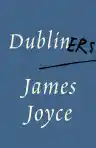
The most accessible entry to Joyce's recurring Dublin setting, themes, and early short-fiction style.
Author guide
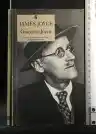
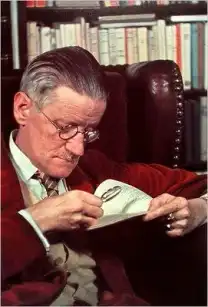
James Augustine Aloysius Joyce (1882–1941) was an Irish modernist writer known for radical experiments with narrative, interior monologue, language, and literary form. His major works include Dubliners, A Portrait of the Artist as a Young Man, Ulysses, and Finnegans Wake, alongside poetry collections, the play Exiles, literary criticism, and posthumously published writings.
Catalog record updated .
Not sure where to begin?
The most accessible entry to Joyce's recurring Dublin setting, themes, and early short-fiction style.
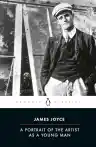
A concise introduction to Joyce's developing modernist technique and the Stephen Dedalus figure.
Joyce's central mature novel and the best starting point for understanding his formal innovations.
Read in order
letters · complete
The three-volume edition of Joyce's correspondence published posthumously, with volume 1 edited by Stuart Gilbert and volumes 2–3 edited by Richard Ellmann.
Book 1 · letters · 1957
Book 2 · letters · 1966
Book 3 · letters · 1966
Outside the series
novel · 1916
The chronicle of Stephen Dedalus's Dublin childhood and young offers an oblique self-portrait of the young James Joyce. Exuberantly inventive, this coming-of-age story is a tour de force of style and technique.
novel · 1922
On June 16, 1904, in Dublin, Ireland, the day is distinguished by its utter normality. Two characters, Stephen Dedalus and Leopold Bloom, go about their separate business, crossing paths with a gallery of indelible Dubliners.
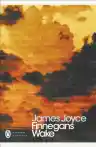
novel · 1939
Follows a man's thoughts and dreams during a single night. It is also a book that participates in the re-reading of Irish history that was part of the revival of the early 20th century. The author also wrote "Ulysses", "Dubliners" and…
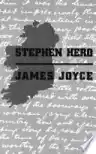
unfinished-novel · 1944
Stephen Hero is an early version of Joyce's A Portrait of the artist as a Young Man. It was originally rejected on grounds of indecency—so the story goes— by twenty publishers, whereupon Joyce threw the manuscript in the fire, but Mrs.…
short-story-collection · 1914
With these fifteen stories, James Joyce reinvented the art of fiction, using a scrupulous, deadpan realism to convey truths that were at once blasphemous and sacramental. Whether writing about the death of a fallen priest ("The Sisters"),…
essays-and-criticism · 1959
poem · 1904
poetry-collection · 1907
poem · 1912
poetry-collection · 1927
prose-poem · 1968
Joyce's fictionalized autobiographical love story is presented together with textual and documentary notes.
play · 1918
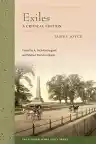
New edition of Joyce's one and only play, published alongside prestigious revival at National Theatre.
James Joyce was an Irish modernist writer, novelist, poet, and critic. He was born in Dublin on February 2, 1882, and died in Zurich on January 13, 1941.
Joyce studied modern languages at University College Dublin and worked as an English teacher at Berlitz schools in Pola, Trieste, and Zurich. He became a full-time writer around 1920.
Joyce’s writing was shaped by Dublin life, his Jesuit education, and writers including Henrik Ibsen, Dante, and W. B. Yeats. Ibsen was especially important to him during his university years.
Sources: jamesjoyce.ie (opens in a new tab)cambridge.org (opens in a new tab)
No. Joyce was never a Nobel Prize laureate, although the Royal Literary Fund provided him financial relief in 1915 to support his writing and move to Zurich.
Sources: nobelprize.org (opens in a new tab)rlf.org.uk (opens in a new tab)
Joyce is regarded as a major modernist because of his experimental use of language, interior thought, and narrative form. His writing about Dublin and his influence on later literature helped make him one of the twentieth century’s most consequential authors.
Sources: rem.routledge.com (opens in a new tab)english.ox.ac.uk (opens in a new tab)