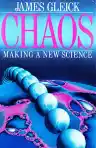
Chaos: Making a New Science
The foundational and most accessible introduction to Gleick's narrative science writing.

Author guide
James Gleick (born 1954) is an American science writer, historian, biographer, and essayist. A Harvard College graduate, he worked as an editor and reporter for The New York Times and later wrote extensively about science, technology, information, and the history of ideas. His books include biographies of Richard Feynman and Isaac Newton, as well as works on chaos theory, acceleration, electronic technology, information, and time travel. His books have been translated into approximately thirty languages.
Catalog record updated .
Not sure where to begin?
The foundational and most accessible introduction to Gleick's narrative science writing.
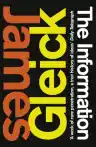
A later career-spanning work connecting communication, information theory, mathematics, and culture.
Outside the series
nonfiction · 1987
The author describes how scientists studying the growth of complexity in nature are discovering order and pattern in chaos. He explains concepts such as nonlinearity, the Butterfly Effect, universal constants, fractals, and strange…
nonfiction · 1989
With 102 spectacular full-color photos, this fascinating "field guide" explores the world's natural disorder.
nonfiction · 1999
nonfiction · 2011
The Information: A History, a Theory, a Flood begins with the tale of colonial European explorers and their fascination with African talking drums and their observed use to send complex and widely understood messages back and forth…
nonfiction · 2016
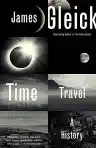
Best Books of 2016 BOSTON GLOBE * THE ATLANTIC From the acclaimed bestselling author of The Information and Chaos comes this enthralling history of time travel—a concept that has preoccupied physicists and storytellers over the course of…
biography · 1992
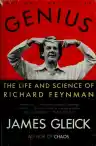
A gem of a book, about the life and mind of one of the most influential and iconoclastic characters in 20th century physics. Really a pleasure to read.
biography · 2003
"In this biography, James Gleick moves between a comprehensive historical portrait and a dramatic focus on Newton's significant letters and unpublished notebooks to illuminate the real importance of his work in physics, in optics, and in…
essay-collection · 2002
James Gleick is an American science writer, historian, biographer, and essayist known for narrative nonfiction about science, technology, information, and the history of ideas.
Sources: us.macmillan.com (opens in a new tab)go.authorsguild.org (opens in a new tab)
He was born in New York City in 1954 and graduated from Harvard College in 1976.
He helped found the alternative weekly Metropolis in Minneapolis, then worked for ten years as an editor and reporter at The New York Times before becoming a full-time author.
Sources: nationalbook.org (opens in a new tab)go.authorsguild.org (opens in a new tab)
Gleick won the 2012 Royal Society Winton Prize and the 2012 PEN/E. O. Wilson Literary Science Writing Award for The Information. He has also been a Pulitzer Prize and National Book Award finalist.
Sources: royalsociety.org (opens in a new tab)pen.org (opens in a new tab)pulitzer.org (opens in a new tab)pulitzer.org (opens in a new tab)nationalbook.org (opens in a new tab)
His narrative approach helped bring complex subjects such as chaos theory and information science to general readers. His book Chaos also helped make chaos theory a lasting part of popular culture.
Sources: wired.com (opens in a new tab)nybooks.com (opens in a new tab)