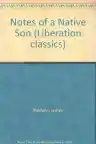
Notes of a Native Son
A foundational collection that introduces Baldwin's nonfiction, literary criticism, autobiography, and social analysis.
Author guide
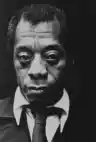
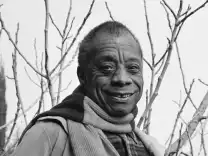
James Baldwin was born in Harlem in 1924 and became one of the major American literary and intellectual voices of the twentieth century. His novels, essays, short stories, plays, poetry, screenwriting, and children's literature examine race, sexuality, religion, identity, exile, and social justice. He lived for extended periods in France and Turkey and was an influential participant in the U.S. civil rights movement. Baldwin died in southern France in 1987.
Catalog record updated .
Not sure where to begin?
A foundational collection that introduces Baldwin's nonfiction, literary criticism, autobiography, and social analysis.

Baldwin's first novel and a central entry point to his fiction, religious themes, and autobiographical concerns.

A concise landmark work pairing personal reflection with Baldwin's most direct analysis of race and American society.
Outside the series
novel · 1953
The story of the guilt, bitterness and spiritual strivings of the Grimes family which is told as the son, John, faces the issue of religious conversion in the Temple of the Fire Baptised.
novel · 1956
Set in the contemporary Paris of American expatraites, liasons, and violence, a young man finds himself caught between desire and conventional morality. James Baldwin's brilliant narrative delves into the mystery of loving with a sharp,…
novel · 1962
Published in 1962, this is an emotionally intense novel of love, hatred, race and liberal America in the 1960s. Set in Greenwhich Village, Harlem and France, ANOTHER COUNTRY tells the story of the suicide of jazz-musician Rufus Scott and…
novel · 1968
At the height of his theatrical career, the actor Leo Proudhammer is nearly felled by a heart attack. As he hovers between life and death, Baldwin shows the choices that have made him enviably famous and terrifyingly vulnerable. For…
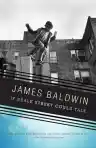
novel · 1974
In this honest and stunning novel that inspired the award-winning major motion picture of the same name, James Baldwin has given America a moving story of love in the face of injustice. "A major work of Black American fiction." –The New…
novel · 1979
This is the ficional story of the great gospel singer Arthur Montana. Arthur was found dead in the basement of a London pub at the age of thirty-nine, yet he lives on in this memoir. Written by Hall, his brother and manager, it is in part…
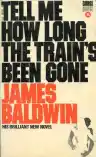
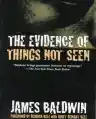
nonfiction · 1985
This edition of a classic work by one of America’s premier writers offers a new Foreword by Derrick Bell (with Janet Dewart Bell) to the 1995 paperback edition, and is as meaningful today as it was when it was first published in 1985. In…
essay-collection · 1955
Since its original publication in 1955, this first nonfiction collection of essays by James Baldwin remains an American classic. His impassioned essays on life in Harlem, the protest novel, movies, and African Americans abroad are as…
essay-collection · 1961
Told with Baldwin's characteristically unflinching honesty, this collection of illuminating, deeply felt essays examines topics ranging from race relations in the United States to the role of the writer in society, and offers personal…
essay-collection · 1963
A national bestseller when it first appeared in 1963, The Fire Next Time galvanized the nation, gave passionate voice to the emerging civil rights movement—and still lights the way to understanding race in America today. "Basically the…
photographic-essay · 1964
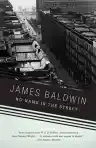
memoir-and-essays · 1972
From one of the most important American writers of the twentieth century—an extraordinary history of the turbulent sixties and early seventies that powerfully speaks to contemporary conversations around racism. “It contains truth that…
book-length-essay · 1976
Baldwin’s personal reflections on movies gathered here in a book-length essay are also a probing appraisal of American racial politics. Offering an incisive look at racism in American movies and a vision of America’s self-delusions and…
children's-book · 1955
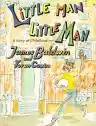
children's-book · 1976
Depicts the environment and daily life of two boys coming of age in Harlem.
poetry-collection · 1983
poetry-collection · 1989
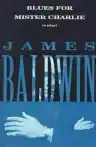
play · 1964
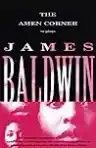
play · 1968
screenplay · 1972
James Baldwin's screenplay based on Alex Haley's now classic "The Autobiography Of Malcolm X makes immediate and terrfyingly real the stunning events that gave birth to a forceful, determined man . . . and created the atmosphere of hate…
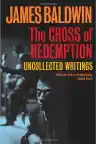
posthumous-essay-collection · 2010
James Baldwin was an American literary master, renowned for his fierce engagement with issues haunting our common history. In The Cross of Redemption we have Baldwin discoursing on, among other subjects, the possibility of an…
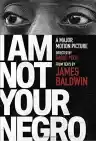
posthumous-book · 2017
Transcript of the documentary film, I am not your negro, by Raoul Peck composed of unpublished and published writings, interviews, and letters by James Baldwin on the subject of racism in America.
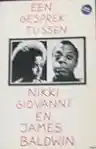
dialogue · 1971
(*From the introduction*) On August 25, 1970, anthropologist Margaret Mead and writer James Baldwin met for the first time to have three recorded conversations, totaling more than seven hours of tape that, once transcribed, would compose…
dialogue · 1973
James Baldwin was an American novelist, essayist, poet, playwright, and social critic whose writing addressed race, identity, sexuality, religion, and American society. He also became an important voice in the U.S. civil rights movement.
Source: loc.gov (opens in a new tab)
Baldwin’s Harlem upbringing, Pentecostal religious experience, and encounters with racism strongly shaped his work. The encouragement of Richard Wright helped launch his career, while his years in Europe gave him a broader perspective on American identity and race.
Sources: chipublib.org (opens in a new tab)poetryfoundation.org (opens in a new tab)cambridge.org (opens in a new tab)
Baldwin wrote openly about same-sex desire and sexuality, but he resisted fixed labels for his identity. Contemporary scholarship often describes him as queer or bisexual, while the Smithsonian’s National Museum of African American History and Culture emphasizes his reluctance to fit rigid categories.
Sources: nmaahc.si.edu (opens in a new tab)poetryfoundation.org (opens in a new tab)
Baldwin was a finalist for the National Book Awards four times, in 1957, 1962, 1964, and 1980. In 1986, France named him a commander of the Legion of Honor.
Sources: nationalbook.org (opens in a new tab)latimes.com (opens in a new tab)
Baldwin remains influential because he joined powerful literary craftsmanship with searching analysis of race, sexuality, religion, and belonging. His work continues to shape discussions of American identity and is still promoted through major library, educational, and literary programs.
Sources: loc.gov (opens in a new tab)poetryfoundation.org (opens in a new tab)nationalbook.org (opens in a new tab)