The Catcher in the Rye
Salinger's best-known novel and the clearest entry point to his major themes and distinctive voice.
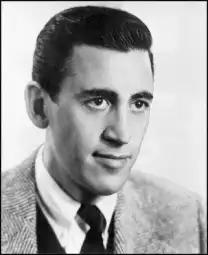
Author guide
Jerome David Salinger (1919–2010) was an American fiction writer whose principal published books include the novel The Catcher in the Rye, the short-story collection Nine Stories, and two collections of linked Glass family novellas. He largely withdrew from public life after the 1960s and published no new fiction after 1965, though a posthumous collection of three early stories appeared in 2014.
Catalog record updated .
Not sure where to begin?
Salinger's best-known novel and the clearest entry point to his major themes and distinctive voice.
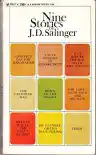
Introduces his short fiction and several early Glass-family stories in a compact collection.
Read in order
story-cycle · completed
A linked cycle of stories and novellas concerning the Glass family, including works collected in Nine Stories and the two later Glass-family books.
Book 1 · short-story-collection · 1953
First published short story volume by the author of Catcher In The Rye.
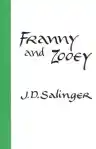
Book 2 · novella-collection · 1961
A novel in two halves, Franny and Zooey brilliantly captures the emotional strains and traumas of entering adulthood. It is a gleaming example of the wit, precision, and poignancy that have made J. D. Salinger one of America’s most…
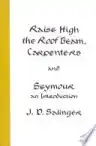
Book 3 · novella-collection · 1963
Two semi-autobiographical novellas in Salinger’s Glass family series. Both stories are written in the stream-of-consciousness style with *Raise High the Roof Beam* narrated by Buddy Glass as he recalls the day of his brother Seymour’s…
Outside the series
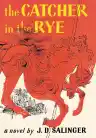
novel · 1951
"The boy himself is at once too simple and too complex for us to make any final comment about him or his story. Perhaps the safest thing we can say about Holden is that he was born in the world not just strongly attracted to beauty but,…
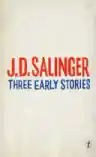
short-story-collection · 2014
Three formative short stories by one of the most significant American writers of the twentieth century. A cocktail party conversation is most revealing in what is left unsaid. Tensions between a brother and sister escalate to violent…
J. D. Salinger was the pen name of Jerome David Salinger, an American fiction writer best known for The Catcher in the Rye and his celebrated short stories.
He was born in New York City on January 1, 1919, and died in Cornish, New Hampshire, on January 27, 2010, aged 91.
Sources: nationalbook.org (opens in a new tab)theguardian.com (opens in a new tab)
His combat service and wartime trauma shaped the psychological concerns of his fiction. Later, he studied Zen and Mahayana Buddhism, Taoism, and Advaita Vedanta, and practiced meditation, bringing a strong spiritual dimension to his work.
Salinger was a National Book Award finalist for Fiction in 1952 for The Catcher in the Rye and in 1962 for Franny and Zooey.
Sources: nationalbook.org (opens in a new tab)nationalbook.org (opens in a new tab)
After achieving fame, Salinger withdrew to Cornish, New Hampshire, avoided conventional interviews, and published no new work after 1965. His deliberate privacy became part of his public image, while his earlier writing remained enduringly influential.
Sources: nationalbook.org (opens in a new tab)academic.oup.com (opens in a new tab)