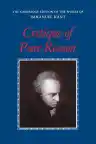
Critique of Pure Reason
Kant's central work in theoretical philosophy and the foundation of his critical system.
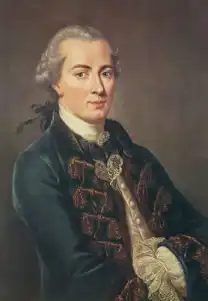
Author guide
Immanuel Kant (1724–1804) was an influential German philosopher associated with the Enlightenment and German Idealism. His major works investigate the limits and structure of human reason, the foundations of morality, judgment and aesthetics, religion, law, politics, anthropology, and natural science. His critical philosophy is centered on the Critique of Pure Reason, Critique of Practical Reason, and Critique of the Power of Judgment.
Catalog record updated .
Not sure where to begin?
Kant's central work in theoretical philosophy and the foundation of his critical system.
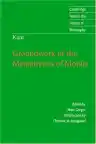
The clearest concise entry point to Kant's moral philosophy and categorical imperative.
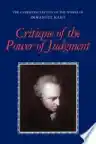
A major work connecting aesthetics, teleology, and the systematic unity of Kant's philosophy.
Outside the series
pamphlet · 1756
pamphlet · 1758
pamphlet · 1759
pamphlet · 1760
pamphlet · 1764
pamphlet · 1775
pamphlet · 1795
pamphlet · 1798
lecture-notes · 1800
lecture-notes · 1802
lecture-notes · 1803
speech · 1881
book · 1747
dissertation · 1755
dissertation · 1770
book · 1781
Immanuel Kant was one of the leading lights of 18th-century philosophy; his work provided the foundations for later revolutionary thinkers such as Hegel and Marx. This work contains the keystone of his critical philosophy - the basis of…
book · 1785
Groundwork of the Metaphysics of Morals is the first of Immanuel Kant's mature works on moral philosophy and remains one of the most influential in the field. Kant conceives his investigation as a work of foundational ethics—one that…
book · 1786
A translation of Kant's mature reflections on issues in the philosophy of natural science.
book · 1788
The Critique of Practical Reason is the second of Kant's three Critiques, one of his three major treatises on moral theory, and a seminal text in the history of moral philosophy. Originally published three years after his Groundwork to…
book · 1790
The Critique of the Power of Judgment (a more accurate rendition of what has hitherto been translated as the Critique of Judgment) is the third of Kant's great critiques following the Critique of Pure Reason and the Critique of Practical…
book · 1793
book · 1797
The Metaphysics of Morals is Kant's major work in applied moral philosophy in which he deals with the basic principles of rights and of virtues. It comprises two parts: the "Doctrine of Right," which deals with the rights that people have…
book · 1798
book · 1798
dissertation · 1839
manuscript-collection · 1882
Immanuel Kant was a German philosopher and a central figure in modern philosophy. His critical philosophy influenced the study of knowledge, morality, aesthetics, and politics.
Kant was born on April 22, 1724, in Königsberg, East Prussia, now Kaliningrad, Russia. He died in the same city on February 12, 1804.
Kant was an academic philosopher and lecturer at the University of Königsberg. He taught there from 1755, became professor of logic and metaphysics in 1770, and retired from teaching in 1796.
Kant’s thinking developed through engagement with Leibniz and Christian Wolff’s rationalism, Newton’s science, and the ideas of Locke, Hume, and Rousseau. His teacher Martin Knutzen played an important role by introducing him to Newton and British philosophy.
Kant helped set the terms for much of nineteenth- and twentieth-century philosophy and remains influential across metaphysics, epistemology, ethics, political philosophy, and aesthetics. His work also helped launch German Idealism and continues to shape philosophical debate.
Sources: plato.stanford.edu (opens in a new tab)plato.stanford.edu (opens in a new tab)